
In 2026, the landscape of Sales CRM software has evolved significantly, with AI playing a pivotal role in enhancing sales effectiveness. Top CRM tools now leverage AI to automate mundane tasks, such as call logging and email personalization, while also providing predictive insights that help sales teams focus on high-priority deals. Leading platforms like Close, Freshsales, and HubSpot have integrated advanced AI features, which not only optimize daily workflows but also contribute to improved overall sales performance. As organizations seek to maximize CRM adoption, the emphasis on user-friendly interfaces and intelligent automation will be essential for achieving sustained engagement among sales representatives.
According to recent industry research, sales reps who use a purpose-built CRM close 29% more deals and spend 23% less time on manual data entry. Whether you’re running a lean inside sales team or scaling an enterprise operation, the right platform makes the difference between hitting quota and missing it.
This guide reviews the Top 11 Sales CRM platforms that are actually rated highly by sales professionals, not just analysts, in 2026. We’ve evaluated each tool on pipeline management, automation, calling & outreach features, AI capabilities, ease of adoption, and pricing.
What Makes a Great Sales CRM for Reps?
Before diving into the list, here’s what a sales-focused CRM must deliver to actually move the needle:
- Pipeline clarity: Reps need to see which deals are hot, which are stalled, and exactly what action to take next.
- Built-in communication: Calling, emailing, and SMS from inside the CRM, with no tab-switching or data loss.
- Automation that saves admin time: Auto-logging calls, emails, and notes so reps spend time selling, not typing.
- AI-driven next actions: Intelligent nudges that tell reps which lead to follow up with and when.
- Fast adoption: If the team doesn’t use it, it’s worthless. Simplicity is a feature.
- Accurate forecasting: Managers need confident forecasts, not gut-feel guesses.
Top 11 Best Sales CRM Software in 2026
Here is our curated ranking of the best CRM tools specifically built or optimized for sales teams, based on real-world performance, G2 and Capterra ratings, and hands-on evaluation.
1. Close
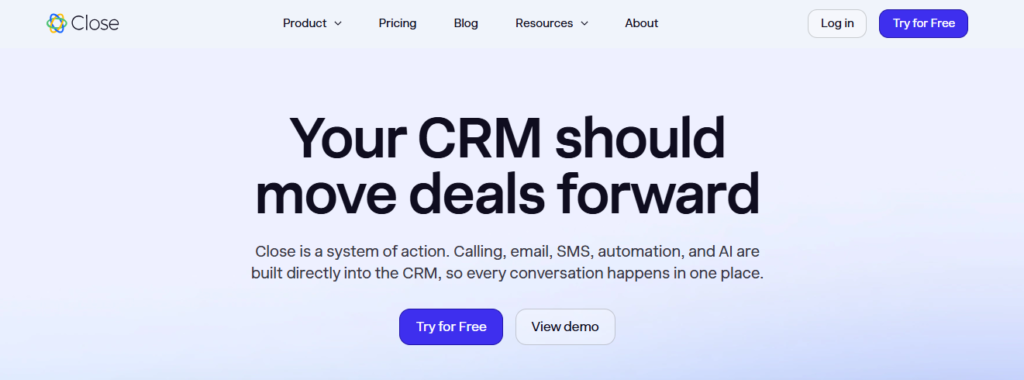
Close is purpose-built for inside sales teams who live and die by the phone and email. Unlike most CRMs that bolt on communication features as an afterthought, Close treats calling, emailing, and SMS as first-class citizens; they’re baked directly into the platform. There is no need to switch to a separate dialer or email client. Every activity is automatically logged, giving reps more time to sell and managers full visibility into rep activity.
In 2026, Close has deepened its AI capabilities with call transcription, automatic meeting summaries, and AI-generated follow-up suggestions based on conversation content. It’s the CRM of choice for high-velocity sales teams at startups and SMBs that need speed above all else.
Key Features
- Built-in Power Dialer, Predictive Dialer, and SMS, all natively integrated.
- AI Call Assistant for real-time transcription, summaries, and coaching prompts.
- Smart Views for instant filtering of hot leads, overdue tasks, and follow-ups.
- Email sequences with tracking, open rates, and automatic reply detection.
- Pipeline and activity reporting with leaderboard views for sales managers.
Pros
- Fastest time-to-dial of any CRM, with no third-party dialer needed.
- Auto-logging of every call, email, and SMS saves massive admin time.
- Extremely intuitive UI that new reps can learn in under a day.
- Ideal for outbound and inside sales teams that make high call volumes.
Cons
- Less suited for complex enterprise sales with multi-stakeholder deal management.
- Marketing automation features are limited compared to HubSpot.
- Integrations ecosystem is smaller than Salesforce.
Best For: Inside sales teams, high-velocity B2B startups, and phone-first sales organizations.
2. Salesforce Sales Cloud
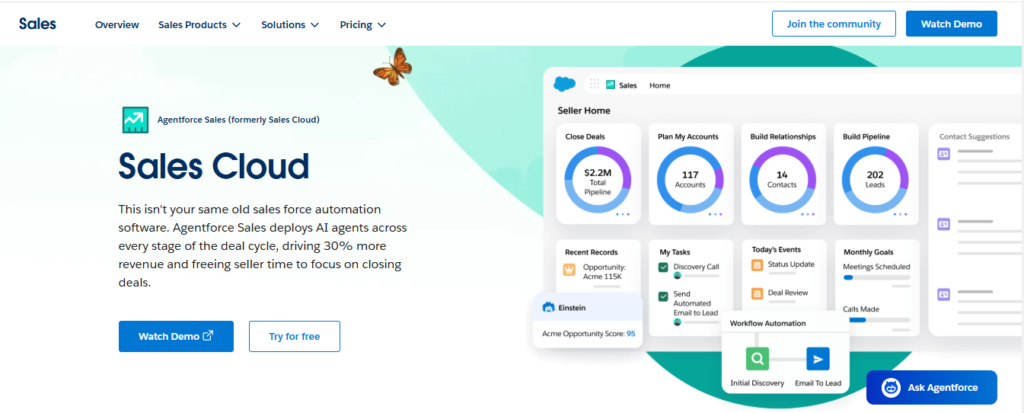
Salesforce is the undisputed heavyweight of the CRM world, and for good reason. No other platform offers the same depth of customization, integration breadth, or AI capability. In 2026, its Einstein 1 Platform has evolved to support fully autonomous AI agents, not just suggestions, but agents that can update records, draft emails, and route leads without human input.
For large enterprise sales organizations that need granular control over territory management, complex approval workflows, and deep analytics, Salesforce remains unmatched. However, that power comes at a cost, both financially and in implementation complexity.
Key Features
- Einstein GPT for automated email drafting, call summaries, and deal intelligence.
- Advanced revenue forecasting with real-time pipeline inspection and waterfall analysis.
- Omnichannel engagement across email, phone, social, and web chat.
- Extensive AppExchange marketplace with 7,000+ integrations.
- Territory management and complex deal structure support.
Pros
- Unmatched scalability for global enterprise sales teams.
- Most powerful AI and analytics capabilities in the market.
- Largest integration ecosystem, connecting with virtually any business tool.
Cons
- High total cost of ownership including licensing, implementation, and maintenance.
- Steep learning curve; most teams need a dedicated Salesforce admin.
- Over-engineered for small or mid-size sales teams.
Best For: Large enterprise sales teams with complex processes and dedicated technical resources.
3. HubSpot Sales Hub
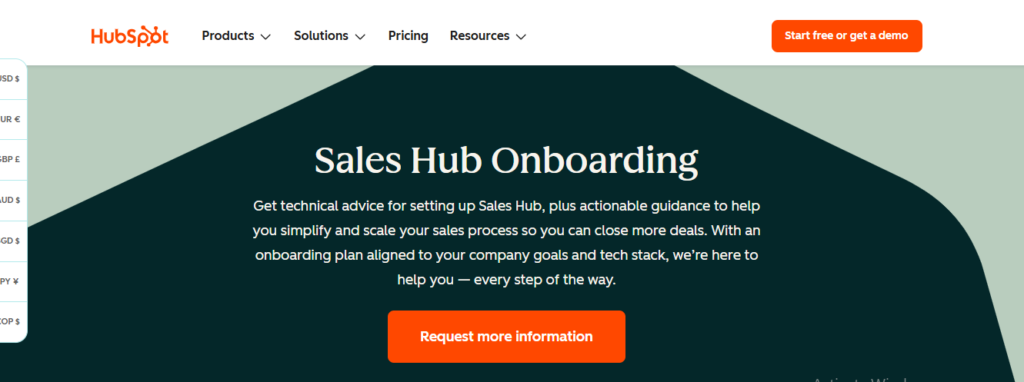
HubSpot Sales Hub is the go-to choice for growing companies that want sales and marketing working in lockstep. Unlike Close (which is phone-first) or Salesforce (which is enterprise-first), HubSpot strikes a balance between ease of use and power, making it extremely popular with scaling B2B companies. The 2026 version features Breeze AI, HubSpot’s AI layer, which handles prospecting, email personalization, and deal summaries automatically.
One of HubSpot’s biggest advantages is its free CRM tier. Startups and small teams can get started for free and upgrade as they grow. The seamless connection between Sales Hub and Marketing Hub means reps get full context on every lead, including what content they’ve read, which emails they’ve opened, and what pages they’ve visited.
Key Features
- Unified contact timeline showing marketing touches, emails, calls, and deals.
- Breeze AI for email generation, prospecting suggestions, and meeting prep.
- Automated sequences for multi-step sales outreach campaigns.
- Meeting scheduling links that sync directly to Google and Outlook calendars.
- Customizable deal pipelines with probability-based forecasting.
Pros
- Best-in-class integration between sales and marketing data.
- Powerful free tier that covers core CRM needs for small teams.
- Intuitive UI with a short learning curve for new reps.
Cons
- Costs escalate significantly as you add seats and premium Hubs.
- Reporting becomes complex and expensive at the enterprise level.
- Less customizable than Salesforce for unique sales processes.
Best For: Growing B2B companies that want sales and marketing aligned in one platform.
4. Pipedrive
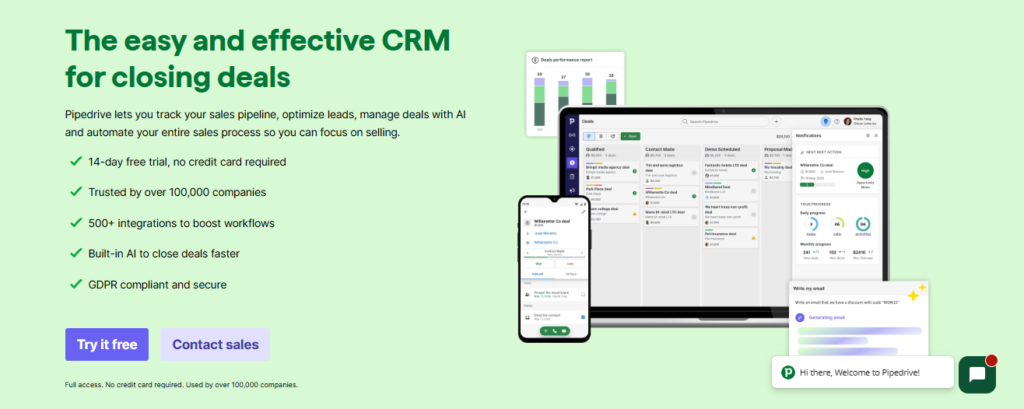
Pipedrive was built by salespeople for salespeople, and it shows. The entire platform is designed around one concept: activity-based selling. If reps complete the right activities, the deals will close. Pipedrive’s visual pipeline is one of the most intuitive in the market; reps can see every deal at a glance and drag cards between stages in seconds.
In 2026, Pipedrive’s AI Sales Assistant has been significantly upgraded, now proactively suggesting which deals to focus on, identifying dormant deals at risk of going cold, and providing coaching prompts based on historical win rates. It remains one of the best value options for dedicated sales teams.
Key Features
- Visual, drag-and-drop sales pipeline that mirrors how sales actually works.
- AI Sales Assistant with deal health scores and prioritization nudges.
- Smart Contact Data for instant lead enrichment from the web.
- LeadBooster add-on for web forms, live chat, and prospecting.
- Workflow automations for follow-up emails, task creation, and deal stage triggers.
Pros
- Fastest pipeline setup in the market; teams are live in hours, not days.
- Exceptional value for money for small and mid-size sales teams.
- Very low learning curve; reps adopt it naturally.
Cons
- Marketing and customer service features are limited and require add-ons.
- Reporting lacks the depth needed for complex enterprise analysis.
- Not designed for multi-department use beyond sales.
Best For: SMB sales teams that want a focused, easy-to-use pipeline management tool.
5. Zoho CRM
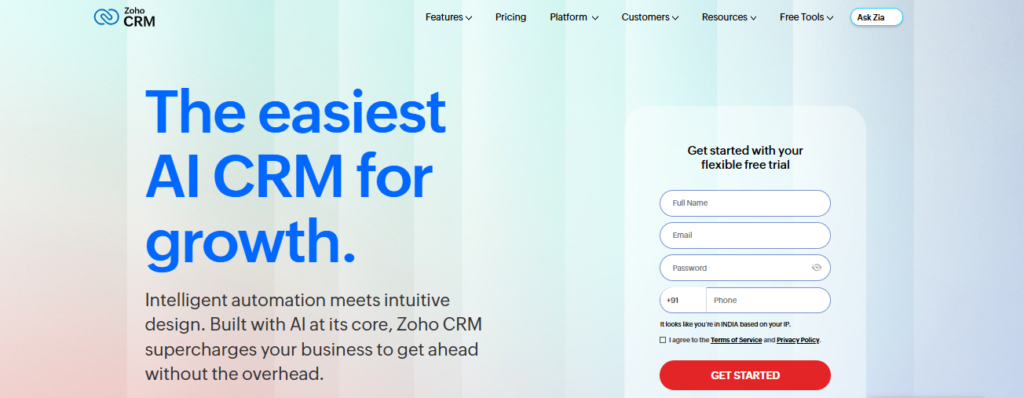
Zoho CRM delivers enterprise-grade sales features at a price point that punches well above its weight. For sales teams at SMBs and mid-market companies, it offers one of the best feature-to-cost ratios available. The Canvas design studio lets teams completely redesign the CRM interface to match their workflow, while Zia, Zoho’s AI engine, provides deal predictions, anomaly detection, and sentiment analysis.
Zoho CRM also stands out for its multi-channel selling capabilities, supporting email, phone, social media, and live chat natively. The tight integration with the broader Zoho ecosystem (Zoho Desk, Zoho Campaigns, Zoho Analytics) makes it a powerful all-in-one platform for companies that prefer one vendor.
Key Features
- Canvas UI designer for completely customized CRM views without code.
- Zia AI for deal forecasting, sentiment analysis, and best-time-to-contact suggestions.
- CommandCenter for orchestrating multi-step customer journeys across departments.
- Built-in telephony with call recording and analytics.
- Native integration with 50+ Zoho apps and 900+ third-party tools.
Pros
- Exceptional feature-to-price ratio, delivering enterprise power at SMB pricing.
- Highly customizable without requiring developer resources.
- Strong multi-channel communication built directly into the platform.
Cons
- Customer support response times can be inconsistent.
- The interface feels cluttered before customization is applied.
- Some advanced features have a steep learning curve.
Best For: Value-conscious SMBs and mid-market companies that need robust sales features.
6. Freshsales (by Freshworks)
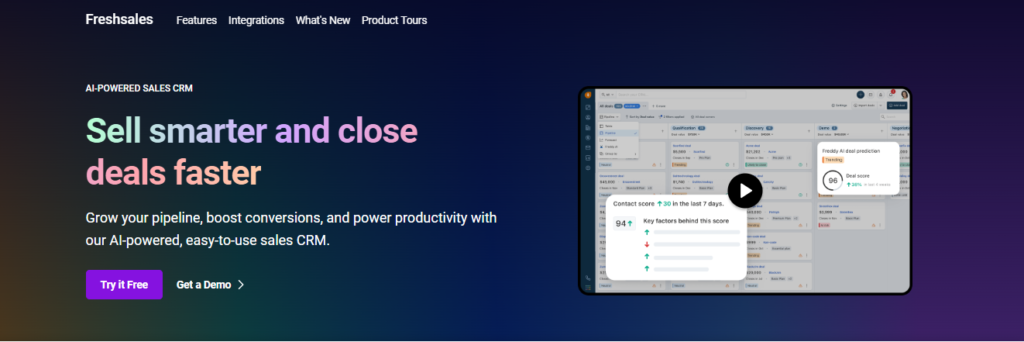
Freshsales is the CRM for teams that want a modern, clean experience with powerful AI baked in from the start. Its Freddy AI engine goes beyond basic lead scoring; it analyzes deal health, predicts which leads are most likely to convert, and surfaces contextual next-best-action recommendations for each rep throughout the day.
Where Freshsales really shines is its communication stack. Email, phone, WhatsApp, and live chat are all built in natively, giving reps a true 360-degree customer view inside a single timeline. The interface is modern and snappy, and the free plan offers enough functionality for small teams to genuinely succeed.
Key Features
- Freddy AI for lead scoring, deal insights, and next-best-action suggestions.
- Built-in cloud telephony, SMS, and WhatsApp Business integration.
- Contact scoring based on behavioral signals across email and web.
- Visual sales sequences for automated multi-channel outreach.
- 360-degree customer timeline combining all touchpoints.
Pros
- One of the most modern and visually clean UIs in the CRM market.
- Strong AI features available even on mid-tier plans.
- Built-in communication tools eliminate the need for third-party dialers.
Cons
- Reporting and analytics are less flexible than Salesforce or HubSpot.
- Third-party integrations are more limited than larger platforms.
- Some users report occasional lag during peak usage.
Best For: Sales teams that want AI-first features and built-in communication in a clean interface.
7. Monday Sales CRM
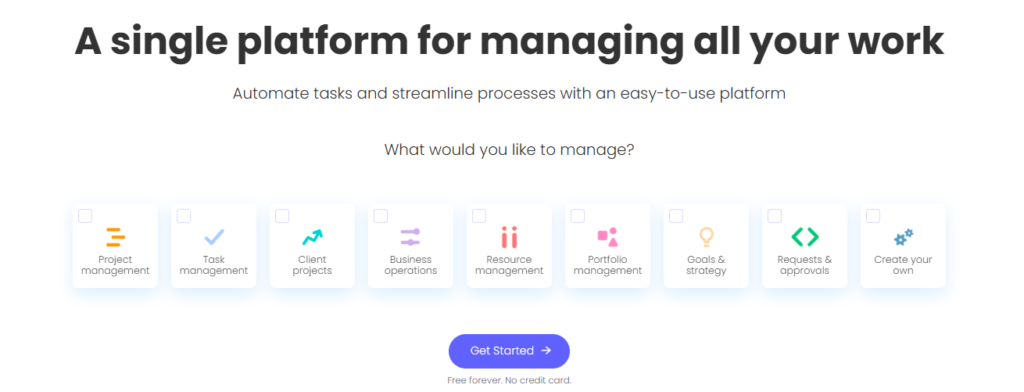
Monday Sales CRM brings the visual, no-code flexibility that made Monday.com famous into a dedicated sales context. Teams can build their entire sales workflow from scratch using customizable boards, columns, and automations, without touching a single line of code. For sales teams that also manage projects, campaigns, or client delivery, Monday’s ability to handle all of these in one workspace is a genuine differentiator.
In 2026, Monday CRM has added AI-powered pipeline updates and deal summaries, reducing the manual data entry burden significantly. Its native integrations with Gmail, Slack, and Microsoft Teams make it easy for distributed teams to collaborate around deals.
Key Features
- Fully customizable boards with unlimited column types and pipeline views.
- AI automations for status updates, deal summaries, and follow-up reminders.
- Multiple views including Kanban, Table, Calendar, and Map.
- Native integration with Gmail, Outlook, Slack, and 200+ apps.
- Shared dashboards for sales managers with live revenue tracking.
Pros
- Unmatched visual flexibility, adaptable to any sales workflow.
- Excellent for teams managing sales alongside projects or client work.
- Fast to set up with pre-built CRM templates.
Cons
- Lacks the deep sales analytics of dedicated CRM platforms like Salesforce.
- Pricing is seat-block based and can become expensive as teams grow.
- Advanced automation features are locked behind higher-tier plans.
Best For: Sales and operations teams that want one flexible workspace for deals and projects.
8. Zendesk Sell
Zendesk Sell is the natural choice for companies where sales and customer support are deeply intertwined. When a rep is about to close a deal, they can instantly see the prospect’s full support history, including open tickets, past complaints, and satisfaction scores, giving them invaluable context for the conversation. This level of sales-service integration is unique and extremely powerful for relationship-led sales.
The mobile app is one of the strongest in the CRM market, offering full functionality including offline access, ideal for field sales teams or reps who are frequently traveling. Smart Lists allow reps to create highly specific filtered views of their pipeline in seconds.
Key Features
- Seamless bidirectional integration with Zendesk Support, providing full ticket history in the sales view.
- Smart Lists for instant, dynamic lead and deal filtering.
- Mobile CRM with offline access and full feature parity.
- Built-in email and call tracking with auto-logging.
- Prospecting tools with data enrichment for building lead lists.
Pros
- Best-in-class sales-to-support visibility for customer-facing teams.
- Industry-leading mobile experience for field sales reps.
- Strong lead generation and prospecting tools built in.
Cons
- More expensive than competitors for the standalone feature set.
- Pipeline customization options are more limited than other platforms.
- Value is maximized only when paired with Zendesk Support.
Best For: Teams already using Zendesk for support, or sales teams with complex post-sale relationships.
9. Microsoft Dynamics 365 Sales
For organizations already running on the Microsoft stack, including Teams, Outlook, SharePoint, and Azure, Dynamics 365 Sales is the logical CRM choice. The depth of native integration with these tools is unmatched. Sales reps can work from within Outlook without ever opening the CRM separately, while Microsoft Copilot handles meeting summaries, email drafting, and pipeline updates automatically.
The 2026 version features deep LinkedIn Sales Navigator integration, allowing reps to pull prospect data, mutual connections, and company news directly into their CRM workflow. Its Power BI-powered reporting is best-in-class for data visualization.
Key Features
- Microsoft Copilot AI for sales productivity, email generation, and meeting prep.
- LinkedIn Sales Navigator integration built natively into the CRM.
- Power BI embedded analytics for advanced sales reporting.
- Seamless Outlook, Teams, and Excel integration.
- Relationship Intelligence for identifying warm introduction paths.
Pros
- Unrivaled integration with the Microsoft 365 ecosystem.
- Enterprise-grade security and compliance for regulated industries.
- Powerful customization through Power Apps and Power Automate.
Cons
- Requires specialized consultants for implementation, resulting in a high setup cost.
- UI can feel dense and complex compared to modern CRMs.
- Full enterprise feature set comes at a significant price.
Best For: Enterprises already invested in Microsoft 365 that need deep ecosystem integration.
10. Capsule CRM
Capsule CRM proves that simple can be powerful. In a market filled with feature-bloated platforms that overwhelm small teams, Capsule focuses on doing the essentials exceptionally well: track your contacts, manage your pipeline, and never miss a follow-up. It is one of the highest-rated CRMs by actual users on G2 and Capterra precisely because reps actually use it.
In 2026, Capsule has added AI-powered features including email writing assistance and deal summaries, while keeping the core experience clean and straightforward. Its transparent flat pricing makes budgeting easy, and its tight integration with accounting tools like Xero and QuickBooks is a bonus for small business owners.
Key Features
- Clean pipeline management with customizable stages and milestones.
- AI email writing assistant for faster rep communication.
- Relationship history tracking across every contact and organization.
- Native integrations with Xero, QuickBooks, Google Workspace, and Mailchimp.
- Task and activity management with calendar sync.
Pros
- Rated 4.7/5 on G2, with extremely high user satisfaction scores.
- Fastest onboarding time; teams are productive in hours.
- Transparent, affordable pricing with no hidden fees.
Cons
- Lacks advanced AI, automation, and analytics of larger platforms.
- Not suitable for high-volume enterprise sales operations.
- Reporting features are relatively basic.
Best For: Small businesses and freelancers who want a no-fuss, high-adoption CRM.
11. Copper CRM
Copper is in a category of its own: it is the only CRM built natively inside Google Workspace, and it is officially recommended by Google. For sales teams that live in Gmail, it is a game-changer. Copper automatically captures contacts, logs emails, and updates deal records from your inbox, all without any manual data entry. There is no separate app to learn or switch to; the CRM is the inbox.
In 2026, Copper has expanded its AI features significantly, offering automatic relationship strength scores, follow-up timing recommendations, and deal health alerts, all driven by the communication data it captures from Gmail and Google Calendar.
Key Features
- Lives directly inside Gmail, with no separate app required.
- Automatic contact and email capture from Gmail with zero manual entry.
- Relationship strength scoring based on communication frequency and recency.
- Google Calendar integration for automatic meeting logging.
- Chrome extension for CRM access on any website.
Pros
- Zero learning curve for teams already in Google Workspace.
- Eliminates virtually all manual data entry for Gmail-based teams.
- Clean, minimalist design that feels like a native Google product.
Cons
- Only works with Google Workspace and is not compatible with Outlook or Office 365.
- Reporting and analytics are more basic than dedicated sales CRMs.
- Not designed for complex enterprise sales processes.
Best For: Google Workspace-native sales teams at agencies, startups, and small businesses.
Quick Comparison: Top 11 Sales CRMs at a Glance
| CRM Tool | Best For | Key Feature | Ease of Use | Scalability |
|---|---|---|---|---|
| Close | Inside sales | Built-in dialer | ⭐⭐⭐⭐⭐ | ⭐⭐⭐ |
| Salesforce | Enterprises | Customization | ⭐⭐ | ⭐⭐⭐⭐⭐ |
| HubSpot | Growing teams | Free CRM | ⭐⭐⭐⭐⭐ | ⭐⭐⭐⭐ |
| Pipedrive | SMBs | Visual pipeline | ⭐⭐⭐⭐⭐ | ⭐⭐⭐ |
| Zoho CRM | Budget teams | Customization | ⭐⭐⭐ | ⭐⭐⭐⭐ |
| Freshsales | AI users | AI insights | ⭐⭐⭐⭐ | ⭐⭐⭐⭐ |
| Monday CRM | Flexible teams | Custom workflows | ⭐⭐⭐⭐ | ⭐⭐⭐⭐ |
| Zendesk Sell | Support teams | Support integration | ⭐⭐⭐⭐ | ⭐⭐⭐ |
| Dynamics 365 | Microsoft users | Ecosystem integration | ⭐⭐ | ⭐⭐⭐⭐⭐ |
| Capsule CRM | Small teams | Simplicity | ⭐⭐⭐⭐⭐ | ⭐⭐ |
| Copper CRM | Gmail users | Automation | ⭐⭐⭐⭐⭐ | ⭐⭐⭐ |
Final Verdict: Which Sales CRM Is Right for Your Team?
There is no single “best” sales CRM; there’s only the best one for your team’s specific situation. Here’s a quick guide:
- If your team makes a high volume of outbound calls, choose Close. Its built-in dialer and auto-logging will transform rep productivity.
- If you’re scaling a B2B company and want sales and marketing aligned, HubSpot Sales Hub is the safest bet.
- If you’re on a tight budget but need real features, Zoho CRM or Freshsales deliver outstanding value.
- If your company runs on Microsoft 365, Dynamics 365 Sales is the logical choice for deep ecosystem integration.
- If your team lives in Gmail and wants zero admin overhead, Copper is unbeatable.
- If you’re a small team that wants something your reps will actually use, Capsule CRM is the answer.
The best move is to take advantage of free trials. Most of these platforms offer 14 to 30-day trials, so run your team through a real sales cycle before committing. If you’re evaluating options for a Best CRM for small business, this hands-on approach helps you quickly identify what truly fits your workflow. The right CRM will feel natural within a week, while the wrong one will have your reps working around it instead of with it.
If you want a broader comparison beyond sales-focused tools, check out our detailed guide on Best CRM Softwares on Thelistify, where we break down CRM platforms for marketing, support, and enterprise use cases.
Frequently Asked Questions (FAQs)
What is the best CRM for sales teams in 2026?
The best CRM depends on your team’s size and workflow. Close is top-rated for inside sales and phone-heavy teams. HubSpot Sales Hub is best for companies growing their inbound pipeline. Pipedrive is ideal for teams that want simplicity and visual pipeline management. All three offer free trials so you can test before committing.
What CRM features matter most for sales reps?
Sales reps prioritize five things above everything else: a clear visual pipeline, automated activity logging (especially calls and emails), fast follow-up reminders, built-in communication tools (phone, email, SMS), and an interface they can learn in hours, not weeks. Any CRM that delivers all five will improve rep performance.
Is there a free CRM for sales teams?
Yes. HubSpot offers one of the most capable free CRMs available, covering contacts, pipeline, email tracking, and meetings scheduling. Freshsales and Zoho CRM also have free tiers. Capsule offers a free plan for up to 2 users. These free options are ideal for startups and solo sales reps before investing in a paid plan.
How is a sales CRM different from a general CRM?
A general CRM stores customer data and manages relationships broadly. A sales CRM is specifically optimized for the revenue side of the business; it focuses on pipeline management, deal progression, activity tracking, forecasting, and rep productivity. Sales CRMs like Close, Pipedrive, and Freshsales include built-in calling, email sequencing, and AI-driven prioritization that general CRMs rarely offer.
Can a small business use enterprise CRM software?
Technically yes, but it’s rarely worth it. Platforms like Salesforce and Microsoft Dynamics 365 are designed for organizations with dedicated IT teams and complex sales processes. Small businesses typically get better results from focused tools like Capsule CRM, Pipedrive, or HubSpot’s free tier, all of which can scale as the business grows.
How do I choose a CRM my sales team will actually use?
Adoption is the #1 reason CRM implementations fail. To maximize adoption: involve reps in the selection process, prioritize simplicity over features, run a real deal through the CRM during the trial period, and measure daily active usage in the first 30 days. The best CRM is the one your team logs into every morning without being asked.
What role does AI play in modern sales CRMs?
In 2026, AI in sales CRMs goes well beyond basic lead scoring. The best platforms use AI to: automatically log and summarize calls, generate personalized follow-up emails, predict deal health and flag at-risk opportunities, recommend the optimal time to contact a prospect, and surface which deals to prioritize each day. Platforms like Close, Freshsales, and HubSpot have all made significant AI investments that directly improve sales rep output.