

In 2026, managing finances with spreadsheets is outdated, especially for freelancers, startups, and growing businesses needing efficient accounting solutions. Research shows that over 64% of small businesses using dedicated accounting software experienced fewer errors and quicker tax preparation. Most online comparison guides fall short, merely listing features without their significance. This guide stands out by analyzing over 20 tools and ranking the 12 best accounting software options based on usability, pricing transparency, integrations, and overall value, catering to those seeking both premium and free solutions.
Top 12 Best Accounting Software Tools in 2026
1. QuickBooks Online
QuickBooks Online is the gold standard in the accounting software world, and it has earned that title by continuously evolving. With over 7 million subscribers globally, it is the most widely used cloud-based accounting platform for small to mid-sized businesses.
QuickBooks Online in 2026 excels with its comprehensive features, covering everything from bookkeeping to payroll and tax preparation, making it accessible even for those without an accounting background. Its popularity among accountants and bookkeepers ensures easy access to professional support, facilitating seamless collaboration with CPAs or financial outsourcing. Ideal for growing businesses, it offers scalable solutions from basic income tracking to multi-user access and specialized reporting, with QuickBooks Online Simple Start or Plus being the preferred choices for cost-effective accounting solutions.
Key Features
- Automatic bank reconciliation with smart transaction matching
- Real-time profit and loss, balance sheet, and cash flow reports
- Invoicing with online payment links and automatic reminders
- Payroll add-on with tax filing and direct deposit support
- 750+ third-party integrations including Shopify, HubSpot, and PayPal
- Mileage tracking via mobile app
Pros
- Massive ecosystem of accountants and bookkeepers
- Detailed reporting that rivals mid-market tools
- Excellent mobile app
- Strong multi-user collaboration
- Regular feature updates
Cons
- Higher pricing than competitors
- Inconsistent customer support
- Overwhelming for beginners
- Advanced features locked behind higher tiers
- Occasional bank sync issues
Best For: Growing small businesses, freelancers, and companies working with accountants.
2. FreshBooks
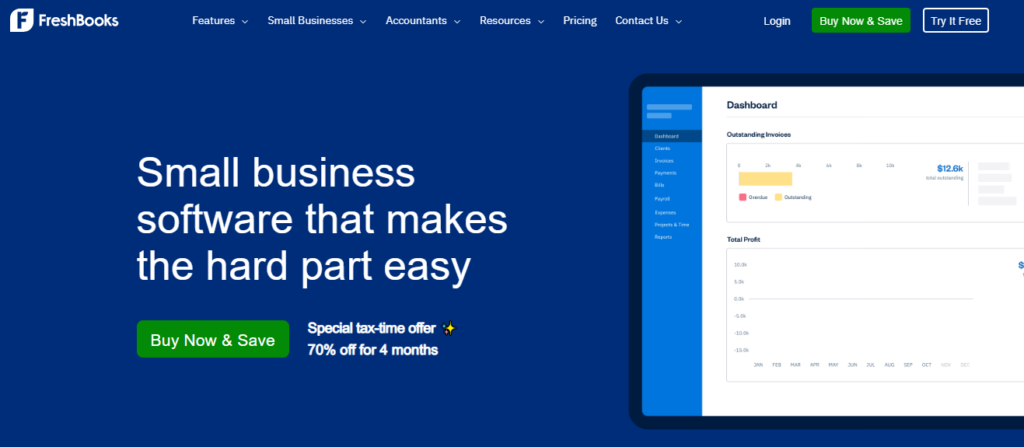
FreshBooks started as an invoicing tool, and that strength still defines it today. It has evolved into a full accounting platform while staying simple and intuitive for non-accountants. If you send proposals, track time, and want faster payments, FreshBooks stands out.
Its client-facing design is a major advantage. Invoices, proposals, and payment links feel polished and professional. Time tracking connects directly to billing, making it ideal for consultants and agencies.
FreshBooks also offers strong customer support with real human assistance available. If you want the best accounting software for a small business without complexity, FreshBooks is a top choice.
Key Features
- Custom-branded invoicing with reminders
- Built-in time tracking
- Expense tracking with receipt capture
- Profit and loss reports
- Retainer billing
- Double-entry accounting
Pros
- Extremely user-friendly
- Great mobile app
- Excellent support
- Strong project tracking
- Professional invoices
Cons
- Not ideal for inventory-heavy businesses
- Higher per-client cost
- Limited bank integrations
- No native payroll
- Limited reporting depth
Best For: Freelancers, consultants, and service-based teams.
3. Xero
Xero is the top alternative to QuickBooks Online for a reason. Built from the ground up as a cloud-first platform, Xero focuses heavily on clean data, strong integrations, and accountant collaboration. It is exceptionally popular in Australia, the UK, and among tech-forward businesses in the US.
One of Xero’s strongest selling points is its unlimited user policy. Unlike QuickBooks, which charges per user, Xero includes unlimited users on all plans. That makes it a considerably better deal for teams, multi-partner businesses, or businesses that want their accountant, bookkeeper, and CFO all in the same platform without extra fees.
Xero also has one of the cleanest user interfaces in its category. Everything is logically placed, and the navigation feels modern rather than cluttered. The software works particularly well for businesses looking for the best business accounting software with deep third-party integrations. Its App Marketplace currently lists over 1,000 connected tools.
Key Features
- Unlimited users on all plans no per-seat pricing
- Bank feeds with automated reconciliation and matching rules
- Comprehensive invoicing with payment links and reminders
- Inventory tracking built into standard plans
- Payroll integration with Gusto for US-based businesses
- Extensive App Marketplace with 1,000+ integrations
Pros
- Unlimited users make it extremely cost-effective for growing teams
- Modern, clean interface with a minimal learning curve
- Excellent accountant portal for managing multiple clients
- Strong inventory tracking without needing add-ons
- Reliable and consistent cloud performance
Cons
- Customer support is primarily email and chat no dedicated phone line in the US
- Payroll requires a paid third-party integration Gusto
- Reporting is less customizable than QuickBooks at higher tiers
- Slightly slower to load dashboard compared to competitors
- Some US-specific tax features are not as robust
Best For: Collaborative teams, accountants managing multiple business clients, and international businesses wanting a scalable cloud accounting platform.
4. Wave Accounting
Wave is one of the most compelling free accounting tools available today. While most software companies treat their free tier as a feature-stripped teaser, Wave genuinely delivers a complete double-entry accounting system at no cost. Income tracking, expense management, invoicing, and financial reporting are all available without paying a dime.
The platform is well-suited to startups, side hustlers, and businesses in their earliest stages that need real accounting functionality without budget pressure. The trade-off is that Wave monetizes through payment processing fees and optional paid payroll, which is a perfectly reasonable exchange for small operations.
Wave is often cited as one of the go-to options when exploring the best free accounting software, and that reputation is well-earned. It is not the most feature-rich tool in this list, but for zero cost, it is remarkably capable. If you eventually outgrow it, the export options make migrating to QuickBooks or Xero straightforward.
Key Features
- Completely free double-entry accounting no credit card required
- Unlimited income and expense tracking with bank connections
- Professional invoicing with payment links card fees apply
- Receipt scanning via mobile app
- Basic financial reporting including P&L and balance sheet
- Multi-currency support for freelancers with international clients
Pros
- 100% free for core accounting features no hidden costs
- Easy to set up even with zero accounting knowledge
- Handles multiple businesses under one account
- Professional invoices and receipts with no branding restrictions
- Good enough for tax season with proper data entry habits
Cons
- No inventory management
- Payroll is a paid add-on with limited state availability
- Customer support is limited and primarily help article-based
- Not built for businesses with complex workflows
- Fewer integrations compared to paid competitors
Best For: Freelancers, sole proprietors, micro-businesses, and early-stage startups that need solid accounting without any software costs.
5. Zoho Books
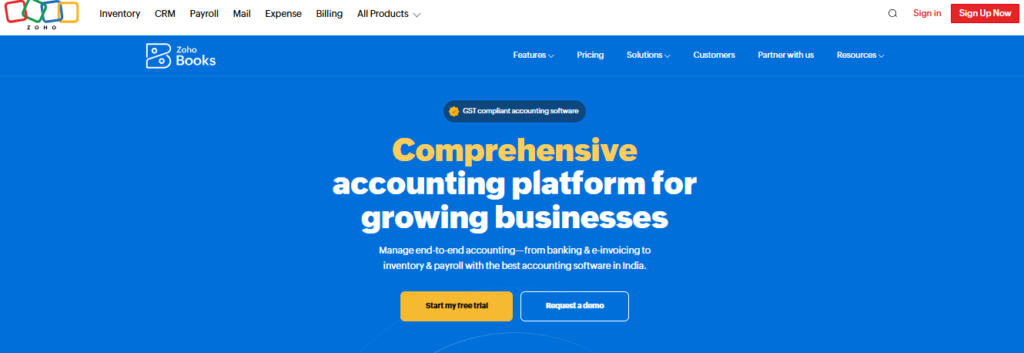
Zoho Books is a powerhouse accounting platform that consistently gets underrated in mainstream comparisons. It offers one of the most complete feature sets at its price point, with a deep integration into the broader Zoho suite including Zoho CRM, Zoho Inventory, Zoho Projects, and over 40 other Zoho apps.
For businesses already using Zoho products, switching to Zoho Books is a no-brainer. The cross-platform data flow is seamless, eliminating the need for manual data re-entry or clunky third-party connectors. Even for businesses new to Zoho, the standalone accounting value is strong. Automated workflows, solid invoicing, time tracking, and GST or VAT compliance make it a globally versatile tool.
Zoho Books also has a free plan for businesses with under $50K in annual revenue, making it a competitive option when exploring the best free accounting software for very early-stage ventures. Its pricing tiers are among the most transparent in the industry, and you get a lot for what you pay. Teams looking for best account based marketing software integration should also note that Zoho CRM connects natively with Zoho Books for seamless revenue attribution.
Key Features
- Full double-entry accounting with automated bank feeds
- Automated payment reminders and recurring billing
- Multi-currency invoicing with real-time exchange rates
- Deep integration with Zoho CRM, Zoho Inventory, and Zoho Projects
- Client portal for viewing invoices and making payments online
- GST, VAT, and multi-tax compliance for international businesses
Pros
- Exceptional value feature-rich at a lower price than competitors
- Best-in-class integration with the Zoho app ecosystem
- Highly customizable invoice templates and workflows
- Strong customer support with live chat and phone
- Multi-currency and multi-tax support out of the box
Cons
- Less accountant adoption in the US compared to QuickBooks
- UI can feel dense for new users unfamiliar with Zoho
- Payroll is not available natively in all regions
- Some advanced reports require manual customization
- Best value realized when using other Zoho products
Best For: Businesses already using Zoho CRM or other Zoho products, international businesses needing multi-currency and multi-tax support, and cost-conscious SMBs.
6. Sage 50 Accounting
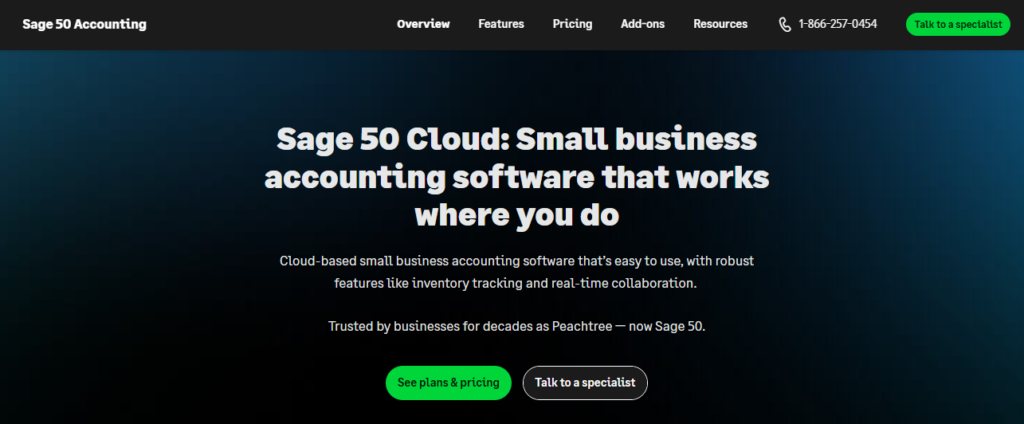
Sage 50 is a veteran in the accounting software industry and remains the preferred choice for established businesses that need desktop-grade control with optional cloud connectivity. Unlike the fully cloud-based tools on this list, Sage 50 installs locally on your computer, giving you fast performance, offline access, and a level of data ownership that cloud-only tools simply cannot offer.
For businesses with complex job costing, industry-specific reporting needs, or strong preferences for on-premise data security, Sage 50 remains a compelling option in 2026. It has particularly strong traction in construction, manufacturing, and distribution, where job-level cost tracking and inventory management are non-negotiable.
This is the kind of tool built for businesses that have been operating for years and need powerful, stable, accountant-friendly software. While it is not the best fit for startups or freelancers, it earns its spot as a top-tier pick for the best accounting software in the traditional business segment.
Key Features
- Desktop-based with optional Microsoft 365 cloud sync
- Job costing and project tracking with profitability reporting
- Advanced inventory management with multiple costing methods
- Industry-specific modules for construction and manufacturing
- Audit trail and multi-user access controls for compliance
- Direct integration with Sage HR and payroll
Pros
- Robust offline functionality works without internet
- Deep job costing and inventory features
- Strong compliance and audit trail tools
- Ideal for businesses with complex financial reporting needs
- Long-standing reputation with accounting professionals
Cons
- Significantly more expensive than cloud competitors
- Steep learning curve not beginner-friendly
- Desktop-first design feels dated compared to modern UIs
- Mobile access is limited
- Customer support can be slow for complex issues
Best For: Established small-to-mid-market businesses in construction, manufacturing, or distribution that need desktop-grade reliability and complex job costing.
7. Oracle NetSuite
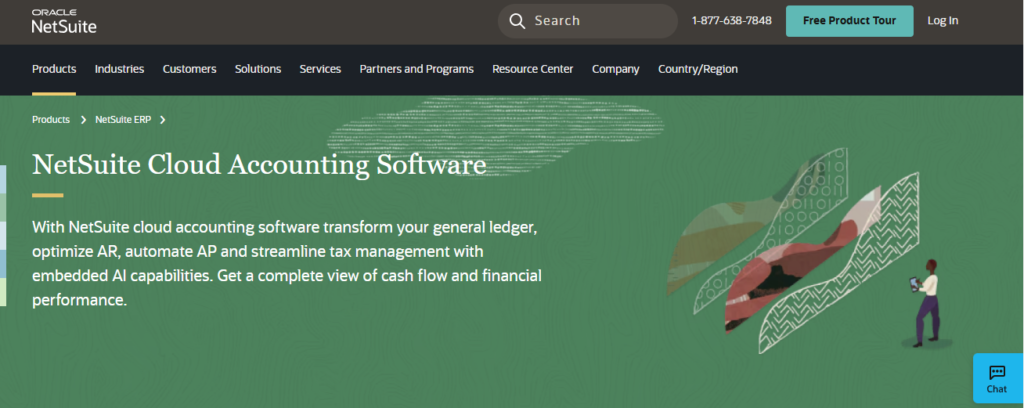
Oracle NetSuite is the enterprise-grade accounting and ERP platform that growing businesses eventually graduate to. It is not a tool you pick for its simplicity. It is a tool you choose when your business has outgrown everything else. NetSuite handles complex multi-entity consolidations, global currencies, advanced revenue recognition, and deep operational reporting that mid-market tools simply cannot replicate.
NetSuite is particularly well-suited for businesses that are scaling rapidly, have international operations, or are preparing for acquisition or IPO. Its real-time financial dashboards, automated close processes, and SOC 1 or SOC 2 compliance make it a go-to platform for finance teams that need more than traditional bookkeeping.
While it is priced and scoped for larger operations, it is worth knowing about even for businesses that are not quite there yet. If you are exploring what the best business accounting software looks like at scale, NetSuite sets the benchmark that everyone else is measured against.
Key Features
- Multi-entity financial consolidation across subsidiaries
- Automated revenue recognition in compliance with ASC 606
- Real-time dashboards with role-based financial reporting
- Global tax compliance with over 190 currency support
- Fixed asset management with full depreciation scheduling
- CRM, inventory, and project management built into one platform
Pros
- Scales from 50 to 50,000+ employees without platform changes
- Best-in-class financial reporting and business intelligence
- Strong audit, compliance, and governance tools
- Single platform replacing multiple disconnected tools
- Deep customization for industry-specific workflows
Cons
- High implementation and licensing costs
- Requires dedicated IT or implementation partner
- Significant learning curve for finance teams
- Not suitable for very small businesses
- Customization can lead to maintenance complexity over time
Best For: Mid-market and enterprise businesses with complex financial structures, international operations, or those preparing for significant growth events.
8. FreeAgent
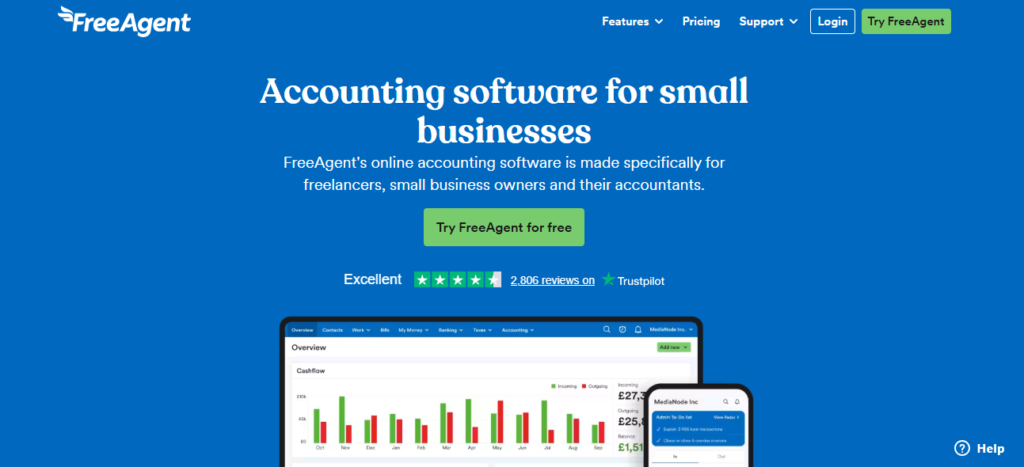
FreeAgent is a UK-based accounting platform specifically built around Making Tax Digital compliance and the needs of freelancers, contractors, and small agencies. While it has limited reach outside the UK and Ireland, it is arguably the most purpose-built tool for self-employed UK professionals in the market.
What makes FreeAgent special is how it thinks about tax. From the moment you log income, it is calculating your Self Assessment or corporation tax liability in real time. There is no end-of-year scramble. Your tax obligations are always visible on the dashboard. That peace of mind alone is worth the subscription for many users.
FreeAgent is available for free to NatWest and RBS business banking customers, which dramatically increases its accessibility in the UK market. For those outside its native region, this remains a specialized pick, but for UK-based businesses it competes strongly with any tool on this list.
Key Features
- Real-time Self Assessment and corporation tax estimates
- Full Making Tax Digital compliance for VAT returns
- Smart invoicing with client payment tracking
- Expense management with receipt capture and mileage logging
- Project management with time tracking and profitability overview
- Bank connections with automatic transaction import
Pros
- Best-in-class tax visibility for UK users
- MTD compliance built in from day one
- Clean and genuinely enjoyable interface to work with
- Free for NatWest and RBS business banking customers
- Excellent for contractor and freelance financial workflows
Cons
- Primarily designed for UK and Ireland limited global relevance
- Limited scalability for businesses with 20+ employees
- Payroll features are less comprehensive than standalone payroll tools
- Fewer third-party integrations than global competitors
- Inventory management is not a strength
Best For: UK-based freelancers, contractors, and small agencies who need compliant accounting with real-time tax clarity.
9. Bench
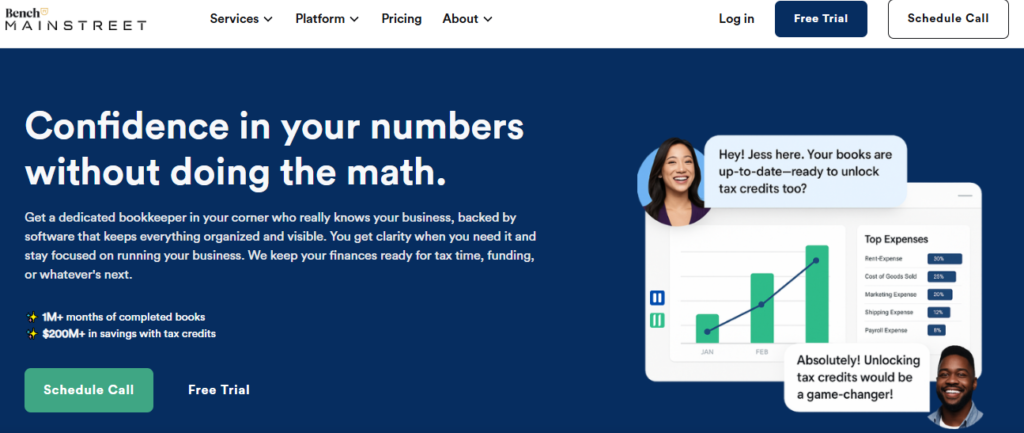
Bench takes a completely different approach to accounting software. Rather than asking you to do your own bookkeeping, Bench pairs you with a dedicated team of human bookkeepers who handle everything. You get a clean, visual dashboard to review your financials, and Bench handles the data entry, reconciliation, and monthly close for you.
This makes Bench uniquely appealing for business owners who know they will not keep up with bookkeeping on their own. If your books are months or years behind, Bench also offers a catch-up bookkeeping service that can bring your financials current. This is a feature no other tool in this list provides at that scale.
Bench is notably well-suited for businesses in the legal industry as well, given its precision around expense categorization and compliance. Those exploring the best legal accounting software will appreciate Bench’s attention to accuracy and its dedicated support model that goes well beyond a typical SaaS platform.
Key Features
- Dedicated team of human bookkeepers handling monthly books
- Visual dashboard showing income, expenses, and financial trends
- Year-end financial package ready for tax preparation
- Catch-up bookkeeping service for overdue accounts
- BenchTax add-on for complete tax filing support
- Messaging platform to communicate directly with your bookkeeping team
Pros
- Eliminates the need to do your own bookkeeping entirely
- Extremely accurate books maintained by trained professionals
- Ideal for business owners who are not financially inclined
- Great for catching up on delinquent or messy financials
- Peace of mind that comes from human review and oversight
Cons
- More expensive than self-service accounting tools
- Not a DIY platform you cannot edit entries yourself easily
- Limited real-time financial updates between monthly closes
- No inventory management
- If you cancel, migrating your data requires additional steps
Best For: Business owners who want professional-quality books without doing bookkeeping themselves, and anyone with overdue financial records that need expert attention.
10. Patriot Accounting
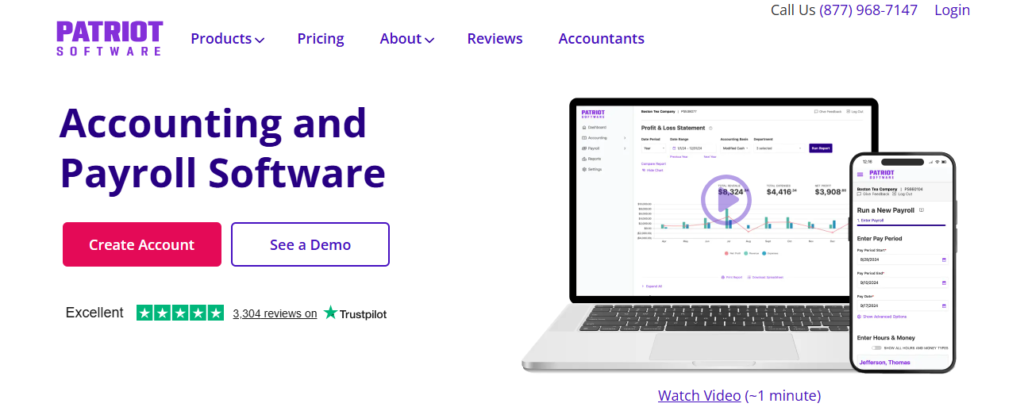
Patriot Software has quietly built one of the best value propositions in the US small business accounting market. Starting at just $20 per month for basic accounting, it delivers core functionality. Invoicing, bank reconciliation, expense tracking, and reporting are included at a price point that is hard to argue with.
Patriot is particularly well-loved by small business owners who want straightforward accounting without the learning curve of QuickBooks or the price tag of Xero.
The interface is clean, the support team is responsive, and the setup process is simple enough to complete in an afternoon.
For businesses focused on finding the best accounting software for a small business without overpaying for features they will never use, Patriot deserves serious consideration as a practical and cost-efficient choice.
Key Features
- Basic and Full Service Accounting plans starting at $20 per month
- Cash-basis and accrual accounting support
- Unlimited invoicing with payment links
- Bank connections with automatic transaction import
- Financial reporting including P&L, balance sheet, and trial balance
- Seamless integration with Patriot Payroll
Pros
- Among the most affordable accounting tools in the market
- Responsive customer support
- Extremely simple setup
- Clean interface
- Payroll integration available
Cons
- Fewer third-party integrations
- Reporting lacks depth
- Not designed for complex operations
- Minimal inventory features
- Limited mobile app functionality
Best For: Budget-conscious small businesses and sole proprietors.
11. Aplos
Aplos is built from the ground up for nonprofit organizations, and that specificity is exactly what makes it valuable. Most general accounting tools force nonprofits to work around features designed for for-profit businesses. Aplos removes that friction with fund accounting, donation tracking, and donor management built directly into the core product.
Nonprofit financial reporting such as Form 990 preparation, fund accounting statements, and budget tracking is handled natively without workarounds. It also includes a built-in donor management CRM, making it a strong all-in-one solution.
Key Features
- Fund accounting designed for nonprofits
- Donation tracking with donor database
- Built-in CRM
- Financial reporting tools
- Budget tracking
- Recurring donation management
Pros
- Purpose-built for nonprofits
- Easy fund tracking
- CRM included
- Affordable
- Compliance-ready
Cons
- Not suitable for for-profit businesses
- Payroll requires integration
- Basic mobile app
- Limited inventory
- Some reporting customization needed
Best For: Nonprofits, churches, and associations.
12. Buildium
Buildium is a property management platform with integrated accounting features. It is designed specifically for real estate workflows including rent collection, expense tracking, and owner reporting.
For real estate professionals searching for the best real estate accounting software, Buildium eliminates the need for separate tools by combining everything in one place.
Key Features
- Property-level accounting
- Rent collection automation
- Trust accounting
- Owner reporting
- Maintenance tracking
- Tax reporting
Pros
- Designed for real estate
- All-in-one platform
- Automation features
- Scalable
- Strong reporting
Cons
- Not useful outside real estate
- Higher cost
- Learning curve
- Support varies
- Custom reports required
Best For: Property managers and real estate investors.
Comparison Table: Best Accounting Software in 2026
| Tool | Best For | Key Strength | Integrations | Ease of Use | Platform Type |
|---|---|---|---|---|---|
| QuickBooks Online | SMBs | Feature depth | 750+ | Moderate | Cloud |
| FreshBooks | Freelancers | Invoicing | 100+ | Easy | Cloud |
| Xero | Teams | Unlimited users | 1000+ | Easy | Cloud |
| Wave | Startups | Free | Limited | Easy | Cloud |
| Zoho Books | SMBs | Value | 40+ | Moderate | Cloud |
| Sage 50 | Established | Desktop power | 50+ | Difficult | Hybrid |
| NetSuite | Enterprise | ERP power | 500+ | Difficult | Cloud |
| FreeAgent | UK users | Tax focus | 100+ | Easy | Cloud |
| Bench | Hands-off | Human bookkeeping | Limited | Easy | Hybrid |
| Patriot | Budget SMBs | Affordability | Limited | Easy | Cloud |
| Aplos | Nonprofits | Fund accounting | 30+ | Easy | Cloud |
| Buildium | Real estate | Property accounting | 50+ | Moderate | Cloud |
Final Verdict
There is no single winner. The best accounting software depends entirely on your business type, size, and priorities. QuickBooks Online wins for versatility and accountant compatibility. FreshBooks is the friendliest tool for freelancers. Xero leads on collaboration and integrations. Wave is unbeatable at the free tier. Specialized tools fill specific needs better than general tools.
To explore more in-depth comparisons like this, visit TheListify, where we regularly publish expert-curated lists of the best tools and software for businesses across various industries. Whether you’re searching for Best CRM Tools, Best Project Management Software, marketing tools, or productivity solutions, our detailed guides help you make informed decisions faster.
Frequently Asked Questions
What is the best accounting software in 2026?
The best accounting software in 2026 depends on your needs. QuickBooks Online is the most versatile, Xero is great for teams, and FreshBooks is ideal for freelancers and service-based businesses.
Can I switch accounting software later?
Yes, most accounting software allows data export and migration. Tools like QuickBooks and Xero offer import features to make switching easier, though some manual adjustments may be required.
How do I choose the best accounting software for my business?
Choose based on your business type, budget, required features, and whether you need integrations or accountant support. Start with a free trial to test usability before committing.
Which accounting software is best for large businesses?
Oracle NetSuite is one of the best accounting software solutions for large and enterprise businesses. It offers advanced reporting, automation, and multi-entity support.
Which accounting software is best for small businesses?
The best accounting software for a small business includes QuickBooks Online, Zoho Books, and Xero. These tools offer strong features, scalability, and ease of use for growing businesses.