
Hiring the right people is one of the most critical challenges any business faces in 2026. Yet most HR teams are still juggling spreadsheets, email threads, and disconnected tools that slow down decisions and push great candidates toward faster-moving competitors. If you are wondering what is the best recruiting software for your organization, you are not alone. The market is crowded, and choosing wrong costs time and money.
The best recruiting software does more than track applications. Today’s top platforms offer AI-powered sourcing, automated screening, collaborative hiring workflows, and deep analytics that help you make smarter decisions at every stage. Based on industry research and a deep-dive analysis of the top platforms, this guide breaks down the 9 best recruiter software options across every business size and use case. No fluff, no filler. Just the tools that actually deliver.
Note: According to industry research from SHRM, the average cost-per-hire in the US is over $4,700, and the average time-to-fill an open role is 42 days. The right recruiting platform can cut both numbers significantly. (Source: SHRM Benchmarking Report)
Top 9 Best Recruiting Software Platforms in 2026
1. Greenhouse – Best Recruiting Software for Structured, Enterprise-Grade Hiring
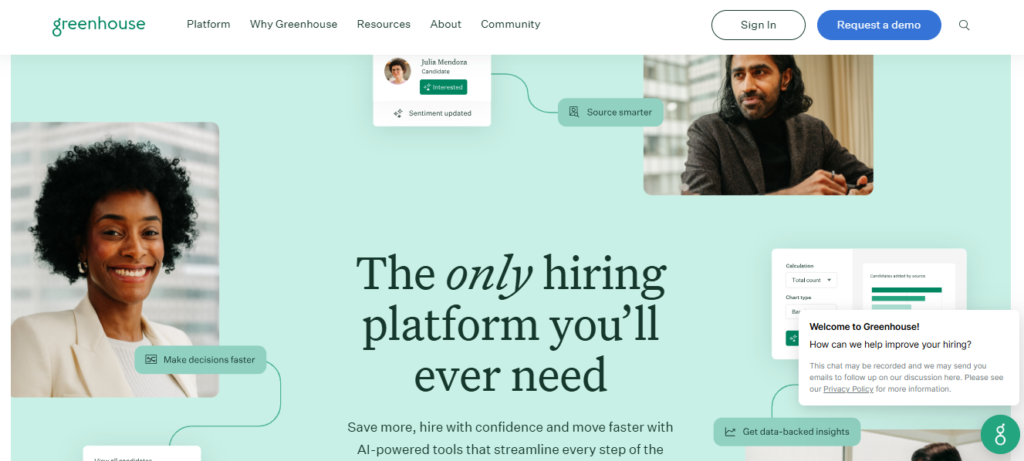
Greenhouse is widely regarded as one of the best recruitment software platforms available for mid-market and enterprise organizations that take structured hiring seriously. Founded in 2012, it has grown into a full-featured talent acquisition suite used by companies like DoorDash, Hubspot, and Wayfair. If your team struggles with inconsistent interview processes or poor candidate experience, Greenhouse was essentially designed to fix that.
What separates Greenhouse from the pack is its opinionated approach to hiring. The platform guides teams through scorecard-based evaluations, structured interview kits, and role-specific hiring plans that dramatically reduce bias and improve decision quality. It is not just an applicant tracking system. It is a full operating system for talent acquisition.
Greenhouse works best for scaling companies that need repeatability in hiring. Think Series B startups through Fortune 500 businesses that want to move from gut-feel hiring to data-driven talent decisions. If your team has multiple stakeholders involved in each hire, Greenhouse handles that complexity better than almost anything else on the market.
Key Features
- ✅ Structured interview kits and scorecards that reduce interviewer bias
- ✅ Multi-stage approval workflows with role-based permissions for hiring teams
- ✅ Native DEI reporting and inclusive hiring tools built into the platform
- ✅ 1,000+ integrations including LinkedIn, Slack, Workday, and Google Workspace
- ✅ CRM-style candidate relationship management for proactive sourcing
- ✅ Advanced analytics dashboards tracking source efficiency, time-to-hire, and pipeline health
Pros
- ✅ Best-in-class structured hiring methodology out of the box
- ✅ Extremely deep integration library with HRIS, payroll, and productivity tools
- ✅ Strong DEI and compliance features for regulated industries
- ✅ Highly customizable workflows that scale with organizational complexity
- ✅ Responsive enterprise customer support and dedicated onboarding
Cons
- ❌ Pricing is not transparent and can be expensive for smaller organizations
- ❌ Steeper learning curve for non-technical HR teams
- ❌ Reporting customization requires premium plan upgrades
- ❌ Lacks built-in payroll or full HRIS functionality
Best For: Mid-size to enterprise companies (100+ employees) that need structured, repeatable, and bias-reduced hiring at scale.
2. Workable – Best AI Recruiting Software for SMBs and Fast-Growing Teams
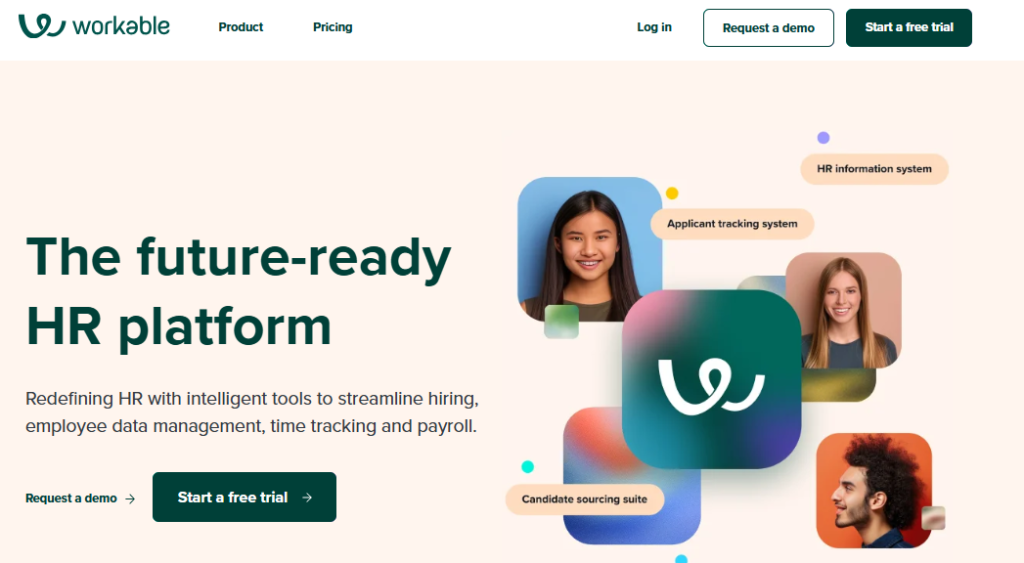
Workable has earned its place as one of the best AI recruiting software options for businesses that need a capable, all-in-one platform without enterprise-level complexity. It combines applicant tracking, sourcing, video interviews, and onboarding into a single clean interface. For teams scaling from 10 to 500 employees, it hits a sweet spot that few competitors match.
The platform’s AI-powered sourcing engine is a genuine differentiator. Workable’s AI scans a database of over 400 million candidate profiles and surfaces passive candidates who match open roles, reducing time spent on LinkedIn and job boards. It also includes an AI assistant that helps draft job descriptions, screen candidates, and suggest interview questions, making it genuinely useful for lean HR teams.
Workable is particularly strong for US-based SMBs that want best recruiter software capabilities without the enterprise price tag or a six-month implementation timeline. Setup takes hours, not weeks, and pricing is transparent, which is refreshing in this market.
Key Features
- ✅ AI sourcing engine with access to 400M+ passive candidate profiles
- ✅ One-click job posting to 200+ job boards simultaneously
- ✅ Built-in video interviewing and async interview tools
- ✅ Automated candidate ranking and screening based on job requirements
- ✅ Mobile-friendly candidate and hiring manager experience
- ✅ Onboarding workflows that carry new hires from offer to day one
Pros
- ✅ Transparent, predictable pricing starting at an accessible tier
- ✅ AI features are practical and integrated throughout the workflow
- ✅ Fast setup with minimal IT involvement required
- ✅ Strong mobile experience for on-the-go hiring managers
- ✅ Excellent job board distribution breadth
Cons
- ❌ Advanced analytics require higher plan tiers
- ❌ CRM and talent pipeline features less robust than dedicated enterprise tools
- ❌ Customization depth is limited compared to Greenhouse or Lever
- ❌ Reporting dashboards can feel basic for data-heavy TA teams
Best For: Growing SMBs and mid-market companies (10-500 employees) that want AI-assisted recruiting with quick setup and transparent pricing.
3. Lever – Best Recruiting Software Combining ATS and CRM in One Platform
Lever, now part of the Employ family alongside JazzHR and Jobvite, occupies a unique position in the market as a platform that genuinely merges applicant tracking with candidate relationship management. Most recruiting tools make you choose between ATS functionality and CRM depth. Lever refuses to make that tradeoff, and the result is one of the best recruitment software options for teams that want to build long-term talent pipelines alongside immediate hiring workflows.
The platform’s visual pipeline is one of its most praised features. Hiring teams can see exactly where every candidate sits across every stage, add notes and tasks in real time, and nurture passive candidates through email sequences without leaving the platform. This makes Lever particularly valuable for companies that hire across multiple roles simultaneously and need collaborative visibility.
Lever is best suited for mid-market tech companies, professional services firms, and any organization that wants to shift from reactive to proactive recruiting. It is also worth noting that Lever’s diversity analytics are genuinely useful, not just a checkbox feature.
Key Features
- ✅ Unified ATS and CRM in one platform with shared candidate records
- ✅ Visual hiring pipeline with drag-and-drop stage management
- ✅ Automated nurture campaigns for passive candidate engagement
- ✅ Two-way email sync and calendar integration for seamless communication
- ✅ Diversity and inclusion analytics with stage-by-stage funnel reporting
- ✅ Robust API and 300+ native integrations with HR and productivity tools
Pros
- ✅ Best-in-class combination of ATS and CRM features
- ✅ Visual pipeline makes cross-functional collaboration easy
- ✅ Strong candidate nurture capabilities for proactive sourcing
- ✅ Excellent diversity data and reporting built into core features
- ✅ Solid integration ecosystem with modern HR tech stacks
Cons
- ❌ Pricing tiers can become costly for larger teams
- ❌ Some advanced automation features require premium plans
- ❌ Onboarding features are limited compared to full HRIS platforms
- ❌ UI can feel busy when managing large candidate volumes
Best For: Mid-market tech companies and talent teams (50-1,000 employees) that want proactive pipeline building alongside reactive hiring.
4. BambooHR – Best HR Recruiting Software Inside a Complete HRIS Suite
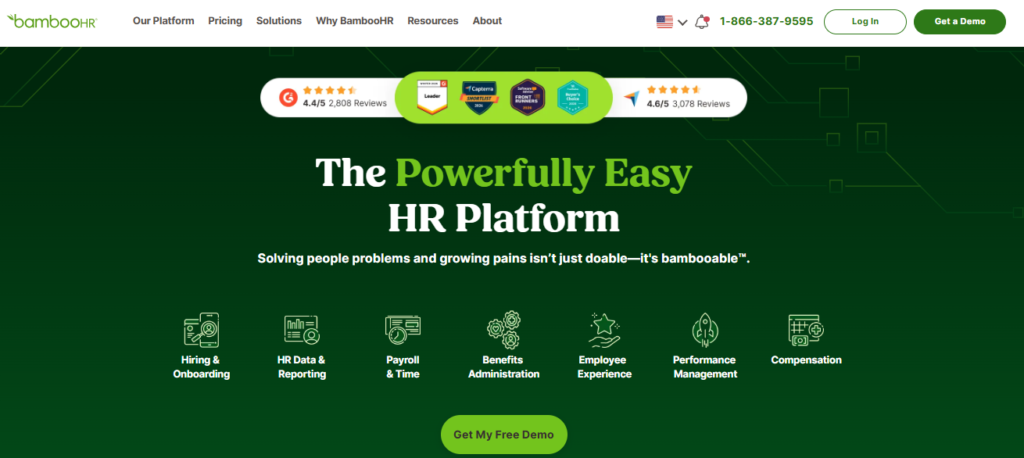
BambooHR is the go-to choice for organizations that want their best HR recruiting software integrated directly into their broader people management platform. Rather than being a standalone recruiting tool bolted onto an HRIS, BambooHR built recruiting as a native module within a system that also handles onboarding, performance management, time tracking, and payroll. The result is a seamless handoff from candidate to new hire without any data re-entry.
The recruiting module inside BambooHR covers the full hiring lifecycle: job posting, applicant tracking, candidate communication, offer letters, and e-signatures. It is not the most feature-rich standalone ATS, but that is not the point. For HR generalists managing hiring alongside a dozen other responsibilities, BambooHR’s simplicity is a feature, not a limitation.
BambooHR is the ideal choice for small to mid-size businesses that want a single HR platform rather than a patchwork of disconnected tools. If you are already using BambooHR for HR operations, the recruiting module is a no-brainer upgrade.
Key Features
- ✅ Native recruiting module integrated with full HRIS, payroll, and onboarding
- ✅ Customizable hiring pipelines with candidate tracking and status updates
- ✅ Automated offer letter generation with e-signature workflows
- ✅ Employee self-service portal with seamless new hire onboarding
- ✅ Pre-built and custom report builder covering HR and recruiting metrics
- ✅ Mobile app for both hiring managers and candidates
Pros
- ✅ All-in-one HR platform eliminates tool sprawl for growing companies
- ✅ Exceptionally clean and intuitive user interface
- ✅ Seamless data flow from recruiting to onboarding to payroll
- ✅ Strong customer support and implementation assistance
- ✅ Excellent performance management and engagement features alongside recruiting
Cons
- ❌ ATS features are less advanced than dedicated recruiting platforms
- ❌ Limited AI or automation capabilities compared to modern ATS tools
- ❌ Job board posting breadth is narrower than Workable or Greenhouse
- ❌ Not ideal as a standalone recruiting tool if HRIS is not needed
Best For: Small to mid-size companies (20-500 employees) that want recruiting built into their full HR system rather than a separate tool.
5. SmartRecruiters – Best Recruiting Software for High-Volume Enterprise Hiring
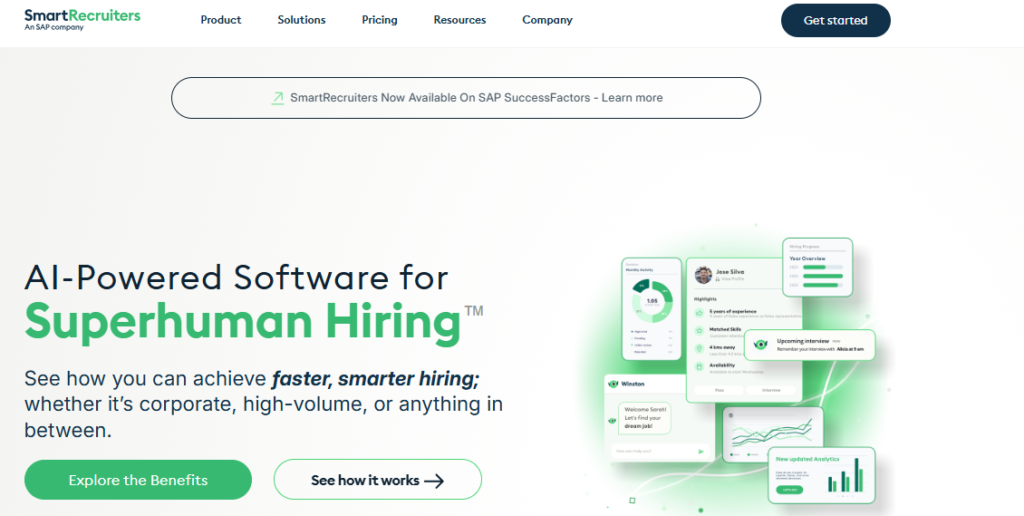
SmartRecruiters positions itself as a Talent Acquisition Suite, and for enterprise teams managing hundreds of open requisitions simultaneously, it lives up to that billing. The platform combines an enterprise-grade ATS, built-in CRM, job marketing capabilities, and a marketplace of recruitment apps into one unified system. Companies like Visa, McDonald’s, and LinkedIn use it at scale, which tells you something about its reliability under pressure.
One of SmartRecruiters’ most distinctive capabilities is its SmartDistribute feature, which automatically pushes job postings to the highest-performing job boards based on historical conversion data. This kind of intelligent job marketing reduces cost-per-applicant and improves candidate quality without manual effort. Pair that with its AI screening and interview scheduling features, and you have a platform that genuinely automates the heavy lifting of high-volume hiring.
SmartRecruiters is also one of the few platforms with a meaningful free tier for small teams, making it accessible even before you commit to enterprise contracts. That free entry point, combined with enterprise scalability, makes it a compelling choice across business sizes.
Key Features
- ✅ SmartDistribute for data-driven automatic job board optimization
- ✅ AI-powered candidate screening and matching across open roles
- ✅ Native CRM with talent pool management for proactive sourcing
- ✅ Compliance tools including GDPR, OFCCP, and EEO reporting modules
- ✅ App marketplace with 350+ vetted recruitment technology integrations
- ✅ Collaborative hiring with configurable interview workflows and scorecards
Pros
- ✅ Proven at massive enterprise scale across global organizations
- ✅ Free tier available for startups and small teams
- ✅ Intelligent job marketing reduces cost-per-applicant automatically
- ✅ Strong compliance and regulatory reporting for large companies
- ✅ Excellent mobile experience for both recruiters and candidates
Cons
- ❌ Enterprise features require significant budget investment
- ❌ Implementation complexity is high for very large deployments
- ❌ Customer support quality varies across plan tiers
- ❌ Reporting flexibility can feel limited without custom configuration
Best For: Enterprise organizations and high-volume hiring teams (500+ employees) that need intelligent job marketing, compliance, and scalable ATS in one suite.
6. Manatal – Best AI Recruiting Software USA for Agencies and In-House Teams
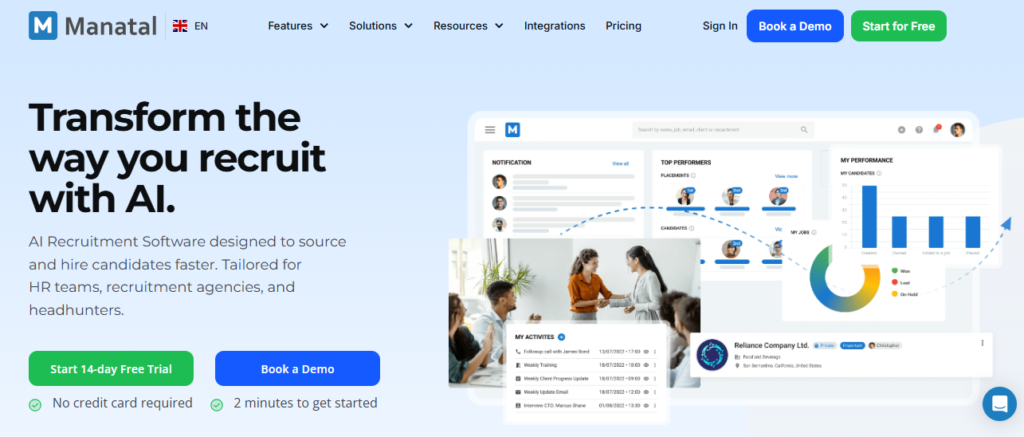
Manatal has quickly emerged as one of the best AI recruiting software options for organizations that want genuine machine learning features without enterprise price tags. The platform uses AI to score and rank candidates against job requirements, pull enriched candidate profiles from LinkedIn and social media automatically, and recommend candidates from your existing database for new roles. For recruiters who spend hours manually screening resumes, Manatal is a genuine time-saver.
Built with both staffing agencies and in-house recruiting teams in mind, Manatal offers two distinct experiences in one platform. Agency users get a pipeline management view with client portals and multi-company management. In-house teams get a traditional ATS workflow with AI layered throughout. It is one of the few platforms that genuinely serves both audiences well.
Manatal’s pricing is notably accessible, starting at under $20 per user per month, making it the best recruiter software for cost-conscious organizations that still want AI capabilities. It is particularly popular among teams in Southeast Asia, the Middle East, and increasingly in the USA.
Key Features
- ✅ AI candidate scoring and ranking against job descriptions automatically
- ✅ Social media enrichment pulling profile data from LinkedIn and beyond
- ✅ Built-in career page builder with custom branding
- ✅ Client portal for staffing agencies with multi-organization management
- ✅ Kanban-style visual pipeline with drag-and-drop candidate management
- ✅ GDPR and EEO compliance tools with data retention controls
Pros
- ✅ Best price-to-AI-feature ratio in the recruiting software market
- ✅ Dual-mode design serves both agencies and in-house teams
- ✅ Clean, modern interface with minimal learning curve
- ✅ Social media enrichment reduces manual candidate research significantly
- ✅ 14-day free trial with full feature access, no credit card required
Cons
- ❌ Integration library is smaller than Greenhouse or SmartRecruiters
- ❌ Advanced reporting requires higher plan tiers
- ❌ Phone support not available on all plans
- ❌ Less suitable for very large enterprise hiring operations
Best For: Staffing agencies, in-house recruiting teams, and SMBs that want practical AI features at an accessible price point.
7. Zoho Recruit – Best Recruiting Software for Staffing Agencies and Remote Teams
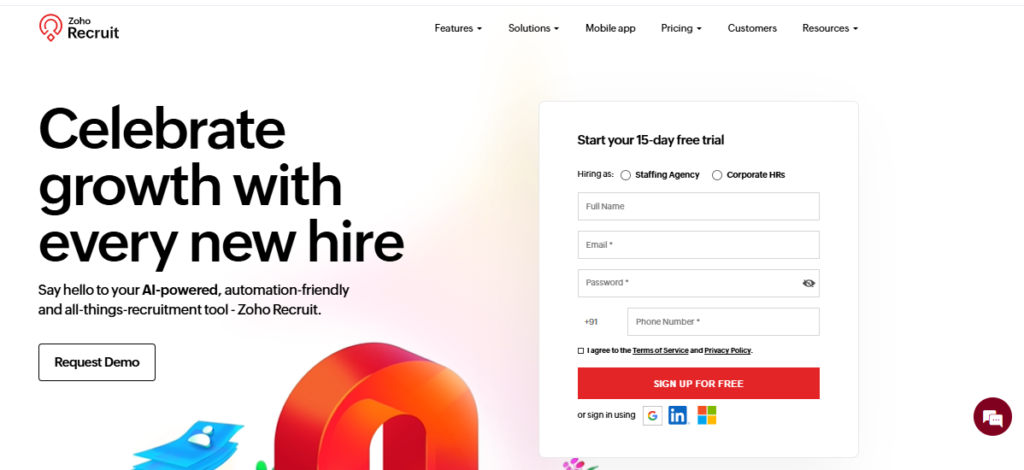
Zoho Recruit is the standout choice within the Zoho ecosystem for organizations that want a full-featured ATS tightly integrated with Zoho CRM, Zoho People, and the rest of the Zoho suite. If your business already runs on Zoho, adding Recruit makes obvious sense. Even if it does not, Zoho Recruit holds its own as a capable standalone platform with strong staffing agency features.
The platform offers three distinct editions: a free version for small teams, a Standard edition for in-house HR departments, and an Enterprise edition designed specifically for staffing agencies with client management, job requisition workflows, and resume parsing at scale. That segmentation means you are not overpaying for features you do not need.
Zoho Recruit also includes a candidate self-scheduling feature that allows applicants to book their own interview slots, reducing back-and-forth coordination dramatically. For distributed and remote teams that coordinate interviews across time zones, this feature alone can justify the platform.
Key Features
- ✅ Free plan available for up to one active job and one user
- ✅ Staffing agency edition with client portals and contract management
- ✅ AI-powered resume parsing and automatic candidate profile creation
- ✅ Candidate self-scheduling with calendar sync across time zones
- ✅ Deep native integration across the full Zoho product ecosystem
- ✅ Custom automation workflows for sourcing, screening, and communication
Pros
- ✅ Free tier available making it accessible with zero upfront cost
- ✅ Best-in-class for teams already using Zoho CRM or Zoho People
- ✅ Staffing agency features are genuinely strong and well-designed
- ✅ Highly customizable workflows and fields for non-standard hiring processes
- ✅ Self-scheduling reduces coordinator workload significantly
Cons
- ❌ UI can feel dated compared to modern ATS platforms
- ❌ Free plan is quite limited for teams with multiple active roles
- ❌ Customer support response times can be slow on lower tiers
- ❌ Reporting and analytics less intuitive than dedicated analytics platforms
Best For: Staffing agencies, remote-first teams, and businesses already invested in the Zoho ecosystem that need a flexible, scalable recruiting platform.
8. iCIMS Talent Cloud – Best Enterprise Recruiting Software for Global Talent Operations
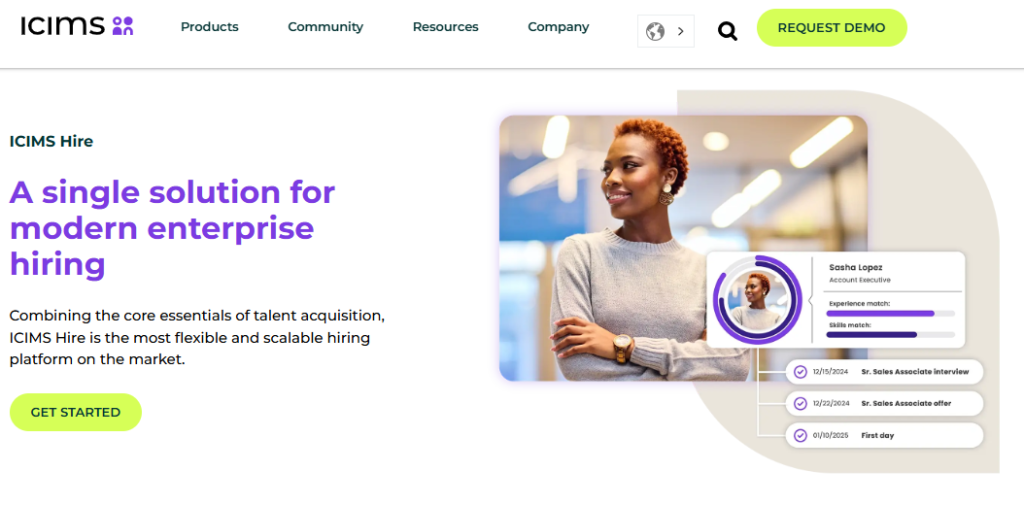
iCIMS Talent Cloud is one of the most comprehensive enterprise recruiting platforms available in 2026, built for organizations that operate complex, global hiring programs. The platform covers everything from employer branding and candidate engagement through application tracking, interview management, offer management, and onboarding. More than 4,000 companies worldwide rely on iCIMS, including a large portion of the Fortune 100.
What makes iCIMS stand out at the enterprise level is its modular architecture. Companies can start with core ATS functionality and progressively add modules like CRM, text recruiting, video interviewing, and AI matching as their needs evolve. This prevents the all-or-nothing upgrade cycles that frustrate teams using monolithic platforms.
iCIMS is also a leader in candidate experience. Its Candidate Relationship Management module allows recruiters to build and nurture talent communities over time, which is critical for organizations that need a continuous pipeline of qualified candidates for recurring roles. For large employers with high turnover roles or seasonal hiring spikes, this is invaluable.
Key Features
- ✅ Modular talent cloud architecture allowing phased adoption of capabilities
- ✅ AI-powered talent matching across ATS and CRM candidate databases
- ✅ Candidate Relationship Management with automated talent community nurturing
- ✅ Text recruiting and conversational AI for candidate communication
- ✅ Global compliance support covering 200+ countries and territories
- ✅ Advanced analytics and reporting with configurable executive dashboards
Pros
- ✅ Unmatched enterprise scale and global compliance capabilities
- ✅ Modular approach avoids paying for unused features upfront
- ✅ Strong candidate experience tools including career site builder
- ✅ Proven reliability and security at Fortune 100 scale
- ✅ Dedicated implementation and customer success support
Cons
- ❌ High cost puts it out of reach for small and mid-size organizations
- ❌ Complex implementation timeline (often 3-6 months for full deployment)
- ❌ UI has not kept pace with more modern competitors visually
- ❌ Customization requires significant technical resources
Best For: Large enterprises and global organizations (1,000+ employees) that need a modular, scalable, and compliance-ready talent acquisition platform.
9. JazzHR – Best Recruiting Software for Small Businesses and Startups
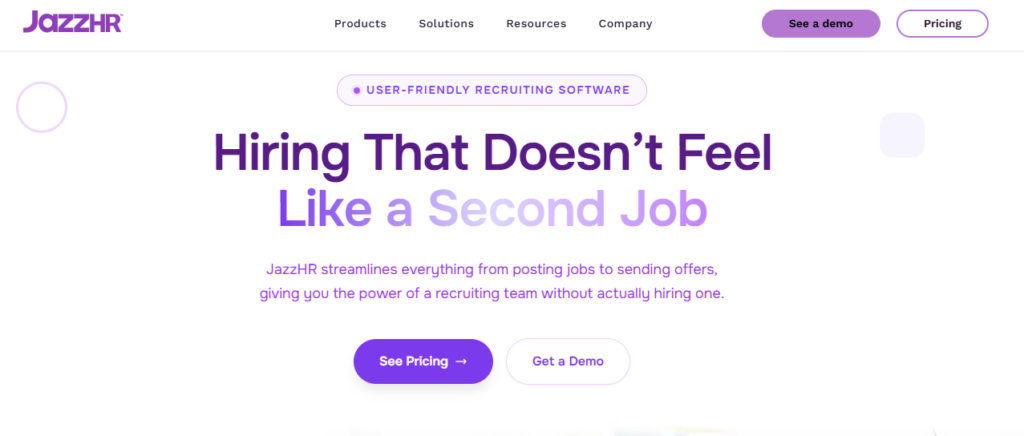
JazzHR is the best recruiting software for small businesses that need a capable, affordable ATS without the bloat of enterprise platforms. Priced accessibly and designed for teams of one to a few recruiters, JazzHR delivers the core functionality that small and growing businesses actually need: job posting, candidate tracking, interview scheduling, and reporting. Nothing more complicated than necessary, nothing left out.
One of JazzHR’s most useful features is its unlimited user model on certain plans, which means you can invite every hiring manager, department head, and executive into the platform without worrying about per-seat costs spiraling. This makes collaborative hiring transparent and manageable even for lean HR teams.
JazzHR now operates under the Employ umbrella alongside Lever and Jobvite, meaning it benefits from shared innovation and product investment. For startups and small businesses evaluating what is the best recruiting software without a large budget, JazzHR consistently sits at the top of that list.
Key Features
- ✅ Unlimited users on select plans, reducing per-seat cost concerns
- ✅ One-click posting to 20+ free and paid job boards
- ✅ Candidate evaluation tools with custom questionnaires and scoring
- ✅ Interview scheduling with automated calendar invites and reminders
- ✅ Offer letter templates with digital signature capabilities
- ✅ Reporting on source effectiveness, pipeline velocity, and team activity
Pros
- ✅ Most affordable entry-level pricing in the professional ATS category
- ✅ Unlimited users on higher plans removes per-seat cost anxiety
- ✅ Quick setup that does not require IT or technical resources
- ✅ Intuitive interface that hiring managers adopt without training
- ✅ Backed by Employ’s continued platform investment and innovation
Cons
- ❌ Limited AI and automation features compared to modern platforms
- ❌ Integrations are narrower than enterprise-grade competitors
- ❌ Reporting depth is adequate but not analytics-heavy
- ❌ May outgrow the platform as headcount crosses 200+ employees
Best For: Startups and small businesses (under 200 employees) that need a professional, affordable ATS without unnecessary complexity.
Comparison Table: Best Recruiting Software at a Glance
Use this table to quickly match each platform to your organization’s size, priorities, and budget.
| Tool | Best For | Key Strength | Integrations | Ease of Use | Platform Type |
| Greenhouse | Mid-Market / Enterprise | Structured hiring & DEI | 1,000+ | Moderate | ATS + Analytics |
| Workable | SMBs / Fast-Growth Teams | AI sourcing & job distribution | 200+ | Easy | ATS + AI Sourcing |
| Lever | Mid-Market Tech Teams | ATS + CRM in one platform | 300+ | Easy | ATS + CRM |
| BambooHR | SMBs (Full HR Suite) | All-in-one HRIS + Recruiting | 120+ | Very Easy | HRIS + ATS |
| SmartRecruiters | Enterprise / High Volume | Intelligent job marketing | 350+ | Moderate | TA Suite |
| Manatal | Agencies / SMBs | AI scoring at low cost | 80+ | Easy | ATS + AI + CRM |
| Zoho Recruit | Staffing Agencies | Zoho ecosystem integration | 500+ | Moderate | ATS + Agency CRM |
| iCIMS | Large Enterprises | Global compliance & scale | 700+ | Complex | Modular TA Cloud |
| JazzHR | Startups / Small Business | Affordable unlimited users | 50+ | Very Easy | ATS |
Final Verdict
If you are at an enterprise scale, Greenhouse or iCIMS will give you the structured, compliant, and scalable hiring infrastructure you need. For fast-growing SMBs, Workable’s AI features and transparent pricing make it the smartest default choice. Lever wins for teams that want ATS and CRM in one place without managing two tools. BambooHR is the clear call if you want recruiting inside a full HR suite. And if budget is a primary constraint, JazzHR and Manatal both deliver serious value at accessible price points.
Conclusion: Choosing the Best Recruiting Software for Your Business
The best recruiting software is not a one-size-fits-all answer. It depends on your team size, hiring volume, budget, and whether you need a standalone ATS or a platform that connects your entire HR stack. What we know for certain is that the cost of a slow, manual hiring process is far higher than any software subscription.
Start by identifying your biggest hiring bottleneck. Is it sourcing? Screening? Collaboration? Compliance? Let that pain point drive your software selection rather than chasing feature lists. Most platforms on this list offer free trials, so take at least two for a test drive before committing.
Whether you are a startup comparing the best recruiter software under a tight budget or an enterprise team evaluating the best AI recruiting software for USA operations at scale, this list gives you a clear, honest starting point. Pick the platform that solves your real problem, and your next great hire will follow.
To explore more in-depth comparisons like this, visit TheListify, where we regularly publish expert-curated lists of the best tools and software for businesses across various industries. Whether you’re searching for Best CRM Tools, Best Accounting Software, Best Project Management Software, marketing tools, or productivity solutions, our detailed guides help you make informed decisions faster.
Frequently Asked Questions
What is the best recruiting software in 2026?
The best recruiting software in 2026 depends on your needs. Greenhouse is ideal for enterprise hiring, Workable for SMBs, and Lever for ATS + CRM functionality.
What features should I look for in recruiting software?
Look for features like applicant tracking (ATS), AI-powered sourcing, automated screening, interview scheduling, analytics, and integrations with HR tools.
How does recruiting software improve hiring efficiency?
Recruiting software automates repetitive tasks, centralizes candidate data, and speeds up communication, reducing time-to-hire and improving candidate experience.
What is the difference between ATS and recruiting software?
An ATS (Applicant Tracking System) is a core part of recruiting software, while recruiting platforms often include additional features like CRM, AI sourcing, and analytics.
How long does it take to implement recruiting software?
Implementation can take a few hours for tools like Workable or JazzHR, while enterprise platforms like iCIMS may take several months.
Can recruiting software integrate with HR systems?
Yes, most recruiting tools integrate with HRIS, payroll, and productivity platforms like Slack, LinkedIn, and Google Workspace.