
Hiring the wrong person costs a small business an average of 30% of that employee’s annual salary, according to the Society for Human Resource Management (SHRM). Yet most small businesses are still running their entire recruitment process through a tangle of email threads, spreadsheets, and gut feelings.
That is a problem the right recruiting software can fix overnight. But the market is noisy: dozens of tools all claim to be the best recruiting software for small business, and most reviews list features without telling you which tool actually fits a 10-person startup versus a 100-person agency scaling fast.
This guide cuts through the noise. We have done a deep competitive analysis, reviewed the top SERP articles, and identified the real content gaps so you get decision-making information instead of a regurgitated feature list.
Whether you are a solo HR manager, a founder handling recruiting yourself, or looking for the best recruitment agency software for small staffing agencies in 2026, this list has a clear answer for you.
What to Look for in Recruiting Software for Small Businesses
Before diving into the tools, it helps to know what actually matters for a small team. Enterprise platforms are packed with features you will never use, and paying for them wastes money and adds complexity.
Here is what genuinely moves the needle for small and growing businesses:
- Ease of setup: You should be posting jobs within hours, not weeks.
- Affordable, scalable pricing: Look for per-job or flat monthly plans rather than per-seat bloat.
- Job board integrations: One-click posting to Indeed, LinkedIn, and Glassdoor saves hours every week.
- Candidate pipeline visibility: A clear, visual hiring funnel keeps every stakeholder on the same page.
- Collaboration tools: Hiring managers and team members need to share feedback without using 10 reply-all emails.
- Automation: Auto-screening, interview scheduling, and email templates reduce time-to-hire dramatically.
- Reporting and analytics: Even small teams need to know their source-of-hire and time-to-fill metrics.
Top 9 Best Recruiting Software for Small Business in 2026
1. Workable – Best All-Around ATS for Growing SMBs
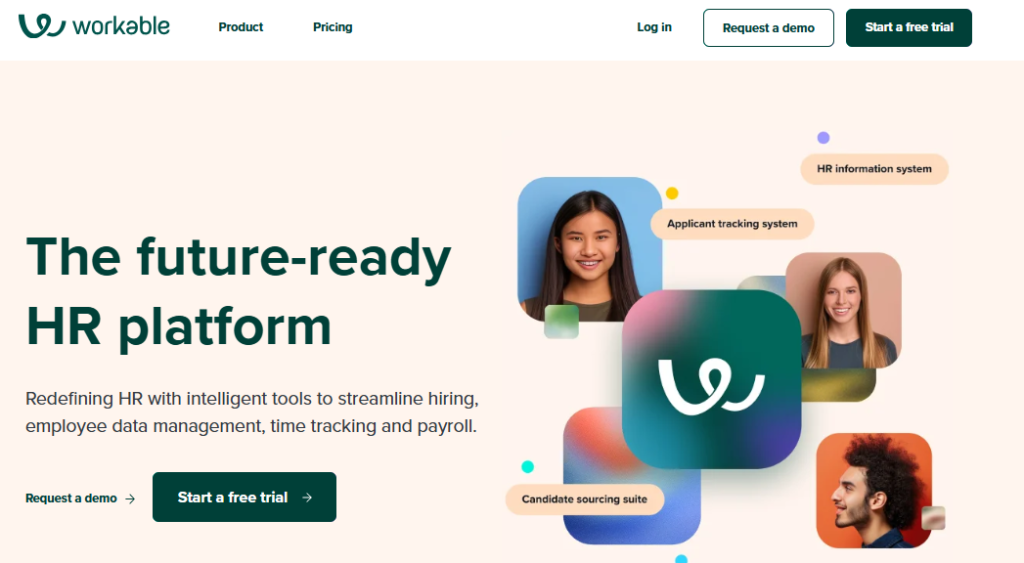
Workable is one of the most consistently recommended pieces of recruiting software for small business, and for good reason. It manages to pack enterprise-grade sourcing tools into a product that a two-person HR team can master in an afternoon.
What separates Workable from most competitors in this space is its AI Recruiter feature, which proactively surfaces passive candidates from a database of over 400 million profiles. Instead of waiting for applications to roll in, small teams can build a talent pipeline from day one. That is a genuine competitive edge over tools like JazzHR or Breezy HR that rely mostly on inbound applicants.
For teams asking “what’s the best recruitment software for small staffing agencies,” Workable also works well because it handles multiple simultaneous openings cleanly without the interface becoming cluttered. The mobile app is genuinely useful, not just a checkbox feature.
✅ Key Features
- AI-powered candidate sourcing: Proactively finds passive candidates from 400M+ profiles
- One-click job posting to 200+ boards: Simultaneous posting to Indeed, LinkedIn, Glassdoor and more
- Collaborative scorecards: Structured interview kits that reduce bias and speed up decisions
- Automated email sequences: Nurture candidates without manual follow-up
- Video interviewing built-in: No need for a separate Zoom or third-party tool
- Real-time hiring analytics dashboard: Track time-to-hire, source quality, and pipeline health
✅ Pros
- Setup is genuinely fast — most teams are live in under a day
- AI sourcing is a real differentiator for outbound hiring
- Clean, modern UI that non-HR staff can figure out instantly
- Strong integration library (Slack, BambooHR, Greenhouse, etc.)
- Mobile app is fully functional, not stripped down
❌ Cons
- Pricing scales up quickly once you add more active jobs
- Advanced analytics require higher-tier plan
- No free plan — the entry tier starts at around $189/month
- Occasional lag in candidate scoring accuracy for niche roles
Best For: Small to mid-sized businesses hiring for multiple roles simultaneously who want an ATS with built-in outbound sourcing, not just an inbox for inbound applications.
2. JazzHR – Most Affordable ATS for Startups and Small Teams
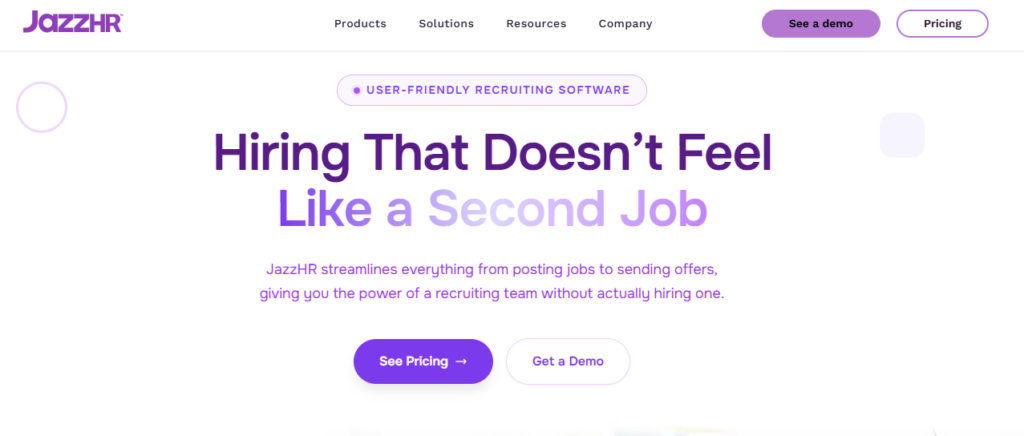
JazzHR has carved out a clear niche as the go-to recruiting software for small companies on tight budgets. At around $75/month for the entry tier, it is one of the most accessible Applicant Tracking Systems that still offers a meaningful feature set beyond a simple inbox.
The platform was originally built for small businesses and startups, and that DNA shows in the simplicity of the workflow builder. You can mirror your existing hiring process, post to dozens of job boards, and get structured candidate profiles without a training manual.
It is worth noting that JazzHR was acquired by Employ Inc. (the same parent company as Lever and Jobvite), which has resulted in steadier product development and better support. For the best recruitment software for small agencies that need to stay budget-disciplined, JazzHR remains a top pick in 2026.
✅ Key Features
- Unlimited job postings (on most plans): No per-job fees that punish growth
- Custom hiring workflows: Mirror your exact process with drag-and-drop stages
- Collaborative candidate evaluation: Comment, tag, and score inside the platform
- Interview scheduling and offer letter templates: Speed up the final stages
- EEOC/OFCCP compliance reporting: Critical for businesses that need legal compliance tracking
- Integration with LinkedIn, Indeed, ZipRecruiter and 50+ job boards:
✅ Pros
- Most affordable entry price among full-featured ATS tools
- Unlimited users on most plans (no per-seat pricing)
- Simple, low-learning-curve interface
- Good compliance support for US-based businesses
- Reliable customer support and strong onboarding resources
❌ Cons
- Reporting and analytics are basic compared to Workable or Greenhouse
- No AI-powered sourcing — primarily inbound-focused
- UI feels slightly dated compared to newer competitors
- Advanced features (like video interviews) require add-ons
Best For: Budget-conscious startups and small businesses with steady but not high-volume hiring who want a solid ATS without overpaying for features they will rarely use.
3. Zoho Recruit – Best for Staffing Agencies and Zoho Ecosystem Users
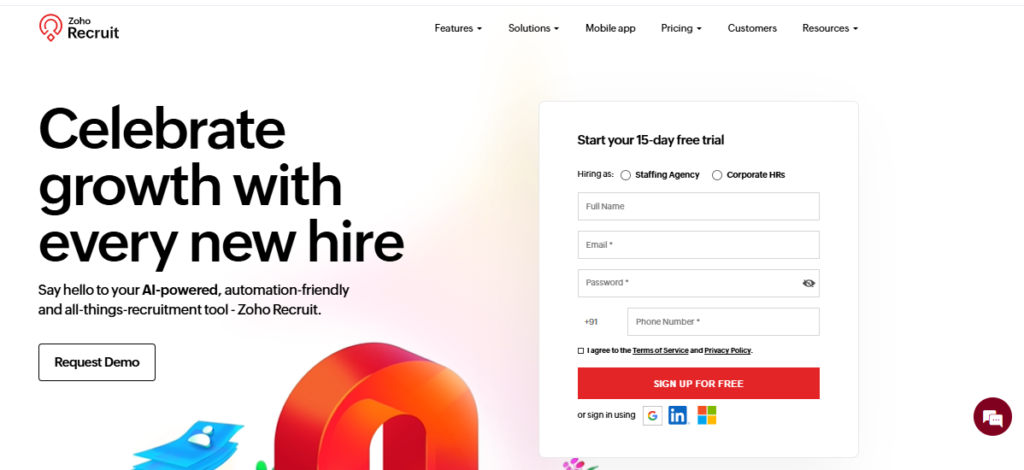
Zoho Recruit is probably the most underappreciated tool in this list when it comes to the best recruitment agency software for small staffing agencies. Unlike pure ATS platforms, Zoho Recruit was built with both in-house recruiters and staffing agencies in mind, which means it handles both client management and candidate tracking in one place.
The platform is deeply customizable. You can build custom modules, create tailored workflows, and even white-label parts of the interface for client-facing portals. That level of flexibility is rare at this price point, and it gives agencies the ability to structure the system around their process rather than adapting to the tool’s process.
If your business is already using Zoho CRM, Zoho Books, or other products in the suite, the native integrations make Zoho Recruit an easy choice. Data flows between platforms without middleware, reducing manual entry and the errors that come with it.
✅ Key Features
- Dual-mode for agencies and in-house teams: Switch between client-facing and internal hiring workflows
- AI candidate matching (Zia AI): Ranks applicants by fit using skills-based scoring
- Custom career portal builder: Create branded job pages without a developer
- Multi-channel sourcing: Post to 75+ job boards including niche verticals
- Resume parsing and candidate deduplication: Keeps your database clean at scale
- Full Zoho Suite integration: Native sync with Zoho CRM, Zoho People, and Zoho Analytics
✅ Pros
- Best value for staffing agencies needing client + candidate management
- Highly customizable without needing a developer
- Generous free plan (up to 1 recruiter and 1 active job)
- Strong mobile app for on-the-go sourcing
- Excellent native integrations within the Zoho ecosystem
❌ Cons
- Initial setup and customization can be time-intensive
- UI is less polished than Workable or SmartRecruiters
- Learning curve is steeper for non-technical users
- Customer support response times can be slow on lower-tier plans
Best For: Small staffing agencies, recruitment consultancies, and businesses already using the Zoho ecosystem who want a highly customizable tool that handles both client management and candidate tracking.
4. Breezy HR – Best Free Plan and Simplest Setup for Small Teams
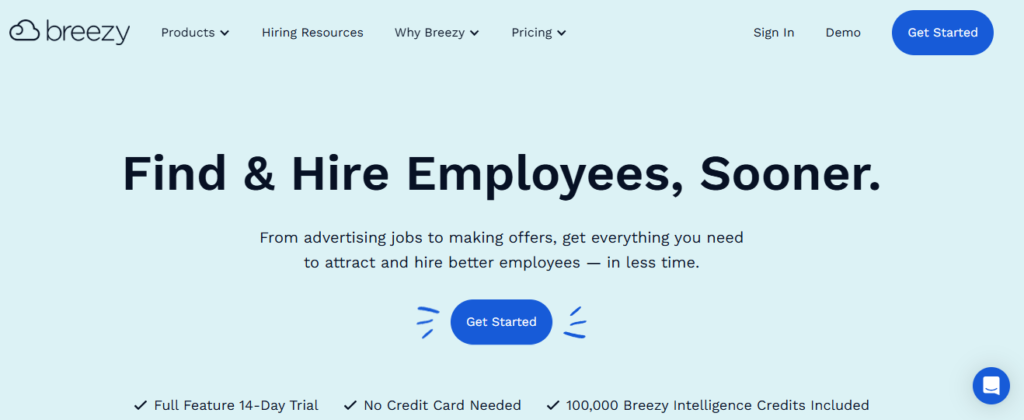
Breezy HR targets the smallest end of the small business spectrum. If you are a founder hiring your first five employees or a team lead who needs to fill one or two roles per quarter, Breezy HR is arguably the most frictionless option on this list.
The visual drag-and-drop pipeline is genuinely one of the best designed in the industry. Candidates move through stages with a Kanban-style board that anyone can understand in 60 seconds. There are no confusing menus or nested settings to fight through.
The free plan is more generous than most competitors allow, supporting one active job with unlimited candidates. For teams that are not hiring constantly, this makes Breezy HR the best recruiting software for small business that wants to start without a financial commitment.
✅ Key Features
- Visual Kanban pipeline: Drag-and-drop candidate cards through custom hiring stages
- Automated interview scheduling: Sync with Google or Outlook calendar and let candidates self-schedule
- Branded career site: Publish a professional jobs page in minutes, no web skills needed
- Candidate questionnaires and screening: Filter unqualified applicants before they hit your inbox
- Email and SMS automation: Communicate with candidates at every stage without manual effort
- One-click posting to 50+ free and paid job boards:
✅ Pros
- Genuinely free plan available (one active job, unlimited candidates)
- Easiest setup on this list — most teams are live in under an hour
- Beautiful, intuitive UI that non-technical users love
- Automated scheduling reduces back-and-forth dramatically
- Good balance of simplicity and functionality for small teams
❌ Cons
- Reporting and analytics are thin compared to enterprise tools
- Free plan is limited to one active position
- No dedicated CRM for building proactive talent pipelines
- Integrations library is smaller than Workable or Greenhouse
- Not ideal for high-volume hiring or agency use cases
Best For: Founders, solo HR managers, and small teams hiring for fewer than 10 roles per year who prioritize simplicity, speed, and a low or zero cost entry point.
5. Greenhouse – Best for Structured, Process-Driven Hiring at Scale
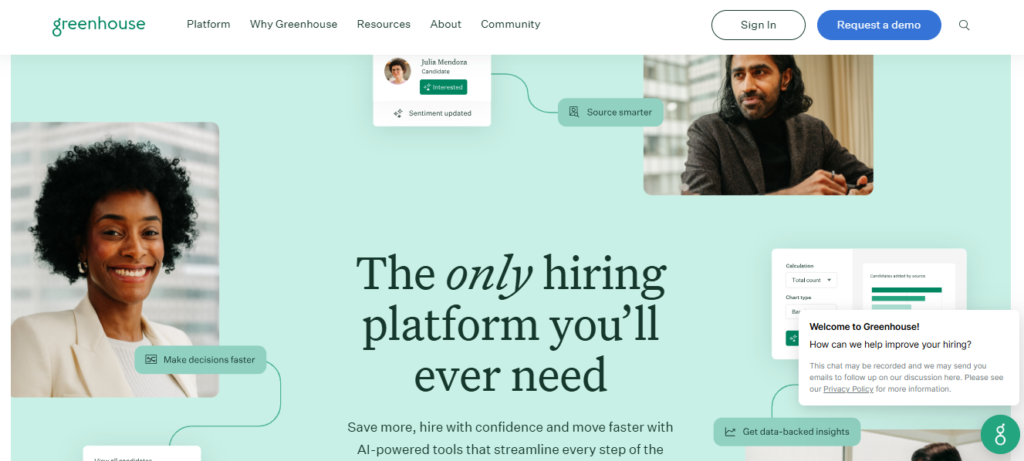
Greenhouse is the tool that structured hiring advocates recommend when consistency matters more than speed. It is built around the principle that every candidate should have the same structured interview experience, rated on the same criteria, by the same set of interviewers. For small businesses that are scaling fast and want to hire with integrity, that structure is invaluable.
The platform is famous for its interview kits and scorecard system. Every interviewer knows exactly which competencies to assess, what questions to ask, and how to score the response. This reduces unconscious bias and makes post-interview calibration dramatically faster.
Greenhouse is not cheap, and it is not the simplest tool to set up. But for a company that has crossed the 50-employee mark and wants to build a repeatable, defensible hiring process, it is one of the best recruiting software options available. It is often cited alongside Lever as the benchmark for serious talent acquisition platforms.
✅ Key Features
- Structured interview kits: Predefined questions and scoring rubrics for every role
- Candidate scorecards: Standardized rating system that reduces bias and subjectivity
- 300+ native integrations: Connects to HRIS, payroll, background check, and productivity tools
- Diversity, equity and inclusion (DEI) reporting: Track representation at every funnel stage
- Offer management and approvals: Route offers through multi-level approval workflows
- Robust API: Build custom integrations and automate data flows with your existing stack
✅ Pros
- Gold standard for structured, bias-resistant hiring processes
- Massive integration library (300+) covers virtually any HR tech stack
- Strong compliance and DEI reporting features
- Excellent for collaborative decision-making across large hiring teams
- Actively developed with regular feature releases
❌ Cons
- Pricing is not publicly listed — typically requires a sales call
- Significant setup and configuration effort before going live
- Overkill for businesses hiring fewer than 20 roles per year
- Customer support can be slow on lower-tier plans
Best For: Fast-growing companies between 50 and 500 employees that want a structured, repeatable hiring process with strong DEI and compliance reporting and a large integration ecosystem.
6. Lever (LeverTRM) – Best ATS + CRM Combo for Relationship-Driven Hiring
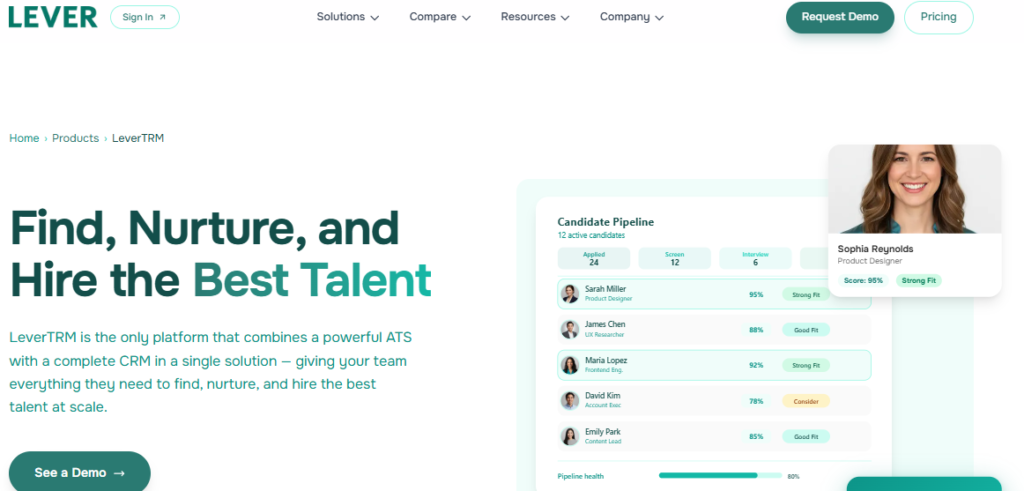
Lever occupies a unique position in this list because it is not just an ATS — it is a Talent Relationship Management (TRM) platform. That distinction matters a lot for small businesses that want to build a proactive talent pipeline rather than simply reacting to open headcount.
The CRM layer inside Lever lets you maintain relationships with passive candidates, previous applicants, and referral network contacts over time. You can send targeted nurture campaigns, track engagement, and re-engage a silver-medal candidate from six months ago with two clicks. For companies that hire at speed in competitive talent markets, that is a meaningful advantage.
Based on recent data from Lever’s own case studies, one staffing company reduced average time-to-hire by 90% after switching to Lever. It is one of the strongest endorsements for how much process automation matters in competitive hiring environments.
✅ Key Features
- Dual ATS + CRM functionality: Manage both active applicants and passive pipeline contacts in one tool
- AI Screening Companion: Automatically scores and ranks candidates based on job fit
- AI Interview Companion: Real-time interview guidance and note capture
- Visual pipeline dashboards: See every role and candidate stage at a glance
- Automated nurture campaigns: Stay in touch with passive talent without manual effort
- Deep analytics and reporting: Funnel metrics, source ROI, and diversity tracking
✅ Pros
- Best-in-class CRM for proactive talent pipeline management
- AI tools add real value in screening and interview stages
- Excellent UI that hiring managers actually enjoy using
- Strong customer success track record with documented case studies
- Integrates cleanly with most HRIS and payroll platforms
❌ Cons
- Pricing requires a demo/sales conversation — not transparent upfront
- Heavier than a pure ATS — not ideal for occasional hiring
- Onboarding requires dedicated time to configure CRM workflows correctly
- AI features are still maturing compared to pure AI-native platforms
Best For: Companies that hire proactively, not just reactively — especially those in competitive talent markets who want to build and maintain candidate relationships over time alongside a full ATS workflow.
7. SmartRecruiters – Best for Collaborative Hiring with a Marketplace of Add-Ons
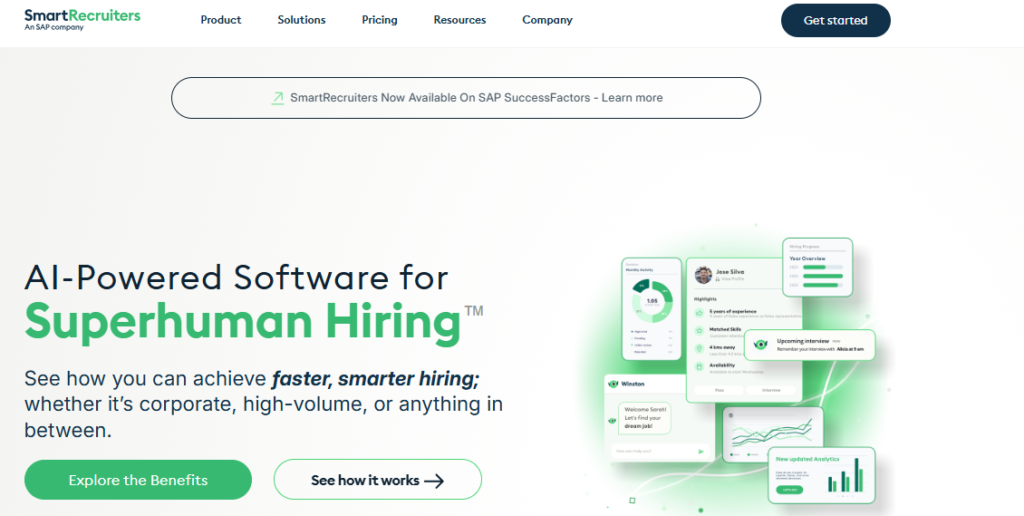
SmartRecruiters pitches itself as a “Hiring Success” platform, and while that phrasing is a bit marketing-heavy, the product does deliver on a core promise: making it easy for hiring managers, HR teams, and executives to collaborate on hiring without getting in each other’s way.
The platform’s built-in marketplace is one of its strongest differentiators. You can add background screening, skills assessments, video interviewing, and payroll integrations without leaving the platform. For a small business that wants a composable HR tech stack without managing five separate vendor relationships, this is genuinely useful.
SmartRecruiters also offers a free version (SmartStart) that covers the fundamentals for teams hiring fewer than 10 people per year. It is one of the few enterprise-adjacent tools that does not completely abandon the small business segment on pricing.
✅ Key Features
- Built-in marketplace of 200+ integrations: Add background checks, assessments, and video tools in clicks
- Mobile-optimized job postings and career pages: Candidates apply from any device without friction
- SmartStart free plan: Core ATS features at no cost for smaller hiring volumes
- Collaborative interview management: Assign interviewers, share feedback, and manage offers in one thread
- CRM and talent sourcing tools: Build passive pipelines with outreach sequences
- GDPR and compliance tools: Data handling workflows built for global hiring teams
✅ Pros
- Free plan available with genuinely useful features
- Marketplace model means you never need to leave the platform for add-ons
- Excellent mobile experience for both candidates and hiring teams
- Strong GDPR and international compliance support
- Clean, modern UI that enterprise and SMB users both find intuitive
❌ Cons
- Paid plans can get expensive as team size and hiring volume grows
- Advanced analytics require higher-tier plans
- Customer support on the free plan is limited to documentation
- Reporting customization is less flexible than Greenhouse or Lever
Best For: Small to mid-sized businesses that want a collaborative, mobile-friendly hiring platform with a strong integration marketplace and the option to start free before committing to a paid plan.
8. BambooHR – Best All-in-One HR Platform with Built-In Hiring
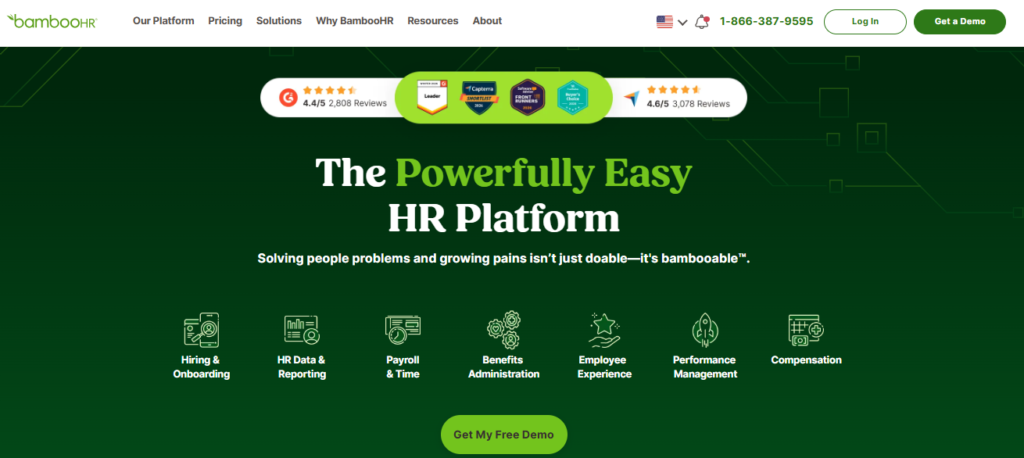
BambooHR is primarily an HR platform that happens to include a solid ATS, not the other way around. That distinction matters: if your primary pain point is managing the full employee lifecycle from hiring through onboarding, performance, and PTO, BambooHR is one of the cleanest solutions available for small businesses.
The hiring module covers all the basics well — job postings, applicant tracking, collaborative review, offer letters, and e-signatures. Where BambooHR genuinely shines is in the transition from hired candidate to active employee. The onboarding workflow is among the best in the SMB HR space, automatically triggering paperwork, IT requests, and buddy assignments the moment an offer is accepted.
For teams that are tired of managing separate HR and recruiting tools that do not talk to each other, BambooHR eliminates that friction entirely. It is a solid choice among the best recruiting software for small business when HR administration is equally important as recruitment.
✅ Key Features
- Unified HR + ATS platform: Hiring, onboarding, performance, and PTO in one system
- Automated onboarding workflows: New hire paperwork and task assignments trigger instantly on offer acceptance
- E-signatures and offer management: Send and collect legally binding documents without DocuSign
- Custom approval chains: Route job requisitions and offers through the right stakeholders
- Reporting and workforce analytics: Headcount trends, turnover data, and hiring velocity in one dashboard
- Mobile app for managers and employees: Full feature access from iOS and Android
✅ Pros
- Best-in-class onboarding that bridges recruiting to HR seamlessly
- Highly polished, user-friendly interface loved by HR teams
- E-signatures included natively — no separate tool needed
- Strong reporting across both HR and recruiting metrics
- Excellent customer support with dedicated onboarding assistance
❌ Cons
- ATS features are less advanced than dedicated recruiting tools like Workable or Lever
- No built-in outbound sourcing — primarily inbound-focused
- Pricing is not public — requires a custom quote
- Job board integrations are fewer than specialist ATS platforms
Best For: Small businesses where HR and recruiting are managed by the same person or team, and where a smooth hiring-to-onboarding workflow is just as important as candidate sourcing and pipeline management.
9. Rippling – Best All-in-One Platform for Tech-Forward Small Businesses
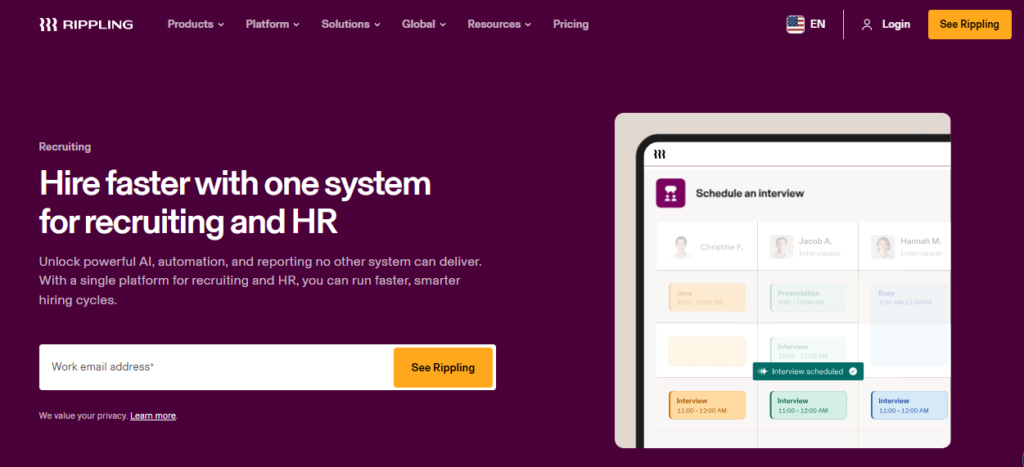
Rippling is in a category of its own because it is not just recruiting software for small business — it is a full workforce management platform covering HR, IT, and payroll from one interface. If the idea of spinning up a new employee’s laptop, adding them to Slack, and enrolling them in benefits on the same day they sign their offer sounds appealing, Rippling makes that happen.
The recruiting module within Rippling is competent but not the deepest standalone ATS on this list. Where the platform earns its spot is in the downstream automation that fires the moment a candidate converts to a hire. Device provisioning, app access, payroll enrollment, and benefits selection can all be automated in advance. For tech-forward businesses, that kind of end-to-end automation is hard to put a price on.
Rippling also now integrates over 500 business apps, which makes it one of the most connected platforms in the HR tech space. For businesses that rely on a large SaaS stack and are tired of manual data syncing between tools, Rippling is worth serious consideration.
✅ Key Features
- Unified HR + IT + payroll platform: Single source of truth for every employee across all departments
- Automated app provisioning: New hires get access to every tool they need on day one automatically
- ATS with job postings and pipeline management: Cover the full recruiting funnel within one platform
- Payroll and benefits enrollment automation: Eliminate manual HR admin for new hires
- Global HR capabilities: Hire and pay employees in 140+ countries
- 500+ app integrations: Connect to virtually any SaaS tool your business already uses
✅ Pros
- Unmatched automation depth from recruiting through IT provisioning
- Largest integration library (500+) of any tool on this list
- Global hiring and payroll capabilities for remote-first teams
- Excellent for businesses where IT and HR are closely connected
- Modular pricing — pay only for the modules you actually use
❌ Cons
- Recruiting module is less feature-rich than dedicated ATS tools
- Can be expensive once multiple modules are added
- Steeper onboarding than simpler tools like Breezy HR or JazzHR
- Best ROI comes from using multiple modules, which is overkill for some small businesses
Best For: Tech-forward small and mid-sized businesses that want a single platform connecting recruiting, HR, IT, and payroll, especially remote-first teams that need automated device and app provisioning for new hires.
Comparison Table: Best Recruiting Software for Small Business 2026
| Tool Name | Best For | Key Strength | Integrations | Ease of Use | Platform |
|---|---|---|---|---|---|
| Workable | Growing SMBs | AI sourcing + job board reach | 200+ | Very Easy | Cloud / Mobile |
| JazzHR | Budget-conscious startups | Affordable ATS with solid basics | 50+ | Easy | Cloud |
| Zoho Recruit | Zoho ecosystem users | Deep customization + staffing CRM | Zoho Suite+ | Moderate | Cloud / Mobile |
| Breezy HR | Small teams, occasional hiring | Visual pipeline + free tier | 50+ | Very Easy | Cloud / Mobile |
| Greenhouse | Process-driven scale-ups | Structured hiring + scorecard depth | 300+ | Moderate | Cloud |
| Lever (LeverTRM) | SMBs building talent pipelines | ATS + CRM combo | 200+ | Easy | Cloud |
| SmartRecruiters | Collaborative hiring teams | Marketplace + enterprise-lite UX | 200+ | Easy | Cloud / Mobile |
| BambooHR | HR-first organizations | Combined HR + light ATS | 100+ | Very Easy | Cloud / Mobile |
| Rippling | Tech-forward all-in-one teams | HR + IT + payroll unified | 500+ | Easy | Cloud / Mobile |
Final Verdict
If you want the best all-around tool, **Workable** wins for most growing SMBs. **JazzHR** is the smartest choice if budget is your primary constraint. **Zoho Recruit** is the clear pick for staffing agencies, while **Breezy HR** is perfect for teams that want to start immediately at zero cost. **Lever** stands out for businesses that want to build proactive talent pipelines rather than just manage inbound applicants. **Rippling** is the play for tech-forward teams that want to unify HR, IT, and payroll under one roof.
How to Choose the Best Recruiting Software for Your Small Business
The best software is the one your team will actually use consistently. Here are the key questions to ask before signing any contract:
1. How often do you hire?
If you hire fewer than 5 people per year, Breezy HR or JazzHR are enough. If you are hiring 20+ roles per year, Workable, Greenhouse, or Lever will pay for themselves in time saved.
2. Are you inbound or outbound focused?
Most small businesses start as inbound recruiters (post a job, wait for applications). As competition for talent increases, outbound sourcing becomes critical. Workable and Lever have the best proactive sourcing tools. JazzHR and Breezy HR are primarily inbound platforms.
3. Do you need an agency solution?
If you are running a staffing agency or a recruitment consultancy, the best recruitment agency software for small staffing agencies is Zoho Recruit. It handles client management and candidate tracking in one place, which dedicated ATS tools are not designed for.
4. What is your HR tech stack?
Already using Zoho CRM? Zoho Recruit is a natural fit. Using BambooHR for HR? Their ATS is sufficient for light hiring. Running a tech company on Slack, Okta, and Google Workspace? Rippling will integrate with everything effortlessly.
5. Is compliance a priority?
US businesses with EEOC compliance requirements should look at JazzHR or Greenhouse. Global teams with GDPR obligations should prioritize SmartRecruiters or Rippling.
Conclusion
Choosing the best recruiting software for small business in 2026 comes down to one question: what is your biggest bottleneck right now? Is it not enough applicants, too much manual coordination, no visibility into your pipeline, or a chaotic onboarding process after the hire?
Each tool on this list solves a slightly different problem at a different price point. Workable and Lever solve sourcing and pipeline management. JazzHR and Breezy HR solve the cost and complexity barrier. Zoho Recruit solves agency and staffing workflows. BambooHR and Rippling solve the full HR lifecycle.
Start by picking the tool that solves your current biggest pain. You can always upgrade or switch as your team grows. The worst move is staying stuck on spreadsheets and email because the options feel overwhelming.
Use the comparison table above to shortlist two or three options, request a free trial or demo, and test your top use case. Good hiring decisions start with good hiring tools.
To explore more in-depth comparisons like this, visit TheListify, where we regularly publish expert-curated lists of the best tools and software for businesses across various industries. Whether you’re searching for Best CRM Tools, Best Accounting Software, Best Recruiting Software, Best Project Management Software, marketing tools, or productivity solutions, our detailed guides help you make informed decisions faster.
Frequently Asked Questions
What is the best recruiting software for small business in 2026?
The best recruiting software for small business in 2026 depends on your needs. Workable is great for all-in-one hiring, Breezy HR for ease of use, and Zoho Recruit for affordability and agency use.
What’s the best recruitment software for small staffing agencies?
The best recruitment software for small staffing agencies includes Zoho Recruit and Lever. These tools offer CRM features, candidate tracking, and automation that help manage multiple clients and job roles efficiently.
How does recruiting software help small businesses hire faster?
Recruiting software automates job posting, resume screening, and interview scheduling. This reduces manual work, improves communication, and helps small businesses hire faster with better candidate experience.
What features should I look for in the best recruitment software for small agencies?
Look for features like applicant tracking, automation, candidate sourcing, CRM capabilities, reporting tools, and integrations with HR software to streamline your hiring process.
Is there affordable recruitment agency software for small staffing agencies in 2026?
Yes, tools like Zoho Recruit and Freshteam offer affordable plans for small staffing agencies. They provide essential features like candidate tracking, automation, and reporting without high costs.