
Your company is probably paying for software nobody uses. IT has no idea which tools are active. Finance can’t see renewals coming. And every department is buying apps on a credit card without approval.
This is the SaaS sprawl problem, and it affects businesses of every size. The average mid-sized company now runs over 130 SaaS applications, and a significant chunk of that spend is waste.
SaaS management software fixes this. It gives your team centralized visibility, automates license cleanup, catches renewals before they auto-renew, and helps you stop paying for tools nobody logs into. According to recent industry research, organizations now average $19.8 million in annual SaaS license waste. That number gets worse without a dedicated management layer.
We analyzed the top competitors and reviewed verified user feedback to bring you this unbiased list of the 7 best SaaS management software tools in 2026. Each pick is evaluated on discovery depth, spend control, automation, ease of use, and pricing.
What Is SaaS Management Software?
SaaS management software (also called a SaaS Management Platform, or SMP) is a centralized system that helps businesses discover, track, optimize, and govern every software subscription across their organization.
A solid SaaS management tool does four core things. First, it finds every app being used, including shadow IT that employees signed up for without IT approval. Second, it tracks every subscription cost, renewal date, and license count. Third, it shows you who is actually using each tool. And fourth, it automates repetitive IT tasks like onboarding, offboarding, and access provisioning.
Modern platforms go further than basic inventory. The best SaaS management tools now include identity governance, AI-powered license recommendations, procurement workflows, vendor benchmarking, and integrations with hundreds of other business systems.
Whether you are an IT admin, a finance lead, or a procurement manager, the right SaaS operations management software will save you time, surface real savings, and reduce the security risk that comes with untracked software access.
Top 7 Best SaaS Management Software Tools for 2026
1. Zluri
Best SaaS Management Tool for IT and Security-Conscious Teams
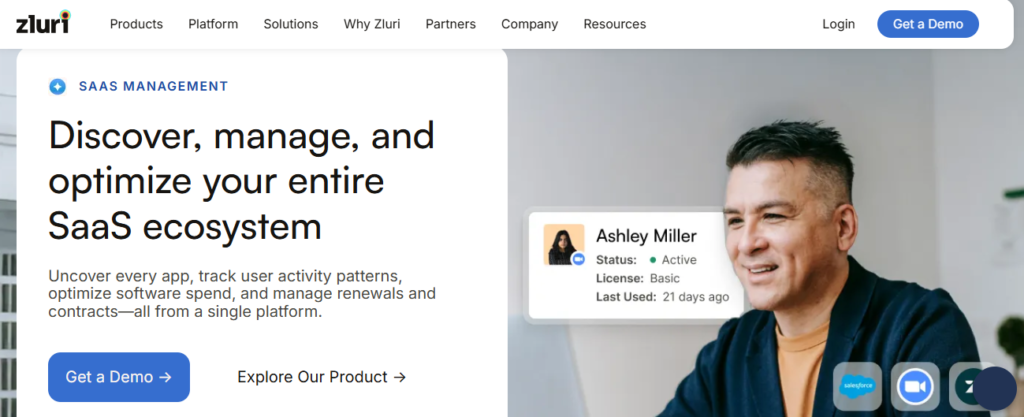
Zluri started as a pure SaaS management platform and has since evolved into one of the most complete identity-driven solutions in the category. What separates it from most competitors is the depth at which it connects software usage to actual user identities, which means you don’t just see that an app is being used, you see exactly who is using it, how often, and what level of access they have.
This identity-first approach makes Zluri a strong choice for IT and security teams that need to manage both their SaaS stack and their access governance from a single place. When someone leaves the company, Zluri can trigger automated deprovisioning workflows across every connected application without any manual intervention. That alone is worth the investment for teams that are still doing this manually.
The platform integrates with over 1,000 applications and uses multiple discovery methods including SSO logs, browser extensions, finance data, and direct API connections to build the most accurate picture of your SaaS environment. If you are evaluating the best saas management tool for an IT team with identity governance needs, Zluri belongs at the top of your shortlist.
Key Features
- Multi-layer SaaS discovery across SSO, APIs, browser agents, and finance feeds to surface 100% of app usage including shadow IT
- Identity governance and administration (IGA) with automated access reviews, provisioning, and deprovisioning workflows tied to HR events
- License optimization engine that detects unused and duplicate licenses and recommends right-sizing or elimination actions
- Automated employee lifecycle management from onboarding checklists to offboarding revocation across all connected apps
- Security posture scoring across your SaaS stack with risk flags for misconfigured permissions and dormant high-privilege accounts
- Pre-built workflow templates for IT helpdesk requests, access approvals, and recurring access certification campaigns
Pros
- One of the deepest SaaS discovery engines available, consistently surfaces apps other platforms miss
- IGA capabilities reduce reliance on a separate identity governance tool, consolidating your IT stack
- Highly automated lifecycle management cuts IT admin time significantly for growing teams
- Excellent audit trail and compliance reporting for SOC 2, ISO 27001, and GDPR workflows
- Integrations library is genuinely broad, covering HR systems, ERPs, finance tools, and productivity suites
Cons
- Pricing is custom and not listed publicly, which makes initial budget planning difficult
- Full feature set has a learning curve and can feel complex for smaller IT teams without dedicated admins
- Some users report that more advanced automation workflows require professional services to configure correctly
- Cloud infrastructure visibility is limited since Zluri focuses specifically on SaaS rather than hybrid IT environments
Best For: IT teams at mid-sized to enterprise companies that need deep SaaS discovery alongside identity governance and automated user lifecycle management in one platform.
Pricing: Custom pricing based on number of users and features required. Contact Zluri for a demo and quote.
2. Zylo
Best SaaS Operations Management Software for Large Enterprises
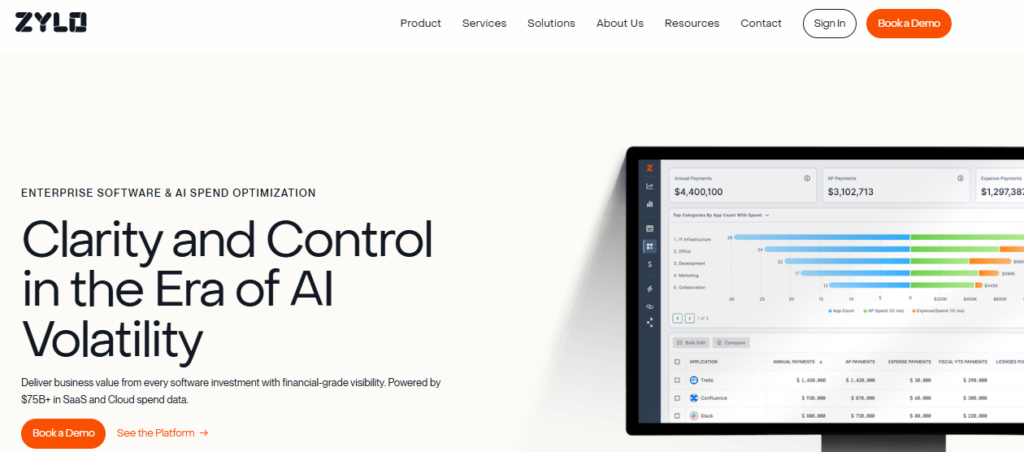
Zylo has built its reputation on one thing: making SaaS spend visible and controllable at enterprise scale. It pulls data from SSO providers, financial systems, HR platforms, and direct API integrations to create a single, reliable view of every SaaS subscription inside your organization. This is the tool that procurement leaders and finance teams reach for when they need to justify software costs or negotiate with vendors.
Where Zylo particularly excels is in renewal management and spend intelligence. It tracks contract end dates, surfaces upcoming renewals well in advance, and gives buyers the usage data and benchmark information they need to enter negotiations from a position of strength rather than scrambling to get a quote renewed at the last minute. Named a Leader in the 2025 Gartner Magic Quadrant for SaaS Management Platforms, Zylo carries strong third-party validation.
It is worth noting that Zylo is more of an intelligence and governance tool than an automation-heavy platform. It will tell you that 50 people have licenses for a tool that only 12 actually use. But acting on that information sometimes involves a manual workflow rather than one-click automation. For large procurement and finance teams, that tradeoff works well since the decisions still need human oversight.
Key Features
- Centralized SaaS system of record that aggregates spend, contract, usage, and ownership data from SSO, finance, HRIS, and API sources
- Renewal pipeline management with 30/60/90-day advance alerts, contract metadata storage, and app owner assignment workflows
- Usage and license utilization reporting at the application, department, and individual user level for precise right-sizing
- Benchmark intelligence to compare your software spend against similar companies and validate whether you are overpaying
- Vendor management dashboard with full contract history, ownership records, and integration with procurement workflows
- Enterprise-grade role-based access controls and audit logs for compliance with internal IT governance requirements
Pros
- Recognized as a Gartner Magic Quadrant Leader, providing strong credibility for executive stakeholder buy-in
- Renewal management capabilities are best-in-class and genuinely reduce surprise auto-renewal costs
- Deep spend analytics let procurement and finance teams make data-backed vendor consolidation decisions
- Works well across large, complex organizations with many business units and decentralized purchasing
- Strong customer success and implementation support makes onboarding smoother for enterprise rollouts
Cons
- Pricing is not publicly disclosed and tends to be at the higher end of the market, better suited for larger budgets
- Automation capabilities are more limited compared to tools like Torii or Zluri, requiring more manual intervention for lifecycle workflows
- Discovery depth depends heavily on integrations being set up correctly, so gaps are possible in complex environments
- Less suited for SMBs or companies just starting their SaaS management journey due to cost and implementation complexity
Best For: Enterprise procurement, finance, and IT teams that need a reliable system of record for SaaS governance, renewal management, and spend intelligence at scale.
Pricing: Custom enterprise pricing. No public pricing listed. Contact Zylo’s sales team for a tailored quote.
3. Torii
Best SaaS Project Management Software for Mid-Market IT Teams That Live and Die by Automation
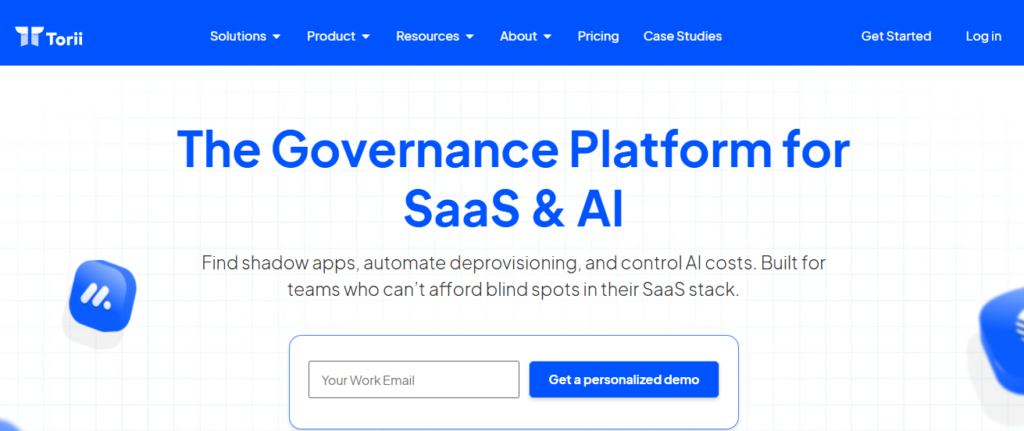
Torii is the automation-first SaaS management platform. If your IT team spends too much time on repetitive tasks like onboarding new employees, revoking access when people leave, or chasing down license reclamation, Torii is built to eliminate those workflows entirely.
The platform uses AI-powered discovery that identifies up to four times more SaaS applications than manual inventory methods. It draws from SSO logs, browser extensions, API connections, and network traffic analysis to build a picture that is as close to complete as any tool in this category. Users report that Torii surfaces apps they had no idea existed in their environment, which is exactly the kind of insight that justifies the investment.
What makes Torii genuinely useful as saas project management software is how its workflow builder connects discovery to action. Once you find an unused app, you can build an automated workflow to reclaim that license, notify the vendor, update your budget tracker, and log the change, all without manual steps. If your team is evaluating Best Agile Project Management Software Tools with IT operations overlap, Torii’s no-code workflow engine is worth a serious look.
Key Features
- AI-driven SaaS discovery that combines SSO, browser extension data, finance integrations, and network signals to find every application in use
- No-code workflow automation builder with pre-built templates for onboarding, offboarding, renewals, and license reclamation campaigns
- Real-time budgeting and expense tracking with department-level attribution and cost allocation reporting
- Shadow IT detection and risk scoring with automated alerts when unauthorized applications are identified
- Application lifecycle management from procurement to renewal to decommission with structured approval workflows
- IGA-adjacent capabilities including access reviews, user provisioning, and compliance-friendly audit logs
Pros
- Automation depth is genuinely impressive and removes a significant portion of repetitive IT admin work
- Discovery engine is among the most thorough available, reducing the risk of untracked shadow IT
- No-code workflow builder is accessible to IT admins without engineering resources
- Cost-saving recommendations are proactive and backed by usage data rather than generic suggestions
- Well-suited for fast-growing mid-market companies building out their IT operations for the first time
Cons
- Pricing is not publicly listed and requires a sales call to get numbers, which slows down the evaluation process
- Some advanced workflow configurations require significant setup time to tune correctly for complex environments
- Spend governance and benchmark intelligence are not as mature as dedicated tools like Zylo or SpendHound
- Best suited for SaaS-heavy environments and has limited visibility into on-prem software or cloud infrastructure costs
Best For: Mid-market IT teams that want to automate user lifecycle management and SaaS operations without needing a full engineering team to configure and maintain the system.
Pricing: Pricing is available on request. No public tiers listed. Contact Torii for a custom quote based on employee headcount.
4. CloudEagle
Best SaaS Management Tool for Procurement-Led Teams That Want Everything in One Place
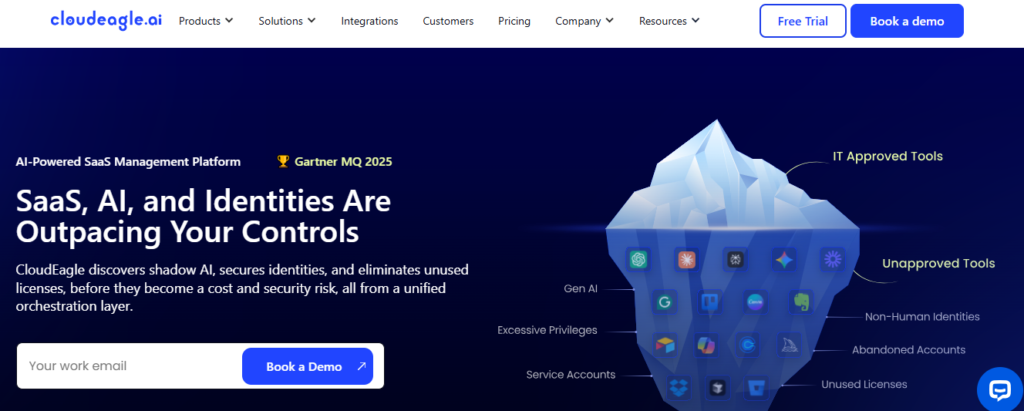
CloudEagle sits at the intersection of SaaS management and procurement. Most platforms focus primarily on discovery or spend tracking. CloudEagle goes further by building an end-to-end vendor management layer on top of the standard SaaS management features, giving procurement teams a place to track contracts, manage vendor relationships, run renewal negotiations, and automate license reclamation all from the same dashboard.
The platform offers over 300 native integrations and automatically identifies and categorizes every application and the users associated with it. Unused apps and licenses can be deprovisioned with a single click, which is a practical time-saver for teams managing hundreds of subscriptions. CloudEagle also includes contract metadata extraction, renewal alerts, and procurement intake workflows that help formalize the software buying process across departments.
For teams building out or maturing their procurement function, CloudEagle is one of the more complete saas management tools available. It covers the full lifecycle from initial software request and approval through renewal negotiation and eventual decommission, which is more than most pure SaaS management platforms attempt.
Key Features
- Automated SaaS discovery with AI-powered categorization and user mapping across all connected applications
- Full vendor lifecycle management from procurement intake through contract renewal and termination workflows
- One-click license reclamation for unused or redundant applications, integrated directly with deprovisioning workflows
- Contract metadata extraction and centralized repository for renewal dates, terms, pricing, and ownership records
- Spend analytics with department-level attribution and comparison against benchmarks for over 300 common SaaS vendors
- Procurement workflow automation including software request intake, multi-stakeholder approval chains, and budget controls
Pros
- End-to-end vendor lifecycle management is more complete than most pure SaaS management platforms in this category
- Single-click license reclamation makes acting on optimization recommendations fast and practical
- Procurement intake workflows add structure to decentralized software buying across business units
- Broad integration library reduces discovery gaps across diverse and complex SaaS environments
- Good fit for both mid-market and enterprise procurement teams looking to consolidate vendor management
Cons
- Pricing is not publicly listed, which makes early-stage budget comparison difficult without engaging sales
- Identity governance and access management capabilities are not as deep as Zluri or BetterCloud for security-first use cases
- Some users note that the user interface can feel dense when managing a large number of vendors simultaneously
- On-prem software and cloud infrastructure visibility are outside the platform’s current scope
Best For: Procurement, finance, and IT teams at mid-market to enterprise companies that need a single platform to manage the full SaaS vendor lifecycle from purchase to renewal.
Pricing: Custom pricing. Contact CloudEagle’s sales team for a quote based on your organization’s size and feature requirements.
5. BetterCloud
Best SaaS Management Software for Google Workspace and Microsoft 365 Environments
BetterCloud has one of the most specific value propositions in the SaaS management category: if your organization runs on Google Workspace, Microsoft 365, or both, BetterCloud gives you a level of administrative control, automation, and policy enforcement that no other platform comes close to. It goes deep where most SMPs go broad.
The platform excels at configuration management and workflow automation within these productivity ecosystems. IT admins can build policies that automatically respond to events like a user resigning, a file being shared externally, or a new employee being added, triggering a cascade of provisioning, permissions, and notification actions without any manual work. This is particularly valuable for security-conscious organizations that need to enforce consistent data handling policies at scale.
BetterCloud’s SaaS management features extend beyond just Google and Microsoft, but that is clearly where the product is strongest. For companies deeply invested in these ecosystems, BetterCloud is likely the best saas management tool available. Teams looking at Best Project Management Tools for distributed workforces will also appreciate how BetterCloud governs document and workspace access across these platforms.
Key Features
- Deep administrative integration with Google Workspace and Microsoft 365, including configuration management, policy enforcement, and compliance controls
- No-code workflow automation for SaaS operations including employee onboarding, offboarding, role changes, and access transfers
- Data protection and DLP (Data Loss Prevention) controls that monitor and restrict file sharing, external collaboration, and sensitive data movement
- User activity monitoring and alerting with configurable rules that trigger automated responses to security or compliance events
- Integration support for 90+ SaaS applications with pre-built workflow templates covering common IT operations scenarios
- Centralized audit logging and compliance reporting for regulatory frameworks including SOC 2 and HIPAA
Pros
- Best-in-class depth for Google Workspace and Microsoft 365 administration, far beyond what native admin consoles offer
- Workflow automation engine is mature and reliable, with a large library of pre-built templates
- Data protection features add a layer of security governance that purely spend-focused SMPs don’t offer
- Compliance reporting simplifies audit preparation for teams in regulated industries
- Strong user community and documentation make it easier to get value from the platform independently
Cons
- Integration depth drops significantly outside the Google Workspace and Microsoft 365 ecosystems
- No SaaS spend benchmarking or financial governance features, so a separate tool may be needed for renewal management
- Pricing is custom and not publicly listed, with enterprise contracts reportedly on the higher end
- Teams outside the Google and Microsoft ecosystems will find far less value than the platform’s positioning suggests
Best For: IT and security teams at organizations heavily invested in Google Workspace or Microsoft 365 that need deep configuration management, data protection, and workflow automation across those environments.
Pricing: Custom pricing. Not publicly listed. Contact BetterCloud for a tailored quote based on number of users and applications.
6. SpendHound
Best Free SaaS Management Tool for SMBs That Want Real Cost Savings Without Enterprise Pricing
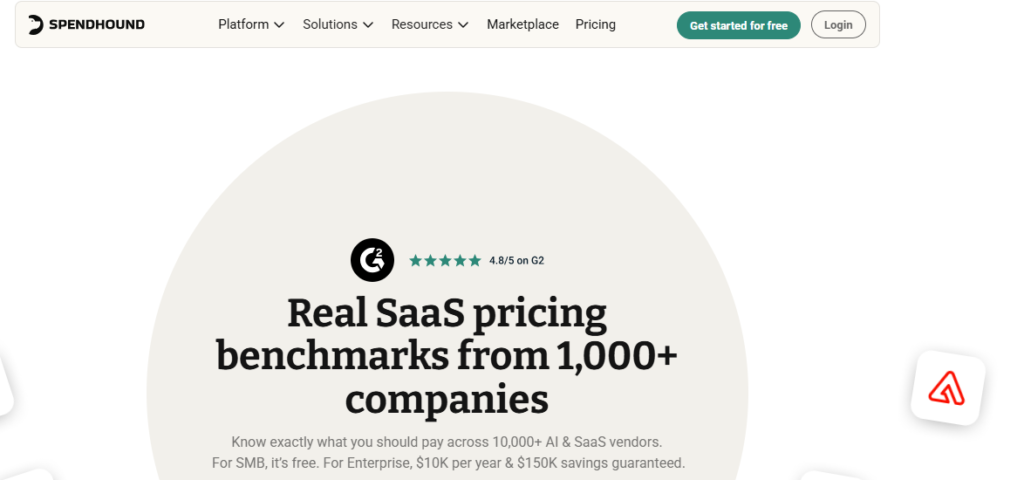
SpendHound is the most accessible entry point in the SaaS management category. It is the only major platform in this list that offers a genuinely full-featured free tier for companies with under 1,000 employees, with no paywall blocking the core discovery, renewal management, and spend tracking features. For small and mid-sized businesses that need to get control of their software costs but don’t have the budget for a six-figure SMP contract, SpendHound is the most practical starting point.
What makes SpendHound stand out beyond price is the benchmark data. The platform aggregates pricing intelligence from over 1,000 companies across more than 10,000 SaaS and AI vendors, so when your renewal for Salesforce or HubSpot comes up, you can enter negotiations knowing whether you’re paying above, below, or near market rate. This kind of intelligence used to only be available to large procurement teams with dedicated vendor management resources.
The platform also includes actual human procurement experts who provide negotiation support and contract review, which is something no other tool in this category offers at any price point. For Best Project Management Software for Small Business teams trying to control SaaS costs without a dedicated procurement team, SpendHound provides a combination of technology and human expertise that is difficult to replicate.
Key Features
- SaaS discovery and spend centralization that pulls subscription data from finance systems, AP tools, and bank feeds to build a complete software inventory
- Pricing benchmarks across 10,000+ vendors contributed by 1,000+ companies to give real negotiation intelligence for common and niche SaaS tools
- Renewal management with configurable alerts at 30, 60, and 90-day intervals plus custom timelines to catch renewals before leverage disappears
- Human negotiation support from procurement experts who help review contracts and develop benchmark-backed negotiation strategies
- License utilization tracking to identify unused seats, overlapping tool functionality, and consolidation opportunities across the stack
- Free tier with no employee cap limitations on core features, plus an enterprise plan with a $150,000 annual savings guarantee
Pros
- Free tier is genuinely useful, not a stripped-down trial, making it accessible for resource-constrained teams
- Pricing benchmark data is unique in the category and gives SMBs the negotiation leverage that previously only large enterprises had
- Human expert support for negotiations differentiates SpendHound from purely technology-driven platforms
- Very fast time to value, with most teams seeing useful data within the first week of setup
- Transparent pricing model with a clear upgrade path from free to enterprise without ambiguity
Cons
- Discovery capabilities, while solid, are not as deep as Zluri or Torii for complex environments with extensive shadow IT
- Automation features for user lifecycle management are more limited compared to BetterCloud or Torii
- Identity governance and access management are outside SpendHound’s core focus, so security-first teams will need a complementary tool
- Enterprise plan pricing of $10,000 per year is reasonable, but the savings guarantee terms should be reviewed carefully before committing
Best For: SMBs, startups, and lean finance or IT teams that need SaaS spend visibility, renewal management, and real pricing benchmarks without a large platform budget or a dedicated procurement team.
Pricing: Free for companies under 1,000 employees. Enterprise plan starts at $10,000/year with a $150,000 savings guarantee.
7. Productiv
Best SaaS Management Software for Enterprises That Want to Understand How Software Is Actually Being Used
Productiv takes a different angle from most SaaS management platforms. While others focus primarily on what you’re paying and who has access, Productiv focuses on how employees actually engage with software. It captures real usage data, measures adoption depth, and gives IT and HR leaders the kind of application intelligence that answers questions like: are people getting value from this tool, and are we actually using the features we’re paying for?
This engagement-centric approach is valuable for large organizations that have already done the basic housekeeping of discovering and cataloguing their apps, and are now trying to understand which tools are delivering ROI and which are underperforming. Productiv integrates at the API level with major applications and uses that data to build detailed engagement metrics well beyond simple login frequency.
The platform works best in enterprise environments where software adoption and change management are significant concerns. If your company rolls out a new tool and needs to track whether adoption is happening as planned, or wants to identify which features of a contracted platform are being ignored, Productiv gives you that visibility in a way that generic SaaS management tools simply don’t.
Key Features
- Deep application engagement analytics that measure feature-level usage, session depth, and adoption trends across your entire SaaS portfolio
- Collaboration intelligence that surfaces how tools are being used across teams, departments, and workflows for more accurate ROI assessments
- Renewal decision support powered by genuine engagement data rather than simple login metrics, giving procurement teams a usage argument for every negotiation
- Benchmarking against aggregated engagement data from similar organizations to show whether your adoption rates are above or below industry norms
- Executive-level dashboards that translate application usage data into business value summaries for CFO and CIO audiences
- Integration with HR and HRIS systems to connect application usage patterns to workforce changes, team growth, and department-level needs
Pros
- Engagement analytics depth is unmatched in the category, providing insight that basic license utilization data completely misses
- Strong ROI narrative for every application makes software budget reviews and consolidation decisions much easier to defend
- Feature-level usage data helps identify overpriced license tiers and downgrade opportunities across major enterprise SaaS vendors
- Well-suited for CHROs, CIOs, and CFOs who want strategic dashboards rather than just IT-level operational reports
- Recognized by Gartner and trusted by large-scale enterprises with complex, multi-department software environments
Cons
- Primarily focused on analytics and intelligence rather than automation, so lifecycle workflows require a separate tool or significant manual effort
- Pricing is enterprise-level and not publicly available, making it inaccessible for smaller companies or those with tight budgets
- Discovery capabilities rely heavily on API integrations and may not surface shadow IT as effectively as agent-based or SSO-based tools
- Implementation typically requires more time than lighter SMPs, as meaningful analytics require clean and complete data pipelines
Best For: Large enterprises with 500+ employees that have already achieved basic SaaS visibility and now want to measure software ROI, optimize adoption, and use engagement data to drive renewal and consolidation decisions.
Pricing: Custom enterprise pricing. Not publicly listed. Contact Productiv for a tailored demo and quote based on your organization’s scale.
SaaS Management Software Comparison Table 2026
| Tool | Best For | Integrations | Ease of Use | Platform Type | Verdict |
|---|---|---|---|---|---|
| Zluri | IT & Security Teams | 1000+ | Moderate | Cloud SaaS | Top Pick |
| Zylo | Large Enterprises | SSO/ERP/HR | Moderate | Cloud SaaS | Best Enterprise |
| Torii | Mid-Market IT | 500+ | High | Cloud SaaS | Best Automation |
| CloudEagle | Procurement Teams | 300+ | High | Cloud SaaS | Best Procurement |
| BetterCloud | Google/M365 Admins | 90+ | High | Cloud SaaS | Best for GoogleWS |
| SpendHound | SMBs & Finance | 500+ | Very High | Cloud SaaS | Best Free Tier |
| Productiv | Enterprise Analytics | API-based | Moderate | Cloud SaaS | Best Analytics |
Final Verdict
Zluri leads for IT teams that need identity governance alongside discovery. Zylo is the enterprise gold standard for spend intelligence and procurement. Torii wins on automation depth for mid-market teams. CloudEagle is the most complete procurement-focused option. BetterCloud dominates Google Workspace and Microsoft 365 environments. SpendHound is the best value play with its genuinely free tier and benchmark intelligence. Productiv is the right call when your goal is understanding application engagement rather than basic inventory management.
How to Choose the Right SaaS Management Software
1. Start With Your Primary Problem
Every team comes to SaaS management with a different pain point. Finance teams are usually worried about surprise renewals and license waste. IT teams want discovery depth and lifecycle automation. Security teams need access governance. Procurement teams want vendor consolidation and negotiation data. Pick the tool that solves your primary problem first and builds from there. Don’t buy a platform whose strongest feature isn’t what you actually need.
2. Evaluate Discovery Coverage Honestly
Discovery is the foundation of SaaS management. If the platform doesn’t find your apps, everything else is built on incomplete data. Ask vendors specifically how they discover applications, what happens when there’s no SSO integration, and whether their approach catches browser-based apps, credit card purchases, and employee-installed extensions. Platforms like Zluri and Torii use multi-method discovery that consistently outperforms SSO-only approaches.
3. Match Automation Depth to Team Size
Automation is most valuable for teams that lack the headcount to handle repetitive tasks manually. If your IT team is small and onboarding or offboarding people manually, a platform with strong workflow automation like Torii or BetterCloud will deliver outsized value. If you have a larger team with more structured processes, a governance-and-intelligence tool like Zylo may be a better fit.
4. Consider Integration Requirements Before Signing
SaaS management platforms are only as good as the data they can access. Before committing to any vendor, map out your critical integrations. Which HRIS do you use? What is your SSO provider? Which finance tools feed your AP data? Then verify that the platform you’re evaluating has deep, maintained integrations for each of those systems. A mismatch here leads to manual workarounds that undermine the platform’s value.
5. Think About Where You’re Going, Not Just Where You Are
Your SaaS stack will grow. A tool that handles your current 80 applications should also handle 250 applications in three years. Ask vendors about performance at scale, customer references from organizations your size and a bit larger, and their product roadmap. The best saas management tools will grow with your organization rather than requiring a platform switch when your needs evolve.
To explore more in-depth comparisons like this, visit TheListify, where we regularly publish expert-curated lists of the best tools and software for businesses across various industries. Whether you’re searching for Best CRM Tools, Best Accounting Software, Best Recruiting Software, Best Project Management Software, Best marketing tools, or productivity solutions, our detailed guides help you make informed decisions faster.
Frequently Asked Questions
What is the best SaaS management software for small businesses in 2026?
SpendHound is the best SaaS management software for small businesses in 2026. It offers a genuinely free tier for companies under 1,000 employees with full access to SaaS discovery, renewal alerts, and pricing benchmarks across 10,000+ vendors. Unlike enterprise-heavy platforms like Zylo or Zluri, SpendHound requires no large implementation budget and delivers real cost savings without a dedicated procurement team.
What is SaaS management software and what does it do?
SaaS management software is a platform that helps businesses discover, track, and optimize every software subscription across their organization. It automatically finds all apps in use including shadow IT, tracks renewal dates and license costs, identifies unused or duplicate subscriptions, and automates IT workflows like employee onboarding and offboarding. The goal is to eliminate software waste, reduce security risk, and give IT and finance teams full visibility into their SaaS stack.
How much does SaaS management software cost?
SaaS management software pricing varies widely by platform and company size. SpendHound is free for companies under 1,000 employees and starts at $10,000 per year for enterprise plans. Most other leading platforms including Zluri, Zylo, Torii, BetterCloud, CloudEagle, and Productiv use custom pricing based on headcount and features, which means you need to contact their sales teams for a quote. Enterprise contracts for larger organizations typically run from $20,000 to well over $100,000 annually depending on scale.
Which SaaS management tool is best for IT teams that need identity governance?
Zluri is the best SaaS management tool for IT teams that need identity governance. It combines deep SaaS discovery with full Identity Governance and Administration (IGA) capabilities, including automated access reviews, user provisioning, deprovisioning, and compliance reporting. This means IT teams can manage both their SaaS stack and access control from a single platform rather than paying for two separate tools.
What is the difference between SaaS management software and project management software?
SaaS management software governs the tools your company uses, tracking subscriptions, licenses, costs, and access across your entire software stack. Project management software helps teams plan, assign, and track actual work. Some platforms like Torii blur the line by offering workflow automation for IT operations, which overlaps with project and task management. However, if you need both, most companies pair a dedicated SaaS management platform with a separate project management tool rather than relying on one system to do both.