

Managing real estate finances gets complicated fast. Between tracking rental income, organizing commissions, monitoring expenses across multiple properties, and preparing for tax season, spreadsheets quickly become a liability instead of a solution. That’s why choosing the best real estate accounting software matters more than ever.
Many online “best software” lists simply recycle the same tools without explaining which platform actually works best for investors, agents, landlords, or property managers. This guide takes a more practical approach. Instead of generic summaries, it focuses on real-world usability, automation, reporting quality, integrations, and long-term scalability.
After reviewing leading platforms, comparing features, and analyzing industry feedback, these five tools consistently stood out in 2026. Whether you manage a few rental units or operate a growing brokerage, this breakdown will help you identify the software that fits your workflow, budget, and future growth plans.
Top 5 Best Real Estate Accounting Software in 2026
1. REI Hub
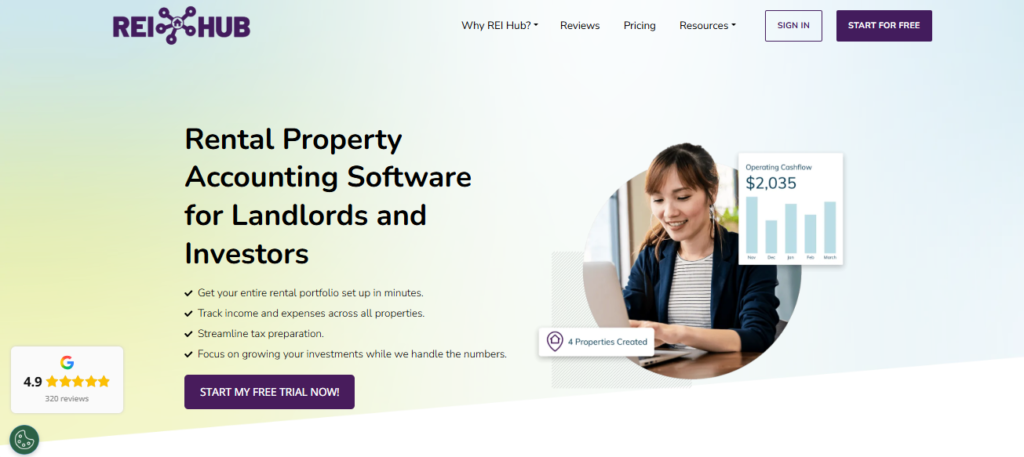
REI Hub was created specifically for real estate investors who want accounting software that already understands rental properties. Unlike traditional bookkeeping tools that require custom categories and manual setup, REI Hub is built around property-based accounting from the start.
One reason it ranks so highly is simplicity. Investors can connect bank accounts, assign transactions to properties, and generate tax-ready reports without needing advanced accounting knowledge. The platform also keeps income, expenses, mortgages, and tenant-related transactions organized in one place.
For landlords managing rental portfolios, REI Hub removes much of the confusion that comes with adapting generic bookkeeping software for real estate use cases. The interface is clean, focused, and designed around rental performance tracking rather than general business accounting.
✅ Key Features
- Pre-configured chart of accounts designed for rental property accounting
- Automatic bank feeds with property and unit-level categorization
- Mortgage tracking with amortization schedules
- Security deposit liability management
- One-click Schedule E and cash flow reporting
- Mobile receipt uploads and mileage tracking
✅ Pros
- Easy setup for non-accountants
- Strong property-level reporting
- Designed specifically for rental investing
- Helpful support team familiar with real estate workflows
- Simplifies tax preparation
❌ Cons
- Limited invoicing capabilities
- Not ideal for non-real-estate businesses
- No built-in payroll system
- Reporting customization is somewhat limited
🎯 Best For: Rental property investors and self-managing landlords who want straightforward, tax-ready accounting.
2. QuickBooks Online

QuickBooks Online remains one of the most flexible accounting platforms available for real estate professionals. While it is not designed exclusively for real estate, its customization capabilities make it highly adaptable for brokerages, investors, and agencies with complex operations.
One of the biggest advantages is ecosystem compatibility. Many CRMs, payment systems, and property management platforms integrate directly with QuickBooks Online, making it easier to centralize operations as the business grows.
The software works especially well for users managing multiple income streams such as rentals, commissions, flips, and property management fees. Advanced reporting and class tracking also help businesses monitor profitability at a property or project level.
✅ Key Features
- Class and location tracking for property reporting
- Automated bank reconciliation tools
- 750+ third-party integrations
- 1099 contractor management
- Custom invoices for commissions and rent
- Multi-user access with permission controls
✅ Pros
- Widely supported by accountants and CPAs
- Strong reporting capabilities
- Scales well for growing businesses
- Reliable mobile app experience
- Extensive integration ecosystem
❌ Cons
- Steeper learning curve for beginners
- Requires customization for real estate workflows
- Advanced plans can become expensive
- Some features locked behind higher pricing tiers
🎯 Best For: Real estate brokerages, growing agencies, and investors handling multiple business models.
3. Stessa
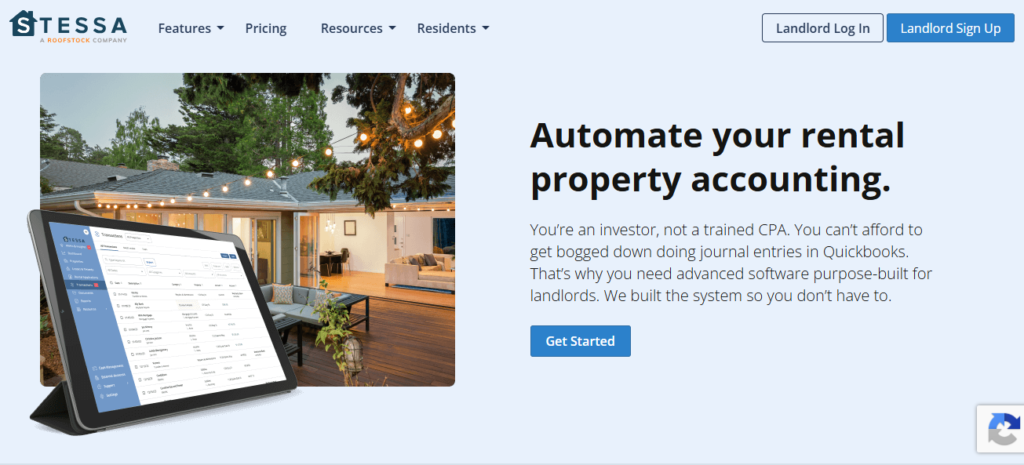
Stessa has become extremely popular among landlords because it delivers impressive functionality without charging for core accounting tools. The platform focuses heavily on automation, helping investors track income, expenses, and property performance with minimal manual work.
For newer investors, the free plan removes the barrier of expensive software subscriptions while still offering professional reporting dashboards. Automated expense categorization and receipt scanning also save a significant amount of bookkeeping time.
Another major advantage is visibility into portfolio performance. Investors can monitor cash flow, operating expenses, and property profitability in real time from a centralized dashboard.
✅ Key Features
- Free property and transaction tracking
- Automated bank and mortgage feeds
- Real-time NOI and cash flow dashboards
- Receipt scanning with smart categorization
- CPA-ready reporting packages
- Optional rent collection features
✅ Pros
- Free core accounting platform
- User-friendly dashboard interface
- Built specifically for rental investors
- Strong automation features
- Unlimited property tracking on free plan
❌ Cons
- Advanced tools require paid upgrades
- Less robust double-entry accounting
- Limited support response times
- Not ideal for commercial real estate operations
🎯 Best For: New landlords and rental investors looking for affordable accounting automation.
4. Buildium
Buildium combines accounting tools with complete property management operations. Instead of using separate platforms for bookkeeping, lease management, maintenance, and tenant communication, Buildium keeps everything connected within one system.
This integrated structure makes it especially valuable for property managers handling larger portfolios. Financial data updates automatically as operational activities happen, reducing duplicate work and improving reporting accuracy.
Buildium also stands out for trust accounting and owner reporting capabilities, which are essential for management companies handling client funds and compliance requirements.
✅ Key Features
- Full double-entry accounting system
- Trust accounting and owner reconciliation
- Online rent collection
- Lease and tenant management
- Maintenance request workflows
- Owner portals with financial statements
✅ Pros
- Combines accounting and operations
- Strong compliance-focused features
- Excellent for scaling portfolios
- Reduces need for multiple software tools
- Comprehensive reporting options
❌ Cons
- Higher pricing than standalone accounting software
- Can feel overwhelming for smaller landlords
- Longer onboarding process
- Some advanced reports require premium plans
🎯 Best For: Property management companies and landlords managing medium-to-large portfolios.
5. Xero
Xero is widely known for its clean interface and modern user experience. For real estate agents and smaller brokerages, it provides a simpler alternative to more complex accounting platforms while still offering strong automation and collaboration features.
One of its biggest strengths is unlimited users across all pricing plans, which makes it attractive for growing teams. Agents can also track commissions, manage expenses, and collaborate with accountants without dealing with restrictive user limits.
The platform integrates well with CRM systems and productivity tools commonly used in real estate businesses, helping teams streamline back-office operations.
✅ Key Features
- Unlimited users on every plan
- AI-assisted bank reconciliation
- Commission and project tracking
- Expense and mileage management
- Recurring invoicing tools
- 1,000+ third-party integrations
✅ Pros
- Clean and intuitive interface
- Transparent pricing structure
- Strong collaboration features
- Great mobile experience
- Excellent integration ecosystem
❌ Cons
- Limited property-specific reporting
- Fewer real estate-focused features
- US payroll options are limited
- Advanced reporting less flexible than QuickBooks
🎯 Best For: Real estate agents, small brokerages, and collaborative teams seeking modern cloud accounting software.
Many of these platforms also appear on broader lists covering the best small business accounting software market because of their scalability and automation capabilities outside the real estate industry as well.
Comparison : Best Real Estate Accounting Software
| Tool Name | Best For | Key Strength | Integrations | Ease of Use | Platform Type |
|---|---|---|---|---|---|
| REI Hub | Rental investors | Property-focused accounting | Banking and rental tools | ⭐⭐⭐⭐⭐ | Web + Mobile |
| QuickBooks Online | Scaling businesses | Flexibility and reporting | 750+ apps | ⭐⭐⭐ | Web + Mobile |
| Stessa | New landlords | Free rental analytics | Banking integrations | ⭐⭐⭐⭐⭐ | Web + Mobile |
| Buildium | Property managers | All-in-one operations | Payments and tenant tools | ⭐⭐⭐⭐ | Web + Mobile |
| Xero | Agents and small teams | Collaboration and automation | 1,000+ apps | ⭐⭐⭐⭐ | Web + Mobile |
Final Verdict
REI Hub is the strongest option for investors who want accounting software tailored specifically for rental properties. QuickBooks Online remains the most versatile solution for larger operations with complex bookkeeping needs. Stessa offers incredible value for newer landlords, while Buildium excels for full-service property management businesses. Xero stands out for agents and teams prioritizing simplicity and collaboration.
To explore more in-depth comparisons like this, visit TheListify, where we regularly publish expert-curated lists of the best tools and software for businesses across various industries. Whether you’re searching for Best CRM Tools, Best Accounting Software, Best Recruiting Software, Best Project Management Software, Best marketing tools, or productivity solutions, our detailed guides help you make informed decisions faster.
Frequently Asked Questions
What is the best real estate accounting software in 2026?
The best real estate accounting software in 2026 depends on your business model. REI Hub is ideal for rental investors, QuickBooks Online works best for scaling businesses, while Buildium is great for property management companies.
Which accounting software is best for real estate investors?
REI Hub and Stessa are among the best accounting software options for real estate investors because they offer property-level reporting, rental expense tracking, and tax-ready financial statements.
Is there free accounting software for landlords?
Yes. Stessa offers a free plan that includes rental income tracking, expense categorization, performance dashboards, and basic accounting tools for landlords.
Can QuickBooks be used for real estate accounting?
Yes. QuickBooks Online can be customized for real estate businesses using class tracking, property categorization, and integrations with property management tools.
What features should real estate accounting software include?
The best real estate accounting software should include expense tracking, property-level reporting, bank reconciliation, tax reporting, tenant payment tracking, and integration with property management platforms.
Tags: Accounting Software for Real Estate, best accounting software for real estate agents, Best Accounting Software for Real Estate Businesses, best accounting software for real estate investors