

An inquiry arrives while you’re showing a property. You plan to call back, then a valuation appointment runs late and the message slips down your inbox. Meanwhile, a former buyer is thinking about selling, but your last conversation lives in a spreadsheet nobody has opened for months.
The best CRM for real estate agents helps you keep both relationships moving. It gives each lead an owner, records what the client wants, and makes the next action obvious. Choosing one gets harder when website builders, advertising packages and calling tools are bundled into the price.
This guide compares ten options for solo agents, small teams and growing brokerages. You’ll find practical strengths, limitations and pricing details, including the extras that change the bill. Several specialist products focus on US and Canadian property workflows; check local coverage before subscribing.
What Is a CRM for Real Estate Agents?
A real estate CRM is a system for organizing people, inquiries, deal stages and follow-up work. A useful record may include where a buyer lead came from, preferred neighborhoods, budget, last contact, next viewing and tasks due before closing. Many specialist platforms add IDX listing search, property alerts, MLS-related data and lead distribution.
General platforms can cover contacts and pipelines without those property-specific features. The distinction matters: choose a full real estate platform when website-to-lead handoff is central, or compare a broader CRM software comparison if the core requirement is reliable contact and deal management.
How These CRMs Were Evaluated
We assessed lead capture, follow-up, property-specific tools, team coordination and total cost. Recommendations reflect documented capabilities and likely workflow fit; they are not scores from hands-on testing.
- Lead capture and routing: how quickly a new inquiry reaches the right agent
- Follow-up: tasks, drip sequences, reminders and communication options
- Real-estate fit: IDX, MLS, property alerts and transactions where relevant
- Team operations: seats, logins, permissions and reporting
- Total cost: setup, annual commitments, add-ons, phone/SMS and MLS fees
- Practical fit: mobile use, integrations and time needed to configure workflows
Top 10 Best CRM Tools for Real Estate Agents in 2026
The specialist systems below generally make more assumptions about property leads and agent workflows. Pipedrive, HubSpot and Zoho are broader CRMs that may suit agencies wanting flexibility or a lower-commitment starting point.
1. Follow Up Boss
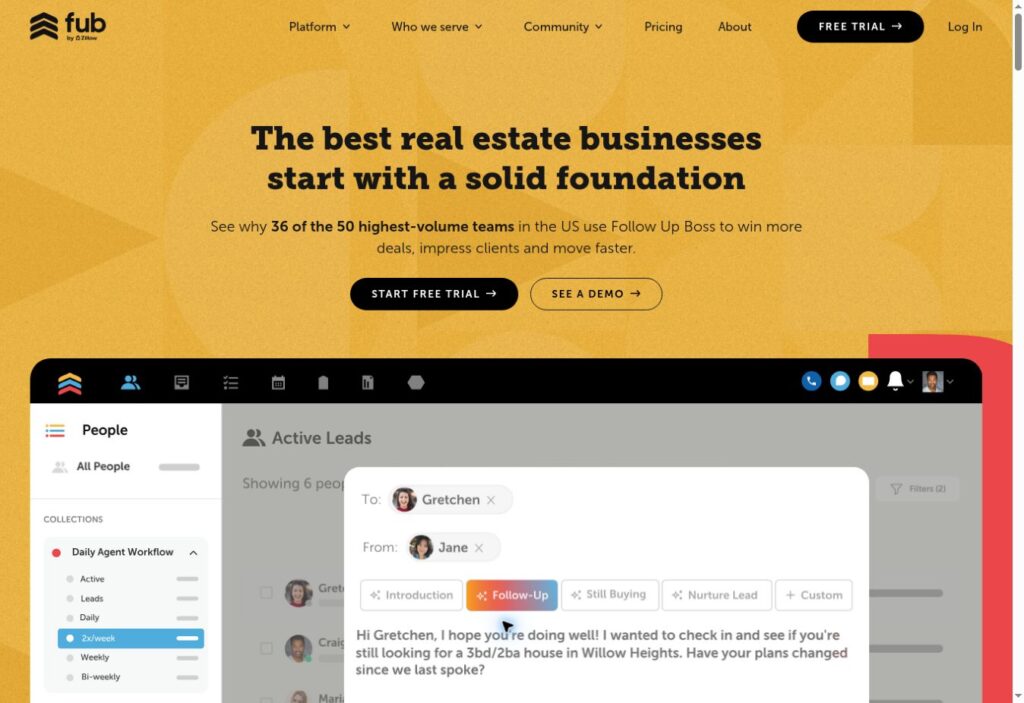
Follow Up Boss — Best for following up on leads from an existing marketing stack.
Already happy with your website and lead suppliers? Follow Up Boss is worth a close look. Its open-platform approach brings inquiries into a shared workspace without making a new property website the center of the purchase. Smart Lists and Action Plans help turn an untidy contact database into a working follow-up routine.
For a team leader, the useful question is whether an inquiry has an owner and a next step. Routing and reporting support that oversight; agents can keep working from mobile between appointments. Native calling costs extra on Grow, so compare the complete communications setup before choosing a tier.
Pricing: Grow is $69 per user/month, or $58 per user/month billed annually. Calling adds $39 per user/month on monthly billing. Check current plans.
Key Features
- Lead-source aggregation and contact records
- Smart Lists for prioritizing follow-up
- Action Plans for repeatable outreach
- Lead assignment and routing
- Email and calendar synchronization
- Mobile access and team reporting
Pros
- Works alongside an existing website and lead stack
- Strong focus on timely follow-up
- Useful shared processes for teams
- Broad supported integration positioning
- Clear published core plan pricing
Cons
- Calling costs extra on Grow
- Team packages have materially higher fixed monthly spend
- Not positioned as a bundled IDX website
Best For
Agents and teams keeping their current lead-generation tools.
Official website: Follow Up Boss.
2. Wise Agent
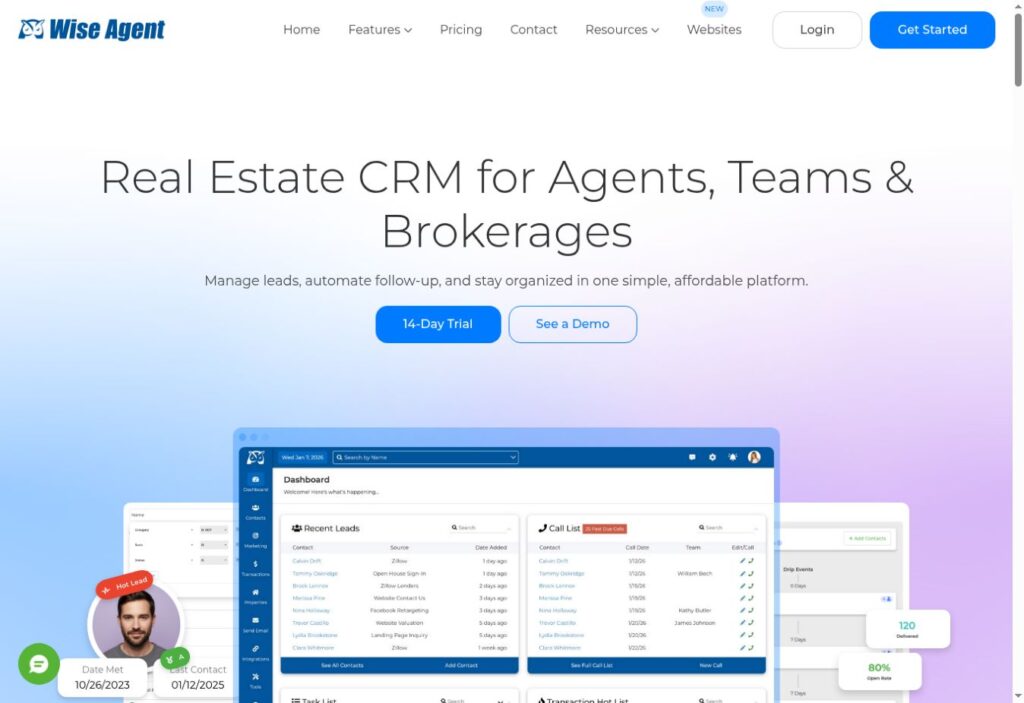
Wise Agent puts everyday contact management alongside transaction tasks and recurring outreach. Its product overview emphasizes a practical combination: organize the database, schedule follow-up and keep work moving toward closing. It is a sensible shortlist entry when the problem is scattered client information rather than a missing advertising platform.
Look closely at access before comparing team prices. The base allowance covers up to five team members on a shared login, not five separate accounts. If everyone needs individual credentials, include that cost. Texting and optional marketing services also deserve their own line in the budget.
Pricing: CRM is $49/month or $499/year. Onboarding and 24/7 support are listed; extra logins and selected services cost more. See pricing.
Key Features
- Contact database and relationship history
- Drip email campaigns
- Transaction management
- Calendar and task reminders
- Landing pages
- Reporting, onboarding and around-the-clock support
Pros
- Lower published subscription than many integrated platforms
- Contact and transaction tasks in one system
- Recurring outreach capabilities
- Onboarding support is documented
- Annual payment option
Cons
- Included team allowance uses shared credentials
- Individual logins add cost
- Texting uses extra credits and registration
Best For
Solo agents and small teams watching total software cost.
Official website: Wise Agent.
3. Lofty

Lofty makes most sense when you want the journey from property search to agent follow-up managed within one platform. Its official website presents IDX websites, CRM and automation as connected parts of the business. That is a different purchase from adding a contact database to tools you already like.
Ask the vendor to trace one website inquiry through assignment, a follow-up plan and a property conversation. Then establish which components are included in your package. Agent, Team, Broker and Enterprise options are advertised, but a feature appearing on the platform page does not establish inclusion in every tier.
Pricing: Quote required. Get the website, users, messaging, AI services, onboarding and contract length itemized. Review package scope.
Key Features
- Customizable IDX website
- Contact and lead management
- Lead routing
- Smart Plans automation
- Email and text communication workflows
- Mobile app and Gmail/Outlook/calendar integrations
Pros
- Website and CRM offered together
- Real-estate listing focus
- Structured follow-up plans
- Team and broker packages
- Named productivity integrations
Cons
- No verified numerical starting price
- Tier-specific inclusions require a written quote
- Broad package scope can complicate cost comparison
Best For
Teams prioritizing a connected property website and CRM.
Official website: Lofty.
4. Real Geeks
Real Geeks links its property website, CRM and marketing tools into a single system. Its product overview focuses on using website activity to guide the agent’s next conversation. For a buyer returning to the same neighborhood listings, that context can be more useful than another generic reminder to make contact.
The main buying decision is whether you need the website bundle. If your current site captures useful inquiries, compare migration effort with a stand-alone CRM. If you need a replacement, price the full package: extra users, MLS feeds and optional lead generation change the total. Exclude features labelled “Coming Soon” from your must-have list.
Pricing: $399/month for two users, plus $500 setup. IDX feeds are $10 per board/month. Optional lead packages and selected AI tools cost extra. See pricing.
Key Features
- IDX property website
- CRM and dialer
- Lead routing
- Activity alerts
- Drip follow-up campaigns
- Property alerts and mobile access
Pros
- Website and CRM in one purchase
- Clear lead-oriented workflow
- Built-in calling-related functionality
- Property-specific alerts
- Published base subscription
Cons
- Base includes only two users
- Setup and MLS fees add cost
- Some advertised AI functions remain upcoming
Best For
Agents looking for a packaged website and lead-follow-up system.
Official website: Real Geeks.
5. Top Producer
Top Producer is a candidate for agents who want follow-up to carry useful property-market context. Its Market Snapshot reports use MLS information, giving an agent something more relevant to send than a general check-in. The platform overview also combines relationship management, automation and business-management tools.
That approach could suit an agent maintaining a database of homeowners as well as active buyers. Check local MLS coverage and ask to see the reports clients actually receive. Treat lead generation and farming packages as separate buying decisions with their own scope and costs.
Pricing: Confirm directly. The pricing page contains different Pro and team figures without enough context to select one confidently. A written quote is more useful than an unreliable starting-price claim.
Key Features
- MLS-based Market Snapshot
- Contact and relationship records
- Automated email responses
- Automated SMS responses
- Transaction tracking
- Shared team contacts and support for numerous MLS boards
Pros
- Market information supports follow-up
- Real estate-specific contact context
- Both email and text outreach
- Team contact sharing
- Transaction workflows
Cons
- Pricing display is inconsistent
- MLS support must be confirmed by board
- Plan-level differences need confirmation
Best For
Agents using market updates to maintain past-client and prospect relationships.
Official website: Top Producer.
6. IXACT Contact
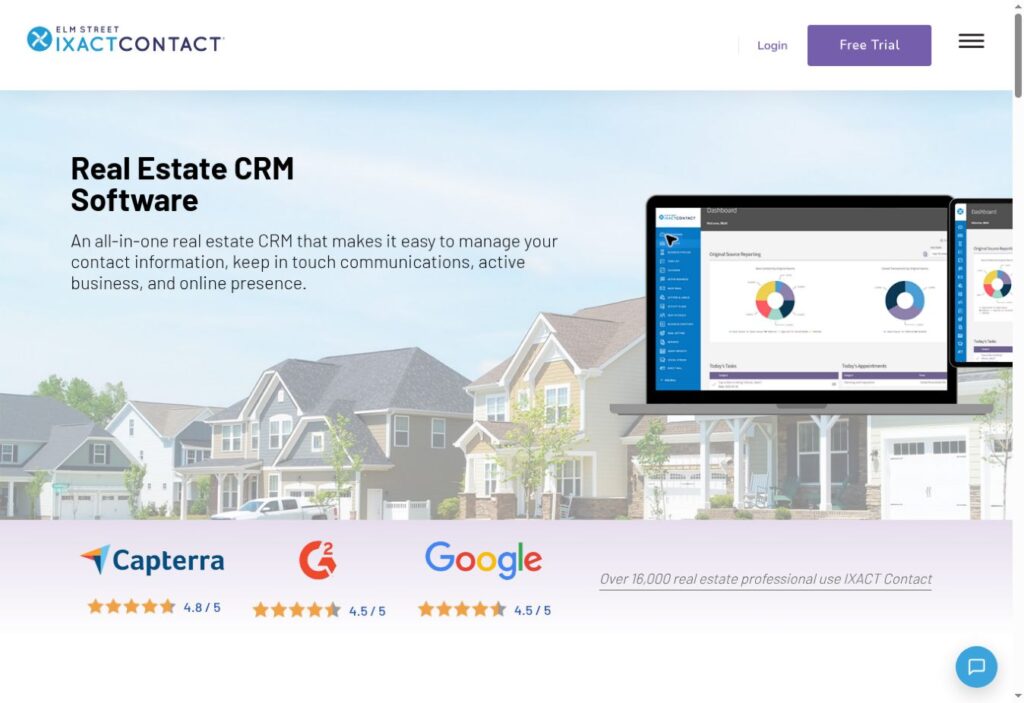
IXACT Contact concentrates on staying in touch after the immediate transaction. Its product overview describes contact profiles, reminders and a Keep in Touch Coach, alongside email marketing. That combination fits agents whose former clients and referral partners should not disappear once a deal closes.
The appeal is having a recurring communication routine rather than starting every newsletter from a blank page. Personalize supplied content and choose contact groups carefully: a homeowner considering a sale needs a different message from a first-time buyer. The included agent website is useful, but IDX is optional and separately priced.
Pricing: $55/month, or $46.75/month billed annually. Extra team members, IDX, texting and selected marketing services add cost. Review allowances.
Key Features
- Contact categorization and history
- Calendar and task reminders
- Newsletters and drip campaigns
- Lead capture and nurturing
- Campaign reporting
- Google/Outlook synchronization and mobile apps
Pros
- Useful for referral-based processes
- Repeatable contact reminders
- Newsletter workflow is included
- Published individual and team prices
- Mobile and calendar support
Cons
- IDX is optional rather than automatically included
- Extra team members cost more
- Third-party integrations may require separate subscriptions
Best For
Relationship-led solo agents and referral-focused practices.
Official website: IXACT Contact.
7. Sierra Interactive
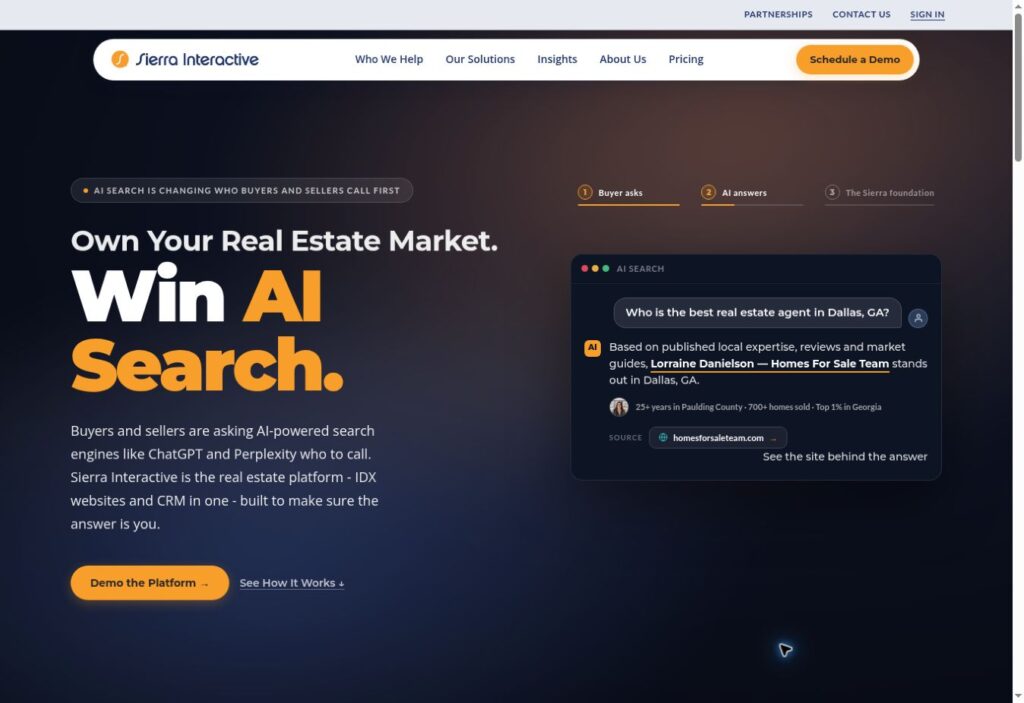
Sierra Interactive combines property websites with CRM workflows. Its published packages move from a one-user Starter tier to options with more users, messaging, routing and reporting. Compare the complete website-to-agent process, especially when several people share incoming inquiries.
The contract deserves attention: monthly installments do not remove the 12-month agreement. Have the vendor demonstrate assignment and missed follow-up using your team’s workflow, then price required dialer and MLS connections. That exercise will reveal more than a long feature checklist.
Pricing: Starter is $299.95/month equivalent paid annually, or $359.95/month in monthly installments. Monthly subscriptions list $500 setup; annual subscriptions list $0. Confirm communication allowances and add-ons.
Key Features
- IDX website and lead capture
- Lead routing
- Follow-up automation
- Team reporting
- Messaging tools with plan allowances
- CRM lead management and optional dialer
Pros
- Purpose-built property search experience
- Team routing and visibility
- Published seat counts for plans
- Multiple plan sizes
- Integrated communication options
Cons
- 12-month commitment for both billing methods
- Setup fee applies to monthly installments
- MLS feeds and dialer options can add cost
- Lead Engage limited to qualifying plans and costs extra
Best For
Growing teams built around website-sourced leads.
Official website: Sierra Interactive.
8. Pipedrive
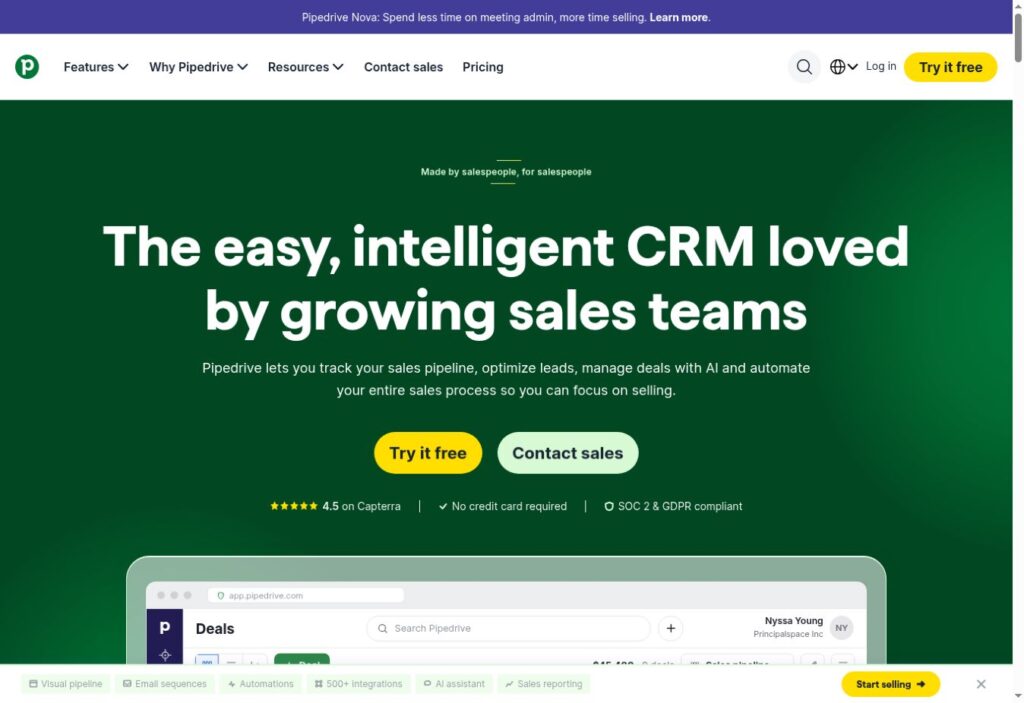
Pipedrive suits agents who want to see which opportunities are moving and what needs attention next. Its sales CRM centers on contacts, activities and visual deal stages. You could configure a buyer pipeline around qualification, viewings, offers and closing, with a separate seller process where the plan allows it.
Flexibility comes with setup work. Someone must define stages, fields and follow-up rules; a generic CRM will not know your agency’s process on day one. Email synchronization and automated sequences are listed on Growth rather than the entry tier, which matters if follow-up automation is the reason you are buying.
Pricing: The pricing page rendered Lite at €14 and Growth at €39 per seat/month, billed annually. Currency and offers vary by region; request a local quote.
Key Features
- Lead and contact records
- Customizable deal pipelines
- Tasks and activity scheduling
- Reporting and data import
- Integrations
- Email synchronization and automation on Growth; routing on Premium
Pros
- Visual sales-stage management
- General-purpose customization
- Lower annual-billed entry price
- Clear tier progression
- Suited to teams already sourcing leads elsewhere
Cons
- Not an IDX website product
- Advanced workflow features need higher plans
- Real estate-specific integrations need investigation
Best For
Agents wanting a disciplined pipeline instead of a bundled website.
Official website: Pipedrive.
9. HubSpot
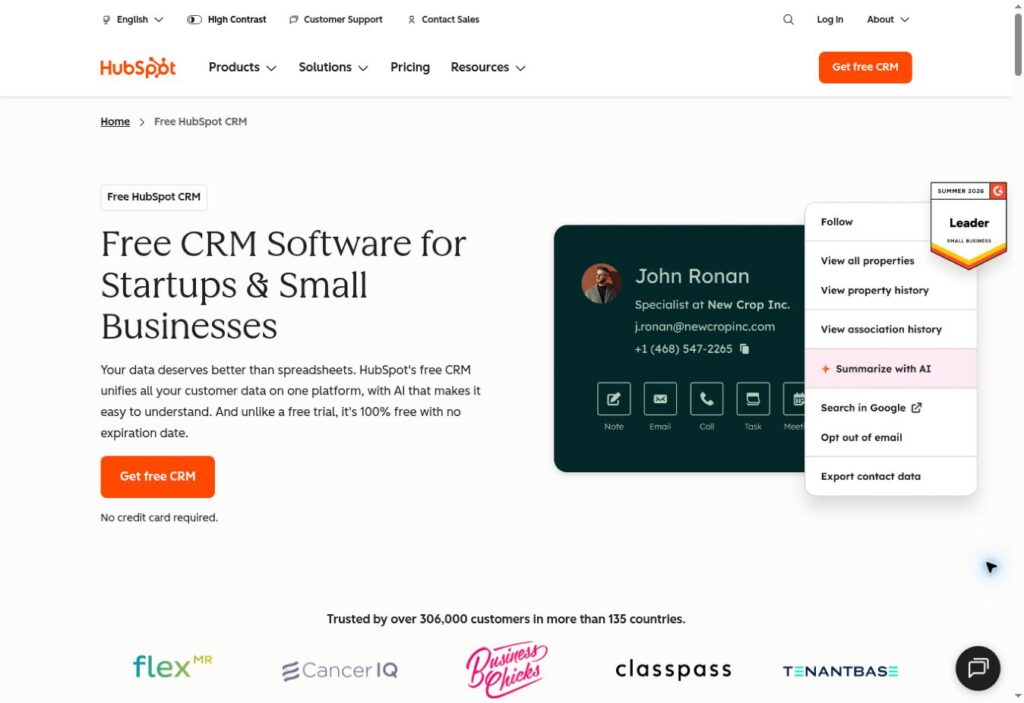
HubSpot lets agents replace scattered spreadsheets with contact, deal and task records before buying a specialist real estate suite. Its free CRM includes contact history and a pipeline view, making it a reasonable starting point for learning which information and follow-up habits actually matter.
Start small: import a clean contact sample, create one pipeline and schedule a next action for each opportunity. Then establish what your intended marketing workflow costs. Free CRM access does not mean every automation, messaging service or property integration is included, and no native IDX website was verified for this comparison.
Pricing: Free tools are available. The product page lists up to two users and 1,000 contacts. Verify current limits and paid options before importing a larger database.
Key Features
- Contact records and activity history
- Deals and pipelines
- Tasks
- Basic reporting
- Mobile access
- Data imports and app integrations
Pros
- Free CRM entry point
- Familiar general sales structure
- Contact and deal tracking
- Broad integration ecosystem
- Possible gradual adoption of paid tools
Cons
- No verified native IDX function
- Advanced automation may cost extra
- Paid offers and limits require plan-level verification
Best For
Agents starting with essential CRM records and testing their sales process.
Official website: HubSpot.
10. Zoho CRM
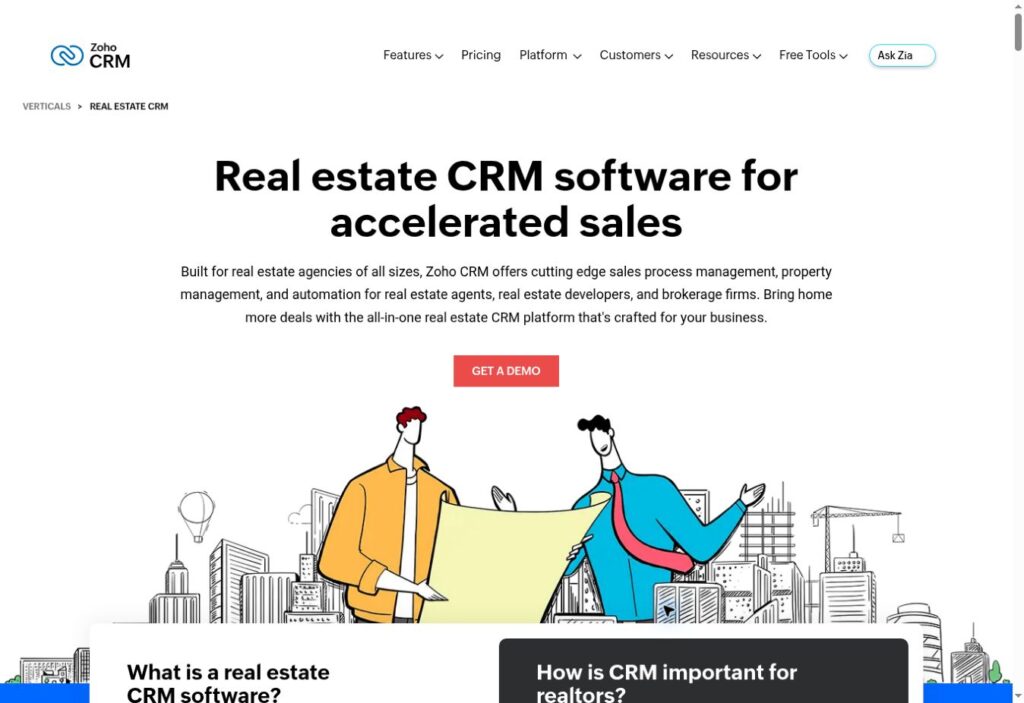
Zoho CRM is worth considering when the business needs more than a standard buyer-contact list. Its real estate guidance describes sales automation, documents, reporting and connections to other tools. That flexibility can help an agency organize handoffs between an inquiry, a property visit and the next responsible colleague.
Customization needs an owner. Agree on fields, pipeline stages and responsibilities before building workflows, or you may end up with inconsistent records. Also distinguish a documented integration from an included service: a connection through a third-party tool can require a separate subscription and configuration.
Pricing: A free edition supports three users. Paid prices did not render reliably in the reviewed US pricing page; confirm the local edition, price and feature limits.
Key Features
- Lead and contact records
- Tasks and reminders
- Import and export
- Mobile access
- Reports and APIs
- Email/calendar connections, forms and custom modules on eligible editions
Pros
- Free edition for three users
- Configurable agency processes
- Mobile and API support
- Cross-team workflow potential
- Does not require a specialist website bundle
Cons
- Configuration takes planning
- Edition-specific features need checking
- Paid pricing was not verifiable from the reviewed page
Best For
Agencies comfortable tailoring a general CRM to their sales and operations.
Official website: Zoho CRM.
Real Estate CRM Comparison Table
Prices checked 17 October 2026. Dollar amounts are vendor-listed USD references; Pipedrive rendered EUR. Annual equivalents require annual billing. Taxes, local terms and optional services can change your quote.
| CRM | Primary fit | Pricing reference | Watch for |
|---|---|---|---|
| Follow Up Boss | Existing lead-stack follow-up | Grow $69/user monthly; $58 annual equivalent | Calling add-on |
| Wise Agent | Low-cost relationship CRM | $49 monthly; $499 yearly | Individual logins and texts |
| Lofty | IDX website + CRM | Quote required | Package scope and seats |
| Real Geeks | IDX website + lead CRM | $399 monthly + $500 setup | MLS boards and user fees |
| Top Producer | MLS-based nurture | Verify conflicting price display | MLS coverage and correct package |
| IXACT Contact | Referral nurturing | $55 monthly; $46.75 annual equivalent | IDX and additional team members |
| Sierra Interactive | Structured website leads | Starter $359.95 monthly installments or $299.95 annual equivalent | 12-month contract, setup, feeds |
| Pipedrive | Flexible deal pipelines | Lite €14/seat/month, billed annually (regional display) | Higher editions for automation |
| HubSpot | Free general CRM start | Free tools: up to 2 users / 1,000 contacts | Automation and seat limits |
| Zoho CRM | Configurable agency workflows | Free up to 3 users; paid verify | Edition restrictions |
How to Choose a Real Estate CRM
Start with where your leads come from. A brokerage with a useful property website may need better follow-up, not a replacement site. An agent starting from scratch should compare the website, CRM and required MLS feeds as one purchase.
Write down one workflow before booking demos: a buyer asks about a property, an agent responds, a viewing is scheduled, an offer follows, and a colleague takes over while the agent is away. Ask each vendor to show that sequence. Look for visible ownership, a next action and a usable conversation record.
Calculate the first-year cost: subscriptions, individual logins, setup, calling, texts, website services and integrations. Ask whether monthly billing means monthly cancellation. Confirm export options before moving your full history.
If you mainly need custom sales stages, compare broader sales CRM tools. For bookkeeping or commission reconciliation, assess real estate accounting software separately. Tracking a deal is not the same as maintaining the accounts.
Frequently Asked Questions
Which CRM is best for a solo real estate agent?
There is no single winner. Wise Agent and IXACT Contact emphasize recurring contact management, while free HubSpot or Zoho editions may be enough for basic pipelines. Check whether you need IDX and paid automation before choosing.
Do real estate agents need an IDX website inside their CRM?
No. An agent who already has a functioning website can use a CRM such as Follow Up Boss for follow-up. Integrated options like Lofty, Real Geeks and Sierra may reduce the number of systems to coordinate, but add package and MLS considerations.
Is a free CRM sufficient for a real estate team?
It can be sufficient for initial contact, deal and task tracking. Free access does not establish free text messaging, IDX search, lead routing or advanced automation. Test requirements against the exact edition.
How should I compare monthly CRM prices?
Calculate the full contracted period, including the number of individual logins, mandatory setup, phone and SMS fees, MLS connections and lead-generation costs. Annual-billed monthly equivalents should not be compared as if they were month-to-month subscriptions.
Can these tools be used outside the United States?
Some general CRMs are broadly configurable, but many specialist platforms reference US- or Canada-style MLS and IDX workflows. Confirm geography, telephony, message rules, local property data and supported integrations directly with the vendor.
Will switching CRM improve lead conversion?
A CRM can make lead ownership and missed follow-up more visible, but there is no verified conversion lift for these products in this comparison. Implementation quality, response practice and lead quality also matter.
Final Verdict
Choose Follow Up Boss when you want stronger lead follow-up without rebuilding your website; Wise Agent or IXACT Contact when staying close to clients and managing cost matters most; and Real Geeks, Lofty or Sierra Interactive when an IDX website is part of the purchase. Top Producer deserves a look for MLS-based nurture, subject to local coverage and a clarified quote. For custom stages without an included property website, shortlist Pipedrive, HubSpot and Zoho CRM. These are fit-based starting points, not independently tested rankings.
Conclusion
A real estate CRM earns its place when it makes everyday follow-up clearer: who owns the new inquiry, what the client needs next, and which conversation has gone quiet. That is a more useful buying test than counting every feature on a pricing page.
For agents with established marketing channels, a focused contact and follow-up tool may be enough. Teams replacing a property website should price the CRM, IDX data, messages, user access and implementation together. General CRMs can be economical and adaptable, but someone has to design the property-specific process.
Before signing, ask vendors to demonstrate your actual lead-to-closing workflow and provide an itemized quote with billing terms. Check local MLS support, export options and the costs attached to automation. A well-matched, consistently used system is worth more than an extensive platform no one maintains.